Child survival
Question Everything, Even The Experts

2010 was the year an idea about challenging the action that was being taken to address child survival was conceived. The idea was bold, and from the beginning sought participation from others.
It was grounded in a plan to run 10 sub-marathons each of 24 km in 10 cities across 10 countries as a stunt to open a conversation asking: “how might we use our networks to improve the delivery of child survival?”
The reason for running 24 km was in response to the emphasis made by many organisations in 2010 promoting the 2008 figures of child death per day which had been released by UNICEF. The figure was 24,000 children dying on average daily. A wholly unacceptable figure, which has since been reduced by a third, and progress for the future shows signs of being promising.
I wasn’t an expert in the field, and it struck me that few were. Canvassing my friends about the importance of the issue showed the effectiveness of marketing campaigns from institutional aid agencies, but apart from that little more knowledge. I thought that in a networked age where communications and health infrastructure was better than ever, was there not more we could do to crowdsource and then implement some form of solution or positive intervention?
This was the point of the running stunt. I would run in 10 cities, simply to highlight the year 2010, and conclude with what I had loosely defined as a ‘Design Forum’ at the end to address the issue. There was no budget, no institutional backers. Just a mad Australian with a little bit of passion, who had been given legs by many friends each contributing a small amount through a makeshift crowdfunding campaign.
I took the idea to several institutional aid agencies and charities who had a vested interest in the idea. Would they partner, or was there somehow I could support their efforts? I wasn’t asking for money, and it just have been evident that perhaps lacked some experience in that sector. Their response, especially in hindsight having now completed that journey after much tribulation, was astounding. I was met with the same response, and that surprised me: “sorry, that is not consistent with our messaging”, “we can’t quite see how it ties in with our fundraising efforts”, and other such words that effectively closed their door to my invitation.
I was at a loss as how to respond to this response from the aid agencies that so effectively had appropriated the issue of child mortality. Was I mistaken, and maybe my ideas were ill-conceived and ridiculous?
Reflecting on their response, I remembered back to Boxing Day 2004 when a catastrophic tsunami would smash against Aceh and many other towns in the Asia Pacific. It was an unprecedented event. At the time, I was still serving as an Australian Army Officer and then had a responsibility for planning emerging operations across the region. From the moment the first phone call was received on Boxing Day afternoon and being probably the first person in Australia to hear about the incident, we spared no effort for the following weeks with literally no rest or respite so as to respond with critical support to assist the logistical, recovery and humanitarian needs which were many.
Aid agencies of every manner were part of what I describe as a third wave of tsunami after a second wave of tsunami crashed around the world as the general public awoke to the horror of what had happened. Many aid agencies were quick to adjust their messaging to receiving funding from an empathetic public.
A short while later, reports in Aceh were of degraded roads and bottle-necks from the inundation of traffic of aid agencies wanting to be the first organisation to be seen to arrive and distribute food and blankets. This hampered getting water and other critical supplies to remote areas. It would have made more sense for the aid agencies to coordinate their efforts in Kuala Lumpur and deploy as a collaborative effort without concern for which person from what organisation arrived first.
Now, a decade on, we look back on Aceh. There are questions about where some aid money ended up. Such questions are worth examining, but not too pointedly perhaps. The generosity that allowed the aid in the first place does deserve accountability, and that is a separate issue from that which is being raised in this post.
Child survival is an issue which has been strongly advocated for, from politicians such as Hilary Clinton to actors the like of Ben Aflick. All have spoken with the same staunch plea, demanding urgent attention, mirroring the words of Tony Lake the Executive Director of UNICEF who in 2012 rightly described child mortality as a “moral obscenity” and a “moral abomination”.
Earlier this year, we saw a very positive report from Bill and Melinda Gates in their Annual Letter which has taken a different approach to the ‘alarmist’ view of an appalling situation that has underpinned the messaging of institutional aid agencies to date. We have turned a corner. He future looks bright.
There is no better time to conduct the Design Forum for an issue like child survival. Just because the future is painted as a bright place to visit, it doesn’t mean the road is downhill from here. There is still a lot of work today, but through collaborating with those interventions that we know work and learning from interventions that have been less successful.
The Design Forum is a conversation that will last nine months and beyond. Is picks up a conversation which has started many decades prior. And everyone is welcome. I expect many people will watch to see how it unfolds, and then get involved once it takes shape closer to May. In the meantime, there is a lot of information out there, there are many people with first-rate experience to draw upon, there is a lot of data.
There is no ownership in this conversation. It is a collaboration. Part of that involves challenging and questioning that which has been said in the past. Even Bill and Melinda Gates’ aspiration should be challenged in order to understand it better. Theirs is a bet. I don’t propose we refute it, but we definitely should examine and scrutinise it rather than just accept everything because it is already on the interwebs. What better form of respect can we give reasoned thought than to challenge it with our own intellect, rather than just accept it blithely?
We are breaking new ground in a conversation that is long established. We give ourselves permission to question everything, even the experts.
Let’s Begin: Osaka
 Starting 9 February 2015 is the first of 10 Design Forum. The reason we are doing this is to improve child survival.
It’s free, and you can join, no matter where you live. Here is the link.
More details will be written shortly. Sign up now to stay connected!
Design Forum: what is it, and why does it matter?

I’m on an epic journey. It is a quest. But it is not about me. It is about us. Together.
This is about you, not me.
Only you can say that we are on this journey together. It is your decision, not mine. I’ll write more about what that journey is shortly, but first let me explain why the decision you make is important.
This is a quest.
This is a quest to make a difference. Quests come in all shapes and sizes. This one is to improve the delivery of child survival.
This is about child survival.
So let’s begin there. I have loosely defined child survival as enabling children to flourish past their fifth birthday. Not just live, because I don’t think that is enough, even though we seldom stop to think twice about the opportunities that life brings us. If you are reading this, you really are one of the fortunate on this one earth we all enjoy. You can read which means you have had the privilege of education, and you have access to a computer, which means you have access to electricity. If you have access to education, technology (a computer), and infrastructure (electricity), it probably suggests you enjoy a wide range of other benefits that a majority of the human race can only dream about. Yes really, everyone else is not just like you. You are special.
This is about building bridges.
My good mate Scott O’Brien has an idea he is working on to connect the top billion with the bottom billion on the planet. It is the ultimate bold endeavour in building bridges. There has been a lot of interplay in the ideas he and I share. And I really enjoy the challenge and inspiration that comes from hearing near ideas or having my old ideas questioned. That is how we find new horizons. It is how we make progress collectively, and it is how we grow individually.
This is about philanthropy.
My question to you is what will you do with the privileged status you have inherited. Yes, there may well be every reason to complain: job security, relationship issues, too little money, health is not where it should be, stressed to the max, and maybe even your latte arrived cold. Those are real issues. Even the latte. But compared with others, you are fortunate and special. Philanthropy is described as having a concern for human welfare, and mostly this definition is associated with giving away money. But here I want to challenge that definition. What about if we consider other resources we enjoy that we can draw upon to use to good effect to benefit human welfare? True philanthropy. Using your time, your talents, your networks, your imagination. Connecting with others so as to help address someone else’s problem in the interest of their welfare is a selfless act of generosity. It is also shown to be the best, fastest, and most reliable way to obtain a sustainable state of happiness. That is, happiness comes from working toward the betterment of others. And don’t worry, the way the world work, these things come back you you in spades. To paraphrase Churchill: “it is by giving that we get.”
This is about making a difference.
UNICEF calculate that every day more than 16,000 children under the age of five die. That figure is called child mortality. Most of those deaths occur within the first 24 hours of life. Many of these deaths are preventable. So why don’t we just prevent them? Can it be that hard? Bill and Melinda Gates have used their recent Annual Letter as a stunt to bet that this figure will fall below 8,000 in the next 15 years. That is good news and would represent the fastest rate of benefit to humanity in history. But this won’t just happen on its own. Yes, significant progress has been made across the last 10 years especially, but let’s not leave change to chance. Innovation comes about through intervention. We need to act to bring about this difference. Returning to the point about philanthropy, this is about more than just giving money. Some of us don’t have money to give. The most valuable contribution any of us can make is through the collective genius of our shared imaginations. Are you going to hold back on us?
This is about us.
This is getting to the part that I said I would come back to. This is where you need to make a decision. I am no longer on this journey alone. Together, a larger community has formed, and we are now ‘us’. The question is, are you coming with us on this journey. Many reading this post know they are. It is easy to get involved if you haven’t done so already. You just have to make a decision to join us, to make a difference together.
This is about a journey.
This is about the 10 City Bridge Run. An idea hatched by myself in 2010 to run 10 sub-marathons each of 24 km in 10 cities across 10 countries as a stunt to address an important question asking: “how might we use our networks to improve the delivery of child survival?” It took a while to commence this journey, and it was far from easy. I began running in Port Moresby on 16 September last year and concluded the running late on a dark, wet and cold night in New York on 3 January this year. But the running was merely the device to get us to the beginning of this epic journey. This journey is actually marked by a series of Design Forums that will be held in all of the 10 cities where running took place as a way of addressing this question about improving the delivery of child survival. You can join at any time. You don’t need to come with us every step of the way. That is the advantage of the ‘us’. We share the labour. We call all reach the destination, and no matter the effort you could contribute, we can all say with much satisfaction “we did this together!”
This is about Design.
We are going to use a method called Design Thinking to address this question about improving child survival. Come as you are, you don’t need special qualifications. We will draw upon the wisdom of the crowd for knowledge. We need your imagination to help us in the process of designing a better future for many.
What does this look like? Read the posts which follows (and a link will be added shortly), to talk about what is involved. There is no cost. You don’t need to travel. You can do it within whatever constraints you currently have. But first you need to decide. You can watch and observe, but why not participate?
We need you to bring whatever magic that makes you special to the table. You are more than enough just as you are. Let’s see what alchemy we can create when we literally put our minds together.
Please join us on this epic quest as we prepare to embark on the Design Forum so at the end of the journey we can all look back with satisfaction at what we have achieved and say: “we did this together!”
Good News For A Change
Did you see what I did there? The heading is a pun! It can be read in two ways.
I would like to take credit for such cleverness, but that is actually the title of a book by David Suzuki and Holly Dressel. The full title is “Good News For A Change: how everyday people are helping the planet.”
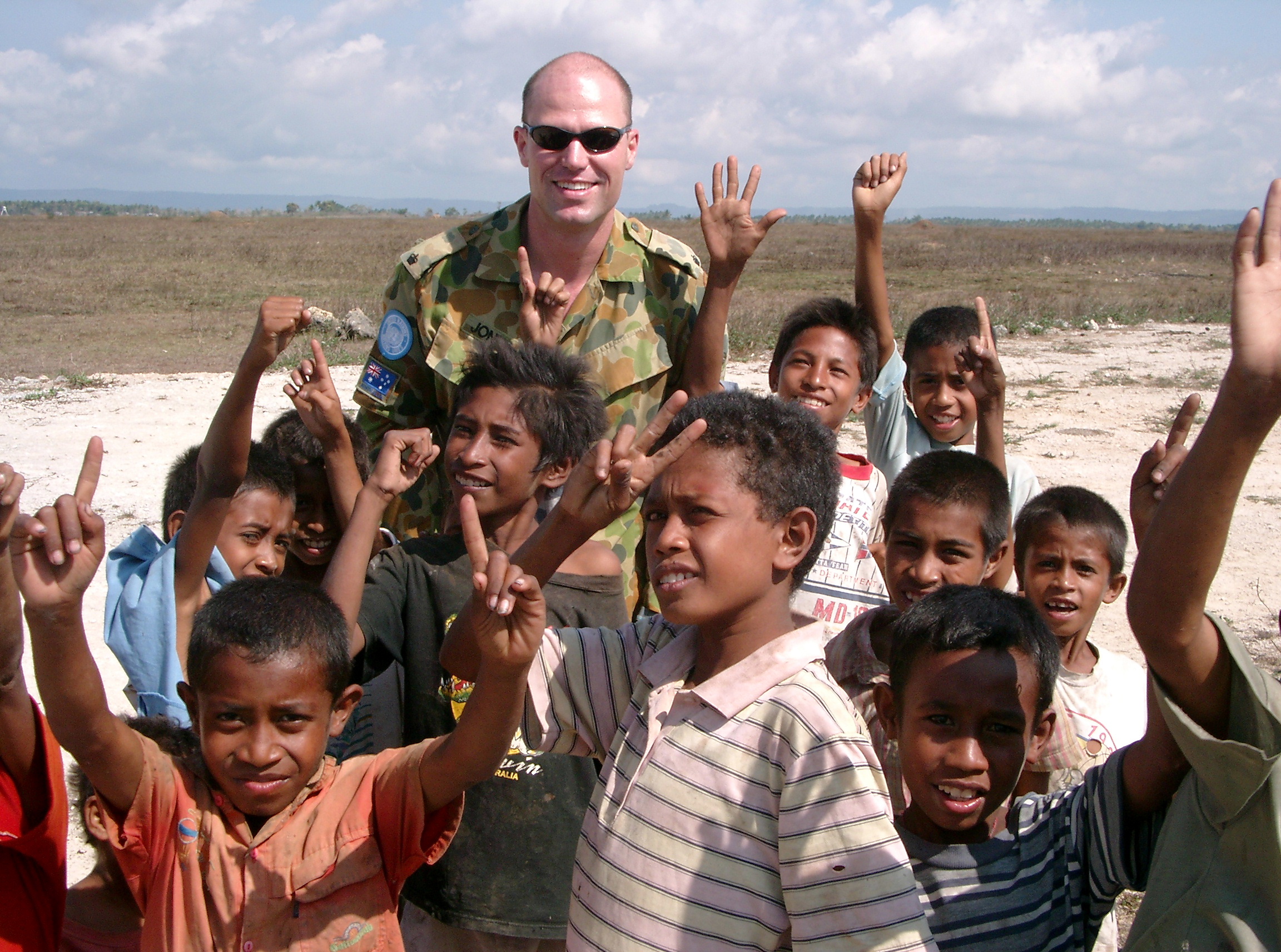
It is a good book. I bought it from a bookstore which I found to be oasis in a desert of ideas when I was deployed on a temporary posting assignment to Darwin during my service as an Australian Army Officer. I was engaged in border protection duties, and we successfully repatriated a so-called ‘Suspected Illegal Entry Vessel (SIEV14)’ from Australian waters back into international waters from where it then travelled back to its original port in Indonesia.
It was during a difficult time in my life for other reasons of a personal nature, and while many people might want to point the bone for my role in the government’s machinary of ‘stopping the boats’, I think that chapter of my life just goes to show the messiness of defining clean ethical boundaries inside of which we might like our lives to operate.
Just before I departed on the 10 City Bridge Run in late September last year, I posted a video on Facebook to some of my old army buddies which had been recorded by IS (the so-called Islamic State). The video showed the effect of a recoilless rifle exploding when the projectile detonated in the barrel. A recoilless rifle looks like a large tank barrel, basically because that is what it is. As an artillery officer, weapon effects and projectiles was a daily part of my life when I was in the Army. A premature detonation was an extremely rare event, and so on a professional level I shared the video. The video was pretty graphic, in that it didn’t leave much to the imagination of what might have come from the operator of the weapon.
What I didn’t count on was a friend trolling through the video and determining that from his perspective it was inappropriate content. And he made sure that was well known before defriending, and since then has never been heard from again.
So why go to the trouble of writing this story. Or talking about my role in the downfall of people who had their hopes set on settling in Australia (yes, an oblique reference there to Spike Milligan, staying with the military theme for a minute). How can that be good news? How that that bring about positive change?
Well, they aren’t and they don’t. They just are. The world can be a messy place. A lot of things happen that disgust us. This is not what we signed up for!
My point in this post is that we can decide to only see the good news. It is a pollyanaish approach to not seeing the bad. I think that is less than helpful actually, even though it fuels us with goodness and possibility.
To solve a problem, we really do need good news for a change. We need the good news both to make a change, and as a break from the relentless misery of bad news reported through the unforgiving 24 hour news cycle. But let’s also take a minute to appreciate the bad and how it created an obscene situation that at worst might be described as an abomination. We don’t need to forgive or embrace the bad. We just need to know where the rot started so that we can change for good.
Blueprint For Change
 Why bother? I mean, can’t we all just sit back and relax now? Isn’t the crisis over?
In their Annual Letter published this year, Bill and Melinda Gates set the scene by betting that there would be greater progress to end extreme poverty than in the previous 15 years. And they are probably right. All indications point toward this as an outcome, and their keen interest over the last 15 years would suggest that this is actually a well-tested assumption rather than an idle wager.
Progress is good, and the message from Bill and Melinda Gates is positive. Are we out of the woods yet? Does that mean the crisis is over?
The 2014 Bill and Melinda Gates Annual Letter framed the issue of child mortality as one of three key areas where they sought to dispel myths that they rightly claim are held about addressing global poverty. At the beginning of the document, they wrote how they were “disgusted” by child mortality.
Other people have used equally strong language. Tony Lake the Executive Director of UNICEF described child mortality in 2012 as a “moral obscenity” and a “moral abomination”.
What does this mean for the 10 City Bridge Run, a citizen-led initiative to open a conversation asking “how might we use our networks to improve the delivery of child survival?” Is the war over, and we didn’t hear the news? Isn’t it all over bar the shouting? After all, Bill and Melinda Gates have spoken.
We should see the current situation as the end of a beginning, and the beginning of the end. We are now riding the waves of change. There has never been a more critical time to convene the Design Forum which will unfold this conversation about child survival than now. There is political will, institutional interest, a wealth of information, technology and the ability to communicate is better than ever, and along with increasing developments in medicine and infrastructure.
The Design Forum is not a silver bullet. And in a relative sense, together we are a minnow in an ocean of information and activity. But we are part of a much larger connected effort. And that is why this is important as a conversation. We have a real part to play, and as that conversation takes shape, it will become more obvious where we can best effect change.
The Design Forum which will commence in Osaka on 9 February is a blueprint for change for improving child survival. We are not reinventing the wheel, but drawing upon the experience and networks of others to amplify our intention. And we need your voice to help make that possible.
The Dali Lama has a quote which I like:
“If you think you are too small to make a difference, then try sleeping with a mosquito.”
We are about to begin the series of Design Forum. You can join in at any time, but why not begin with us at the beginning. We are starting by asking how might we Design the Design Forum. This will be an event in Osaka to draw upon best practice, and examine how we can organise to be effective in making a difference. The first Design Firum in Osaka convenes concurrently with an Acumen Fund/IDEO free online, seven-week course which provides an introduction to Design Thinking. You can get involved. You will make a difference. So why not sign up? It is all free.
Sign up for the Introduction to Design Thinking here.
Sign up for the Osaka Design Forum here.
Looking forward to seeing you on the journey!
Osaka: Design Forum 1
 The first of a series of Design Forum addressing a question: “how might we use our networks to improve the delivery of child survival?” will be convened in Osaka on 9-10 February.
You are invited to participate, no matter how far away from Osaka you might live.
It is free to attend. You can register here.
On 9 February, join us in person or online at one of a number of scheduled video conferences where we will frame the Osaka event as “Designing the Design Forum”.
The Osaka forum will examine what is best practice in design and in convening a gathering. How might we best build bridges that matter, how can we involve others, how can we increase collaboration?
Some key initiatives that point the way to what works can be recently observed:
- Davos, The World Economic Forum
- Bill and Melinda Gates Annual Letter
- The recent ‘Your Turn Challenge’ from Seth Godin and his capable coworker Winnie
- and there are many other examples, and we want you to help explore this list and determine what we can learn, what we can replicate, and what we can take away.
It will be a humble beginning, wedded to a Acumen Fund/IDEO free, online, seven-week course to introduce the process of Design Thinking. Get involved with the course here.
10 February will be experiential by participating in HackOsaka to examine first-hand a hackathon in a different culture and language from that which most of us speak and know. Many people have been part of a hackathon at some point, but the big question will be how do we extend this to a context which out of necessity builds bridges with the other?
Child survival is the core issue, but this first Design Forum in Osaka will be about process. I hope you can be involved too!
Betting On The Future
Bill and Melinda Gates just released their annual letter for 2015. It is framed around looking at the likelihood of massive progress across the next 15 years. The preamble to the letter begins:
“Fifteen years ago, Bill and Melinda made a similar bet. They started their foundation in 2000 with the idea that by backing innovative work in health and education, they could help dramatically reduce inequity. Progress so far has been very exciting—so exciting that they are doubling down on the bet made 15 years ago, and picking ambitious goals for what’s possible 15 years from now.”
I have yet to read through the full document, and here is a link so you can review it yourself.
While I was in Glasgow, I made a short video for Bill and Melinda Gates asking for their advice of five books that might be instructive to framing the issue about child survival. I have yet to hear back from them, and it remains a possibility that I won’t hear from them. They must get a zillion requests from everyone who wants something, and consequently have a fierce protection through some pretty robust gatekeepers.
Remember though that this pursuit of a series of Design Forum is neither hanging on whether we hear back from the Gates’. Of course, it would be great if that were the case to hear from them, and it remains my intent to keep pursuing their engagement on some level.
But just for a moment, let’s assume that for whatever reason we don’t get any response from Bill and Melinda. What should we do then? Well, we will have to find the answers we want through our own networks which is the point of this conversation.
Remaining hopeful of their advice about a handful of books to read, but being pragmatic of the likelihood of this, here is what I suggest: we take the framing of the Annual Letter for 2015 as guidance to help frame the Design Forum. What might be possible to achieve in the next 15 years. It is a 2030 vision.
I Began Questioning
 Where does your journey begin for making a difference that matters? We all have the same amount of time, and each are gifted in some ways, some more gifted than others. I’m interested in this question of when and why people chose to make a difference, rather than how much of a difference they might have made which is a very subjective measure of contribution.
I was delighted to meet up with an old friend Cynthia Smith in New York the previous week at the conclusion of my epic running stunt where I ran 10 sub-marathons each of 24 km in 10 cities across 10 countries. Many of you know already that the running was a stunt to thread a common narrative through 10 cities where an important question will be explored through a nine month period this year in a series of Design Forums asking: “how might we use our networks to improve the delivery of child survival?”

Cynthia is a curator of design at the Cooper Hewitt Smithsonian Design Museum in New York, located on the Upper East Side of Manhattan in what was once Andrew Carnegie’s home.
Cynthia Smith is a remarkable lady who has led a movement examining ‘design for the other 90%’. The idea is that most design is made for that 10% of the global population that can afford to live in homes, drive cars, enjoy discretionary entertainment, and then still have money left over for fashion, holidays, pets, and everything else that we seldom stop to think twice about.
There is a quote in a book she curated which I read once and carry with me as an inspiration. The quote talks about a decision to make a difference, rather than worrying about how ready we are to make that difference. She wrote:
“As a result, I began questioning: ‘In what ways could I, as a designer, make a difference?’
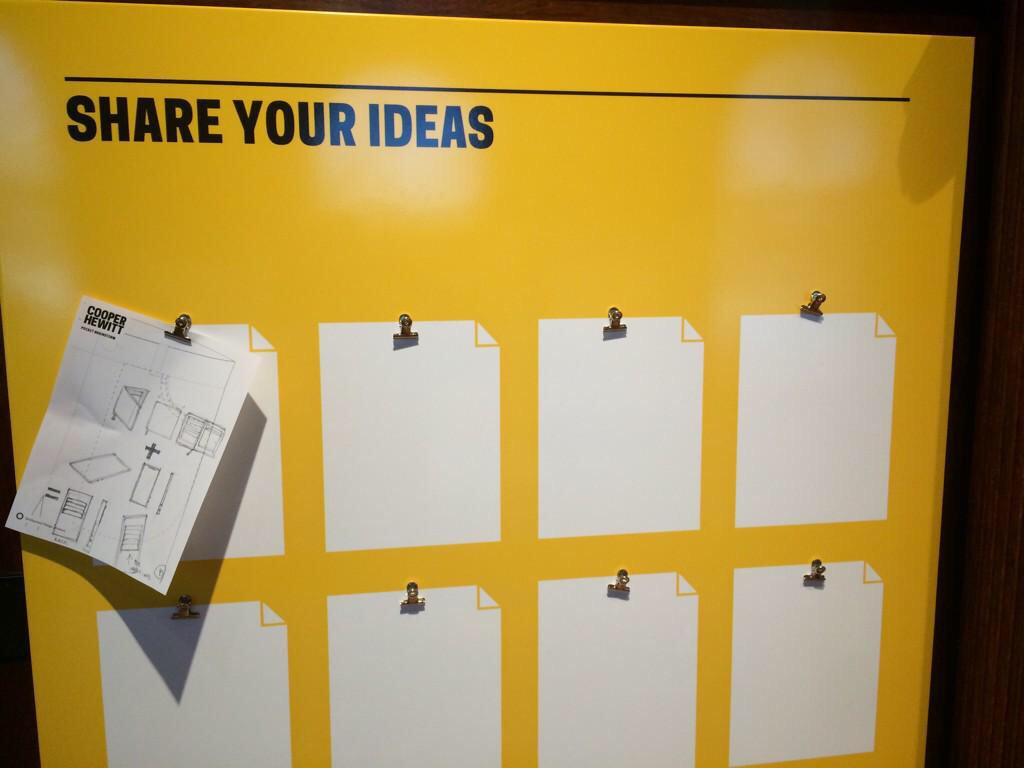
 We met for breakfast, and afterwards spent some time at the collection at the Cooper Hewitt. After saying farewell, I spent some time wandering around the collection myself. What impressed me most was the idea of accessibility of being a designer. One exhibition was about Human Centred Design, and was essentially a call to action for everyone who walked into the exhibition in the old library of Andrew Carnegie to become a designer.
So what does this mean for you and I? Are we any different to Cynthia? After all, she is a ‘capital D’ Designer. You know, a real one.
 I think what it means is that you need to read her quote above and own it for yourself. Take ownership of becoming a designer. And start by asking ‘will you decide to make a difference?’
If is not a new thought to you already, then there is one thing I want you to do for me. Share this post with someone who is ‘just ordinary’, but let them know they are far from ordinary. We need them as designers to make a difference. Maybe not in a big way, but with some sense of conviction that they can actually make a difference.
The centrepiece exhibition was about tools, and was thought-provoking. It took the ordinary and showed how everything has in some way been designed.
I like this thought because it comes back to the Design Forums I spoke about earlier in this post. In every city, we will have a particular focus. When we arrive in New York which I believe will be in May, I would like to pick up this theme of tools as it relates to child survival. It is a conversation I want to pick up with Cynthia, and in some ways I am opening up that thought with this post.

In a stroke of serendipity when we were walking to the Cooper Hewitt, we passed the church that is adjacent to the museum. Apparently, Carnegie’s wife gifted the land to the church knowing that the highrises of the city were starting to be build closer and closer to her house. It was an ingenious was to create a buffer to allow her garden to receive sunlight. That the church doesn’t have steeples confirms this story.
I visited the church the Sunday after we met as was totally inspired by the vision of the Minister who had created a real culture of questioning in what ways could the church make a difference to the local community. So my intention is to speak both with Cynthia and the membership at the church to ask, together in what ways could we make a difference?
But the person who I most want to engage in this conversation is you. In what ways as a designer could you make a difference?
Learning From Experience
 Don’t reinvent the wheel. Improve upon what already exists. Collaborate with others to find better solutions.
This is the spirit of the Design Forum that will unfold commencing in Osaka mid-February across a nine month period to address a question we are asking: “how might we use our networks to improve e delivery of child survival?”
We have begun already, and you are not too late to get involved. Presently, the Davos World Economic Forum is being held discussing some big ideas, among which includes issues like child survival. We can gain insights from those conversations, but perhaps more importantly get a perspective of what makes a good forum by observing Davos. And that is the role of the Design Forum in Osaka: to deconstruct what we know so we can find the best way of having a conversation that matters.
The Design Forum began with a simple idea in 2010 that would be highlighted through a crazy and epic running stunt. The stunt is behind us now, but we take it with us as it gives a thread of narrative to give a meaningful connection between the cities where the Design Forum will take place.
An invitation to be part of the Design Forum will be sent out later today. It will be free to attend, and you don’t need to travel to Osaka. The formal part of the first Design Forum will take place across a three day window, but you needn’t be involved for the whole time. How you ‘attend’ and contribute is up to you. We want your ideas and input.
Right now, please sign this petition for Julie Bishop. It is asking her to be our official Champion to highlight the Design Forum. We will deliver this after the second Design Forum in Papua New Guinea. I have written to her already requesting her to be our Champion. With so many other responsibilities, it is understandable that she might wish us well, but decline, and that is ok. We will then ask again after the third, fourth, fifth, and so on Design Forums.
By asking again and again, we are actually opening a conversation rather than trying to wear her down to relent. And so the objective will be for her involvement in some manner at the final culminating Design Forum in Seoul in October this year. Everything else is part of the conversation, and that is very important too.
Please visit, sign and share: https://www.change.org/p/the-hon-julie-bishop-mp-champion-the-global-series-of-design-forum-to-improve-child-survival
A Worthy Resolution for 2015
 2015 is the year that a series of long-awaited Design Forum convened to open a conversation where a central question will be addressed: “how might we use our networks to improve the delivery of child survival?”
This is the culmination of a running stunt called the 10 City Bridge Run which involved me running 10 sub-marathons each of 24 km in 10 cities across 10 countries. Right now as I type this post, I am standing on the verge of the ninth leg here in Toronto. The weather is cold with some snow flurries, and at -9 degrees celsius, there is every possibility it could snow while I am out running. I will be running between the cusp of two years: setting off when the new year turns in Sydney, and ahead of the new year here in Toronto. Bridging the years.
The resolution is to improve child survival.
One way you can help now is by signing this petition to The Hon Julie Bishop MP, who is Australia’s Foreign Minister, where together we will be asking her to be the official champion for this series of Design Forum.
I made two videos along this journey which give a little more information below. Happy New Year!
 Building Bridges