Design Forum
Anatomy of the Design Forum
I have been wrestling with how to write about the Design Forum. The problem being that there is a lot to write about. Rather than post a 2000+ word blog which few might have the time or inclination to read, I will post as separate chapters, and then make a consolidated document once it is all down. After I post all of the information that I have to share about the Design Forum now, I will return here and add the links below this post to bookend the consolidated list should anyone go searching.
As always, I welcome your ideas.
Map Check: preamble to the Design Forum
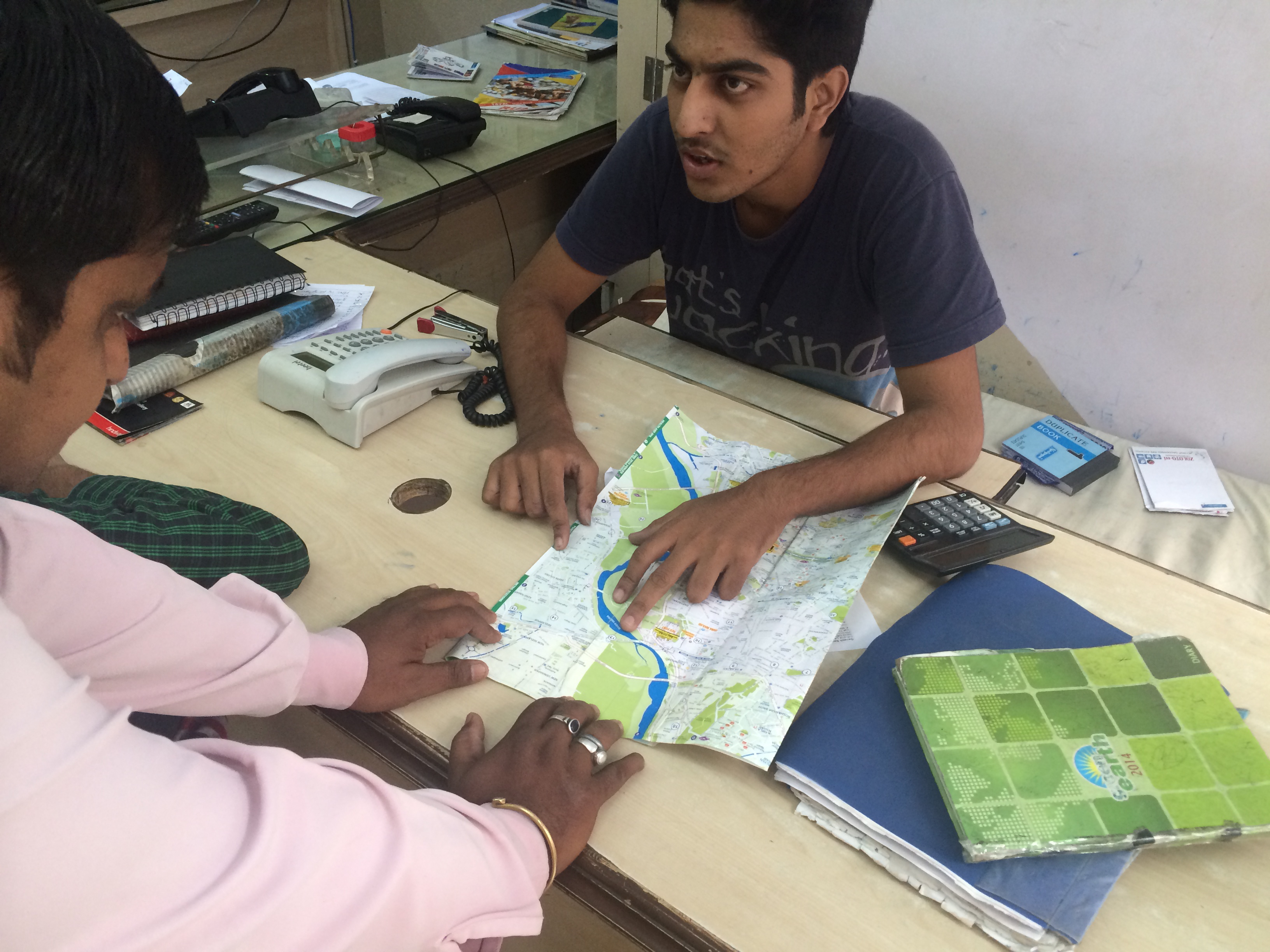 The 10 City Bridge Run Design Forum is a series of 10 events that will be convened in the 10 cities where running took place during the 10 City Bridge Run. The entire focus of the Design Forum is to address the central question to the 10 City Bridge Run which asks: “how might we use our networks to improve the delivery of child survival?”
Making decisions, and working out how to collaborate are two key tasks which we will need to work out how to do together. There are some obvious difficulties with that: we are in different time zones, we are not in the same location, not all of us speak the same language, access and ability to use technology is not evenly distributed. But we all share one trump card that can help us overcome any challenge: our imagination is the freely available resource that will make this possible.
Success will really come down to imagination. Imagination will drive the solutions to challenges of communication, collaboration, decision making. Resource issues, access to people, gaining information and knowledge are practical challenges and very real, but will also be overcome through imagination.
How to communicate and collaborate, and the platforms we might adopt to best enable this, remains the biggest immediate question to answer.
It is not simple, but it is possible.
At the conception of this idea back in 2010, it was an impossibility at that time. Now we are closer to making it happen. And if we can come this far, how much more can we achieve that we don’t know is possible from where we stand now?
This post provides some preliminary thoughts to a framework for the Design Forum which follows in the next post. This post is like a map which we can refer to. But what is important is that we don’t confuse the map for the territory. The plan will be amended and change. Ideas will emerge that are more expansive than we know now.
There will be 10 Design Forums. Well, there may in fact be more should people take the initiative to organise their own in a location other than the 10 key locations which this post relates to. The structure and conduct of each Design Forum can be, and possibly should be, distinct from those which precede it. The length of time (in days and hours) for each Design Forum is almost unimportant. We will need ‘enough time’ to do what we need to do, and this will depend on having clarity on a desired outcome at each step of the way.
The Design Forum are a conversation. Anyone can join, at anytime. We all have busy schedules, and so it is completely expected that people might drop in and out of the conversation. It is across a duration of nine months, and many personal events will take place in that time, some good and some less so. As a community, it is reasonable to expect that we can celebrate and if needed to commiserate in the news of others. The focus is child survival, but it is also a very human experience, and we should acknowledge that too.
During the Design Forum, we will look elsewhere to learn and to model what has worked and what hasn’t worked. While the subject is ‘child survival’, examining what happens in other disciplines will also be important. Inspiration might be found in unexpected places.
Before describing the framework for the Design Forum, I want to note two unfinished or unanswered items of business to date:
- A petition has been made for submission to The Hon Julie Bishop MP, the Australian Foreign Minister, to act as the official Champion for the Design Forum. That petition stands and will be accompany the conduct of the Design Forum, and be reframed to request her to be the official Champion for the final Design Forum in Seoul towards the end of October. Regardless of events that may or not unfold in the coming weeks in Australia, she will remain the person who the petition is addressed. You can read (and share and sign!) the petition in its current draft here.
- A video request has been submitted to Bill and Melinda Gates asking them to recommend a reading list of five books that might help to frame the issue of child survival. Even with the release of their recent Annual Letter, this has merit as Bill and Melinda Gates are two individuals who through their advocacy on this issue have developed a good degree of knowledge that deserves to be more widely shared through a reading list. As far as I know at the moment, this remains an unanswered request. I do think that more could have been done to make sure the video reaches them personally, and shortly I will write directly to them with a letter asking for their consideration. You can see the video here.
The biggest failing in my performance to date is my inability to engage media. There are many reasons for that and some of them relating to computer access or the serviceability of equipment, but it is worth noting that this is something I haven’t done very well. Based on that observation, it is a fair expectation that it will remain an area which I am not well suited to managing as we move forward.
I hope you might see from reading this post that this is a big task. Even before we get to talking about the Design Forum as a series of individual events, we can identify discrete tasks that perhaps can be better shared and managed across our team. How we organise ourselves for that is a task in itself, and let’s start to leverage our collective strength by each taking up a small piece of the strain so the effort is less for all as we put our shoulders to the wheel.
Conception Comes Before Birth
 A nine month journey will begin shortly. It will be uncertain, full of expectation, and at the end of which there will be the emerging of something which at the time of writing this post was only a glimmer in my eye.
It is a journey that starts with an intimate partnership of sorts. That part, the union with others, is unavoidable. It will be messy, fun, maybe full of passion. But for the nine month journey to be successful at the conclusion, at the beginning something must be created.
During this process, a new entity will be woven together, in a process that creates new life. It is an astounding feat, many would describe as a miracle.
Yes, we are birthing an idea. And I want you to be more than just a casual observer. Coyly, I’m asking you to help conceive this with me. Would you….?
Perhaps this description is comical, and maybe more dramatic than is needed. Commencing next week is the beginning of a nine month epic journey called the Design Forum where we will address a question asking “how might we use our networks to improve the delivery of child survival?”
I was describing the vision for the Design Forum that would follow the epic journey that was the 10 City Bridge Run on the eve of the final leg in New York to my good friend Kelley when she identified that it was a journey of nine months. She questioned whether gender played a role in how the Design Forum unfolded. It was a good question: guys and girls think differently. We bring different life experience to the table. Biologically there are core differences which shape our function.
This doesn’t mean that we have ‘male’ roles and ‘female’ roles. That would be too limiting and prescriptive. What it does do though is open the process of the Design Forum to be seen as taking place across loosely the equivalent amount of time that it takes for human pregnancy.
Together, we really are engaging on the process of an idea. Actually, many ideas. And the metaphor extends beyond that further. This endeavour is about enabling life, not so much creating life, but preventing death in order to sustain a flourishing existence. This is important beyond the reasons that would appear obvious. Reducing child mortality is counter-intuitively the best way to contribute to the ending of extreme poverty, and by doing so to improve quality of life, improve health and infrastructure, and these things lead to opportunities for education where currently there are few, and ultimately contain population growth.
Improving child survival is too often the punch line of a funding appeal from an institutional aid agency, but what does it actually involve? There are few silver bullets, and it will involve a lot of hard work. But one thing we can know for sure: it all begins with the birth of an idea sewn from our imaginations.
Design Forum: what is it, and why does it matter?

I’m on an epic journey. It is a quest. But it is not about me. It is about us. Together.
This is about you, not me.
Only you can say that we are on this journey together. It is your decision, not mine. I’ll write more about what that journey is shortly, but first let me explain why the decision you make is important.
This is a quest.
This is a quest to make a difference. Quests come in all shapes and sizes. This one is to improve the delivery of child survival.
This is about child survival.
So let’s begin there. I have loosely defined child survival as enabling children to flourish past their fifth birthday. Not just live, because I don’t think that is enough, even though we seldom stop to think twice about the opportunities that life brings us. If you are reading this, you really are one of the fortunate on this one earth we all enjoy. You can read which means you have had the privilege of education, and you have access to a computer, which means you have access to electricity. If you have access to education, technology (a computer), and infrastructure (electricity), it probably suggests you enjoy a wide range of other benefits that a majority of the human race can only dream about. Yes really, everyone else is not just like you. You are special.
This is about building bridges.
My good mate Scott O’Brien has an idea he is working on to connect the top billion with the bottom billion on the planet. It is the ultimate bold endeavour in building bridges. There has been a lot of interplay in the ideas he and I share. And I really enjoy the challenge and inspiration that comes from hearing near ideas or having my old ideas questioned. That is how we find new horizons. It is how we make progress collectively, and it is how we grow individually.
This is about philanthropy.
My question to you is what will you do with the privileged status you have inherited. Yes, there may well be every reason to complain: job security, relationship issues, too little money, health is not where it should be, stressed to the max, and maybe even your latte arrived cold. Those are real issues. Even the latte. But compared with others, you are fortunate and special. Philanthropy is described as having a concern for human welfare, and mostly this definition is associated with giving away money. But here I want to challenge that definition. What about if we consider other resources we enjoy that we can draw upon to use to good effect to benefit human welfare? True philanthropy. Using your time, your talents, your networks, your imagination. Connecting with others so as to help address someone else’s problem in the interest of their welfare is a selfless act of generosity. It is also shown to be the best, fastest, and most reliable way to obtain a sustainable state of happiness. That is, happiness comes from working toward the betterment of others. And don’t worry, the way the world work, these things come back you you in spades. To paraphrase Churchill: “it is by giving that we get.”
This is about making a difference.
UNICEF calculate that every day more than 16,000 children under the age of five die. That figure is called child mortality. Most of those deaths occur within the first 24 hours of life. Many of these deaths are preventable. So why don’t we just prevent them? Can it be that hard? Bill and Melinda Gates have used their recent Annual Letter as a stunt to bet that this figure will fall below 8,000 in the next 15 years. That is good news and would represent the fastest rate of benefit to humanity in history. But this won’t just happen on its own. Yes, significant progress has been made across the last 10 years especially, but let’s not leave change to chance. Innovation comes about through intervention. We need to act to bring about this difference. Returning to the point about philanthropy, this is about more than just giving money. Some of us don’t have money to give. The most valuable contribution any of us can make is through the collective genius of our shared imaginations. Are you going to hold back on us?
This is about us.
This is getting to the part that I said I would come back to. This is where you need to make a decision. I am no longer on this journey alone. Together, a larger community has formed, and we are now ‘us’. The question is, are you coming with us on this journey. Many reading this post know they are. It is easy to get involved if you haven’t done so already. You just have to make a decision to join us, to make a difference together.
This is about a journey.
This is about the 10 City Bridge Run. An idea hatched by myself in 2010 to run 10 sub-marathons each of 24 km in 10 cities across 10 countries as a stunt to address an important question asking: “how might we use our networks to improve the delivery of child survival?” It took a while to commence this journey, and it was far from easy. I began running in Port Moresby on 16 September last year and concluded the running late on a dark, wet and cold night in New York on 3 January this year. But the running was merely the device to get us to the beginning of this epic journey. This journey is actually marked by a series of Design Forums that will be held in all of the 10 cities where running took place as a way of addressing this question about improving the delivery of child survival. You can join at any time. You don’t need to come with us every step of the way. That is the advantage of the ‘us’. We share the labour. We call all reach the destination, and no matter the effort you could contribute, we can all say with much satisfaction “we did this together!”
This is about Design.
We are going to use a method called Design Thinking to address this question about improving child survival. Come as you are, you don’t need special qualifications. We will draw upon the wisdom of the crowd for knowledge. We need your imagination to help us in the process of designing a better future for many.
What does this look like? Read the posts which follows (and a link will be added shortly), to talk about what is involved. There is no cost. You don’t need to travel. You can do it within whatever constraints you currently have. But first you need to decide. You can watch and observe, but why not participate?
We need you to bring whatever magic that makes you special to the table. You are more than enough just as you are. Let’s see what alchemy we can create when we literally put our minds together.
Please join us on this epic quest as we prepare to embark on the Design Forum so at the end of the journey we can all look back with satisfaction at what we have achieved and say: “we did this together!”
Playing For Change
 What’s holding us back from taking action? With so much accessibility to each other now through technology, there has never been a better time for opening a conversation that can literally cross borders.
We speak different languages, separated to some degree by cultural differences, live in different time zones, and are distributed in different places often separated by expansive oceans.
Marvin Gaye was right:
“Don’t you know that
There ain’t no mountain high enough
Ain’t no valley low enough
Ain’t no river wide enough
To keep me from getting to you”
We’re starting a conversation through the Design Forum beginning in Osaka. No matter where you are, you are invited. It is free, and so is the Introduction to Design Thinking provided by Acumen Fund/IDEO which we are piggybacking on top of to help frame the conversation ahead. Get involved here.
Watch this video of ‘Playing for Change’ where musicians come together. It is an inspiration for how we can connect despite the seemingly impassible barriers between us.
Child Deaths Will Go Down
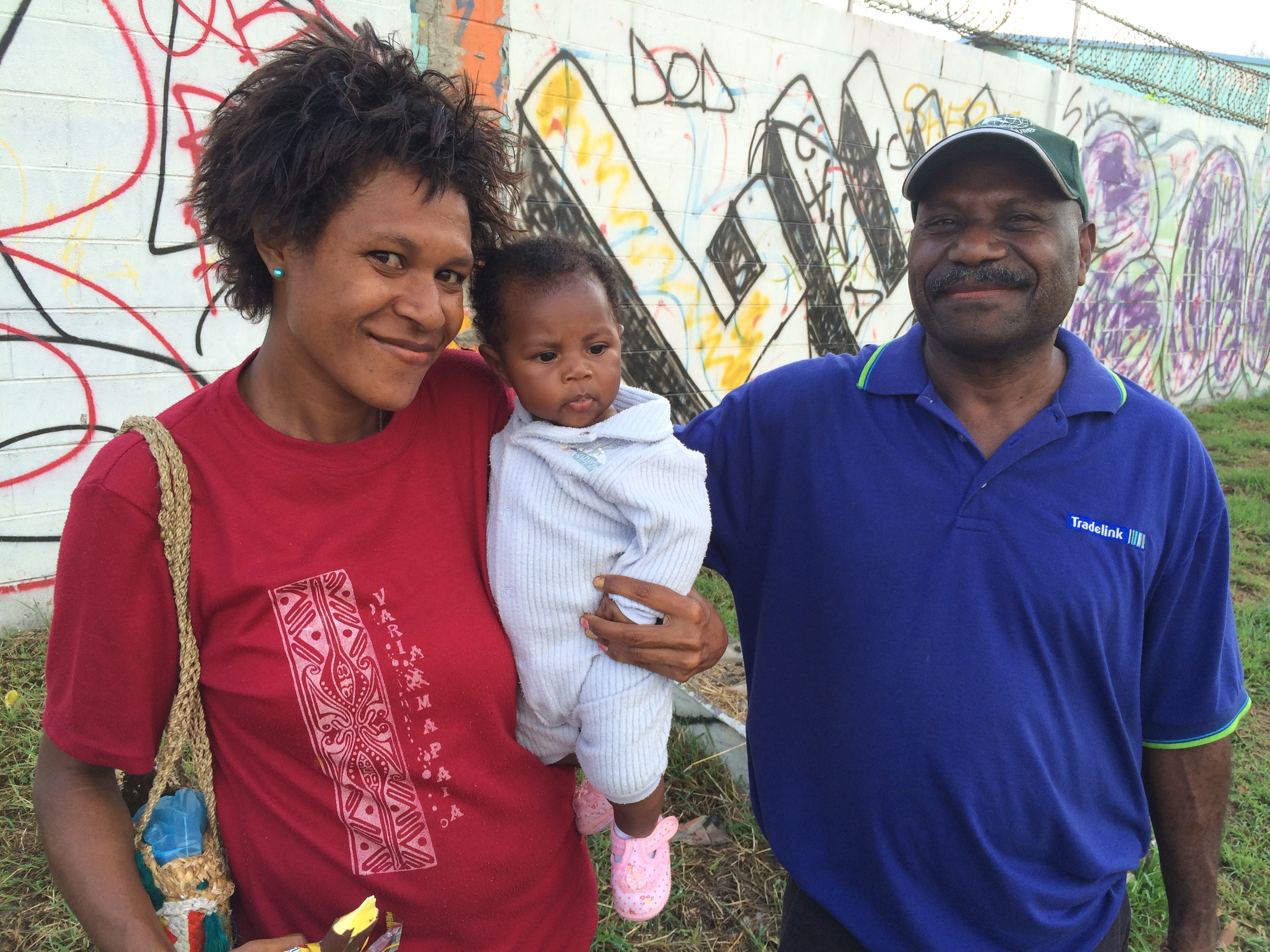 The opening headline in this year’s Annual Letter from Bill and Melinda Gates outlines their reasons for betting there will be greater progress in reducing child deaths (improving child survival) in the next 15 years than was the case in the last 25 years.
It is a well presented argument, and you can read it here.
This is not just going to happen with an extra sprinkle of fairy dust. As I write this, thousands upon thousands of people are working in difficult conditions in unheard-of, remote locations to help make this a reality: to improve the delivery of child survival.
This blog is about a journey called the 10 City Bridge Run which started by asking a question: “what can we practically do to make a difference?” That question matured to become “how might we use our networks to improve the delivery of child survival?” The question will be addressed through a conversation unfolding next month involving a series of Design Forum beginning in Osaka.
You can get involved, and it is free! So why not sign up. You don’t need to be in Osaka. There is also a free, online course to provide an introduction to Design Thinking which has been offered by Acumen Fund/IDEO which will help to frame this question. Participation is free, and you can get involved without any qualification. So why don’t you?
It is great as we prepare to engage with this question about child survival to have a document which so readily frames the issue for us. Please take a read of the first few pages of the Gates Annual Letter.
We are really going to have this conversation. And we intend to have impact. The question is, will you join us?
Sign up for the Introduction to Design Thinking here.
Sign up for the Osaka Design Forum here.
Blueprint For Change
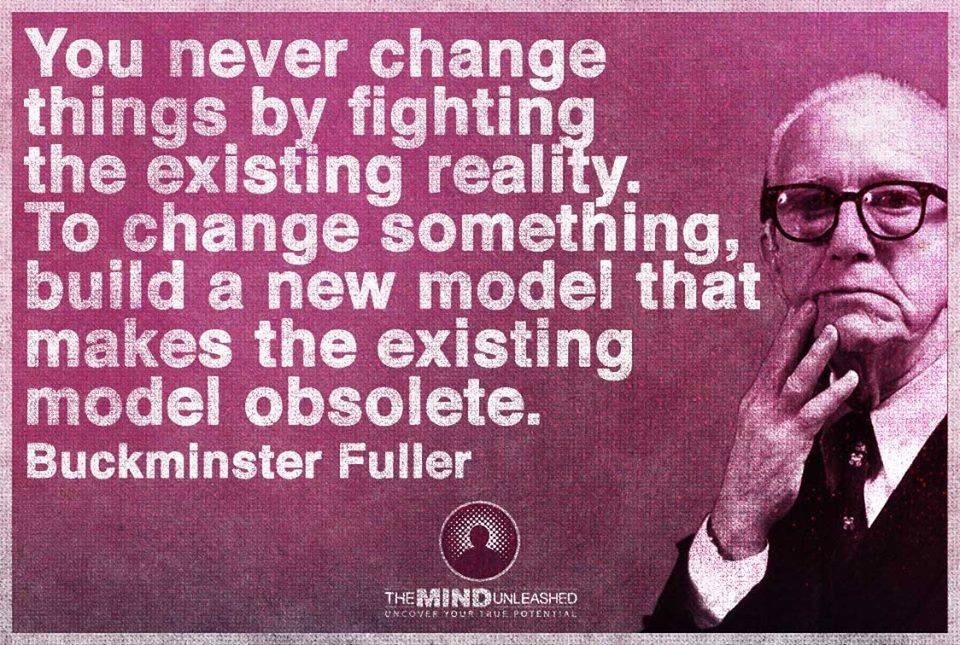 Why bother? I mean, can’t we all just sit back and relax now? Isn’t the crisis over?
In their Annual Letter published this year, Bill and Melinda Gates set the scene by betting that there would be greater progress to end extreme poverty than in the previous 15 years. And they are probably right. All indications point toward this as an outcome, and their keen interest over the last 15 years would suggest that this is actually a well-tested assumption rather than an idle wager.
Progress is good, and the message from Bill and Melinda Gates is positive. Are we out of the woods yet? Does that mean the crisis is over?
The 2014 Bill and Melinda Gates Annual Letter framed the issue of child mortality as one of three key areas where they sought to dispel myths that they rightly claim are held about addressing global poverty. At the beginning of the document, they wrote how they were “disgusted” by child mortality.
Other people have used equally strong language. Tony Lake the Executive Director of UNICEF described child mortality in 2012 as a “moral obscenity” and a “moral abomination”.
What does this mean for the 10 City Bridge Run, a citizen-led initiative to open a conversation asking “how might we use our networks to improve the delivery of child survival?” Is the war over, and we didn’t hear the news? Isn’t it all over bar the shouting? After all, Bill and Melinda Gates have spoken.
We should see the current situation as the end of a beginning, and the beginning of the end. We are now riding the waves of change. There has never been a more critical time to convene the Design Forum which will unfold this conversation about child survival than now. There is political will, institutional interest, a wealth of information, technology and the ability to communicate is better than ever, and along with increasing developments in medicine and infrastructure.
The Design Forum is not a silver bullet. And in a relative sense, together we are a minnow in an ocean of information and activity. But we are part of a much larger connected effort. And that is why this is important as a conversation. We have a real part to play, and as that conversation takes shape, it will become more obvious where we can best effect change.
The Design Forum which will commence in Osaka on 9 February is a blueprint for change for improving child survival. We are not reinventing the wheel, but drawing upon the experience and networks of others to amplify our intention. And we need your voice to help make that possible.
The Dali Lama has a quote which I like:
“If you think you are too small to make a difference, then try sleeping with a mosquito.”
We are about to begin the series of Design Forum. You can join in at any time, but why not begin with us at the beginning. We are starting by asking how might we Design the Design Forum. This will be an event in Osaka to draw upon best practice, and examine how we can organise to be effective in making a difference. The first Design Firum in Osaka convenes concurrently with an Acumen Fund/IDEO free online, seven-week course which provides an introduction to Design Thinking. You can get involved. You will make a difference. So why not sign up? It is all free.
Sign up for the Introduction to Design Thinking here.
Sign up for the Osaka Design Forum here.
Looking forward to seeing you on the journey!
Osaka: Design Forum 1
 The first of a series of Design Forum addressing a question: “how might we use our networks to improve the delivery of child survival?” will be convened in Osaka on 9-10 February.
You are invited to participate, no matter how far away from Osaka you might live.
It is free to attend. You can register here.
On 9 February, join us in person or online at one of a number of scheduled video conferences where we will frame the Osaka event as “Designing the Design Forum”.
The Osaka forum will examine what is best practice in design and in convening a gathering. How might we best build bridges that matter, how can we involve others, how can we increase collaboration?
Some key initiatives that point the way to what works can be recently observed:
- Davos, The World Economic Forum
- Bill and Melinda Gates Annual Letter
- The recent ‘Your Turn Challenge’ from Seth Godin and his capable coworker Winnie
- and there are many other examples, and we want you to help explore this list and determine what we can learn, what we can replicate, and what we can take away.
It will be a humble beginning, wedded to a Acumen Fund/IDEO free, online, seven-week course to introduce the process of Design Thinking. Get involved with the course here.
10 February will be experiential by participating in HackOsaka to examine first-hand a hackathon in a different culture and language from that which most of us speak and know. Many people have been part of a hackathon at some point, but the big question will be how do we extend this to a context which out of necessity builds bridges with the other?
Child survival is the core issue, but this first Design Forum in Osaka will be about process. I hope you can be involved too!
On Becoming A Designer
 The Design Forum for the 10 City Bridge Run commences with getting equipped with the tools we are going to need for the journey ahead. The tools are about our networks, our creativity, and importantly engaging with those for whom this problem of child survival is a real and present issue. Additionally, one key tool is the process of Design Thinking using a framework of Human Centred Design.
Design Thinking is not new. It has been around for decades, if not centuries, but more recently it has been made more useable through the work of people like IDEO. There has been a revolution in design which focuses on the user, or the person with the problem.
The commencement of the first Design Forum aligns with a free, online, seven-week course run by the Acumen Fund and IDEO which I am inviting you to participate in to help frame the series of Design Forum. The course can be done through examining any design challenge, but I am proposing that people join to help address the question framing the 10 City Bridge Run: “how might we use our networks to improve the delivery of child survival?”
Here’s how to get involved. It’s simple, and you can do it without needing any special qualifications:
- Register here, or drop me a note saying you want to participate.
- Join or form a small group of between 2-6 people where you live, or work with me and others online for the conduct of the course. If you are forming a small group, you could meet in a coffee shop once a week. And if you are joining me online, I’ll make a schedule when we can connect by video-conference or Skype, or some other way to collaborate.
- Follow the course across the seven weeks exploring this question: “how might we use our networks to improve the delivery of child survival?” as together we work to ‘Design the Design Forum’.
At the end of the course in early April, not only will we have framed how these Design Forum might play out culminating in Seoul in October, but you will also receive a certificate to prove to the world that you have in fact become a Designer.
That is a worthwhile achievement for 2015! Please accept the invitation, and join us to frame the Design Forum.
There is no limitation on attendance. Please forward this link to others, and please especially ask them to join with us as we look at this question of improving child survival. Thanks in advance!
An Entry Somewhere Else

The Wharf Theatre on Sydney’s Hickson Road has a quote from Tom Stoppard writ large facing the audience as you exit the building via the front steps:
Every exit is an entry somewhere else.
The quote can be read as a message of optimism and hope. But it also shows the unrelenting cycle of beginnings and endings that make up our lives.
Some of these beginnings and endings are profound. Most are just ordinary. Profound or ordinary, they all matter.
I have been feeling a little overwhelmed at the task ahead of the Design Forum to follow. Not so much overwhelmed by the task, because this has been on my mind for some time now, and so I am very much looking forward to getting amongst it. So why overwhelmed?
Overwhelmed because of the impossible task that once again stands before us. Impossible because from where I am now looking into the future, the Design Forum is an impossible proposition because it requires a level of funding I don’t yet have, impossible because the scale of impact is vastly beyond my own capacity or reach, and impossible because the culmination of the series of the Design Forum will be a significantly stronger force than its humble beginnings in Osaka early in February.
Have you been there before? Asking ‘who am I really to be doing something like this?’ I am well aware of my own limitations, maybe more so after the 10 City Bridge Run where I ran a running stunt involving 10 sub-marathons each of 24 km in 10 cities across 10 countries as an epic quest to open a conversation asking “how might we use our networks to improve the delivery of child survival?”
Let’s reframe that question: given that I have the ability to do this through having conceived the idea no matter the difficulties that will be found ahead, who am I not to embark on the next leg of the journey?
Them words is fighting words.
But neither is this quest one of the heroic leader as a lone actor, an agent for the voice of the many. This is a quest for a collective. It is the heroes journey which calls on the agency of many heroes. And it is an invitation to everyone who wants to take the next steps together with me, with us.
I served in the Australian Army for many years. One experience which remains indelibly imprinted in my mind and psyche from my service was that of deploying together, either on operations or on exercise, as a unified force. The invitation is there to you now: will you fight along side me? Not everyone involved in a combat force carries a rifle and bayonet. The force is capable, diverse, and tight-knit.
What is your part in this quest of the Design Forum? Do you have a part? Maybe you don’t. But maybe you do, and if you do will you rise to the challenge of taking part in even a small way in the series of Design Forum that follows so that together we can make an impact on child survival?
The heroes journey is not for everyone. Many will turn away and stay in the comfort of The Ordinary World. I can’t make the decision for you. I can only extend the invitation.
Ahead, is a exit from The Ordinary World. An entry somewhere else. And you are invited.
Cometh the hour, Cometh the man.
 Building Bridges