Inspiration
The Inspiration That Comes From Self-Loathing
 It is time to continue this journey. The time to complete the last three runs has been far, far longer than I had anticipated, with great delays in between. A satisfying experience? Not really. In fact, not at all.
Let me rephrase that: it is time to continue the journey or to give it up.
My good friend gave me some good counsel earlier tis year. She said “look, all of this ambition is admirable, but you are not getting any younger. You can’t just wait forever. You really have to do it or give it up.” It wasn’t an ultimatum, it was good advice from a friend who cared.
And so I began. There have been plenty of mistakes along the way. Too many to mention. Stumbling forward in spite of myself, not really running in any heroic sense.
I avoided media earlier on because I knew deep down how pathetically inadequate my efforts were. I was hardly in a position to start, but at the same time had too much to lose by throwing my hands up and walking away. Besides, that is not my style.
And so I stumbled through this journey. Along the way a couple of friends unfriended me on Facebook over really petty stuff. Surprisingly, that took its toll as well. Was I just some misguided idiot?
And so I am now at that point, having been delayed in Seoul since my last run by almost a month now, and that run in Seoul taking place one month after I arrived. That is totally crazy.
This journey has always been ambitious. I never really appreciated how wildly ambitious it was at first. Would I have started if I knew this was going to be the trouble I would encounter? Hard to say.
The reality is that in the process of doing something, it changes you because of the fresh perspective you gain. Once changed, you can’t go back to how you were before. You see the world through fresh eyes, even if other people don’t.
In the midst of this, my brother died. Aren’t there more important things for me to be doing? Shouldn’t I play it safe? Return home to be with the family?
Besides which, how will I sustain this journey? Getting to Glasgow (my next city) is manageable, but flying home from New York (the final city) is well outside of my reach at the moment.
A friend asked me recently, how on earth did running have anything to do with child survival? Wouldn’t it just be better to raise money, or go any do some volunteer work somewhere, or just hold a gathering and talk about it? Why go to all this trouble?
It does remind me of the joke about the Irish swimmer who wanted to cross the English Channel. He made it two-thirds of the journey, and was so exhausted, he turned around and went back to where he bagan. It sounds like a stupid joke, but it actually makes sense. It is easier to stick with what you know than to go into unchartered waters.
Right now. I am about to dive back into those unchartered waters. It would be easier to go back to my brother’s funeral, but I really believe he would have wanted me to persevere. It was one of the things he admired in me.
What’s more is that my family are now almost expecting me to continue. My eulogy is prepared, and will be read by my sister. I think if I returned now, it would almost be a let-down, as much as everyone would be pleased to see me. It has the added benefit of giving people something to focus on in the post-funeral slump I would imagine too.
All of this at a time when an incredible event has rocked Sydney to the core. The strangest image just came across my Facebook feed. It was a friend taking a selfie in Martin Place with a steely look of resolve and some words about how sad we are all about the incident in Martin Place. Of course, he is right, but it is misplaced community spirit. We don’t need to wait for times of the worst to bring out the best in us.
And that is why I run. In my pathetically unfit, near broke, condition with no certainty of making it to the next city, let alone the end of the next lonely journey of 24km. I do it because I can, and we should. We should act now, today, and do what we can with what we have.
As I answered my friend, the running is important because more than just painting a narrative, I am seeing this journey afresh. I don’t mean this journey I am taking now, but the journey which you are all invited to participate in next year when we look to address this issue of child survival across a rolling series of Design Forum that stretch through the year.
Will we find answers? I don’t know, but none of us will know if we don’t try.
What I do know is that the investment in time has already paid off in terms of giving me fresh eyes to give this effort impact. That is a huge journey ahead next year, and I will be relying on all of the resourcefulness and guile that comes from this quest I am undertaking now, clumsily stumbling in the right direction, slowly but making progress.
The worst thing to do would be to wait until conditions are perfect because they never will be. Go now!
He’s Na Heavy. He’s Mi Brither
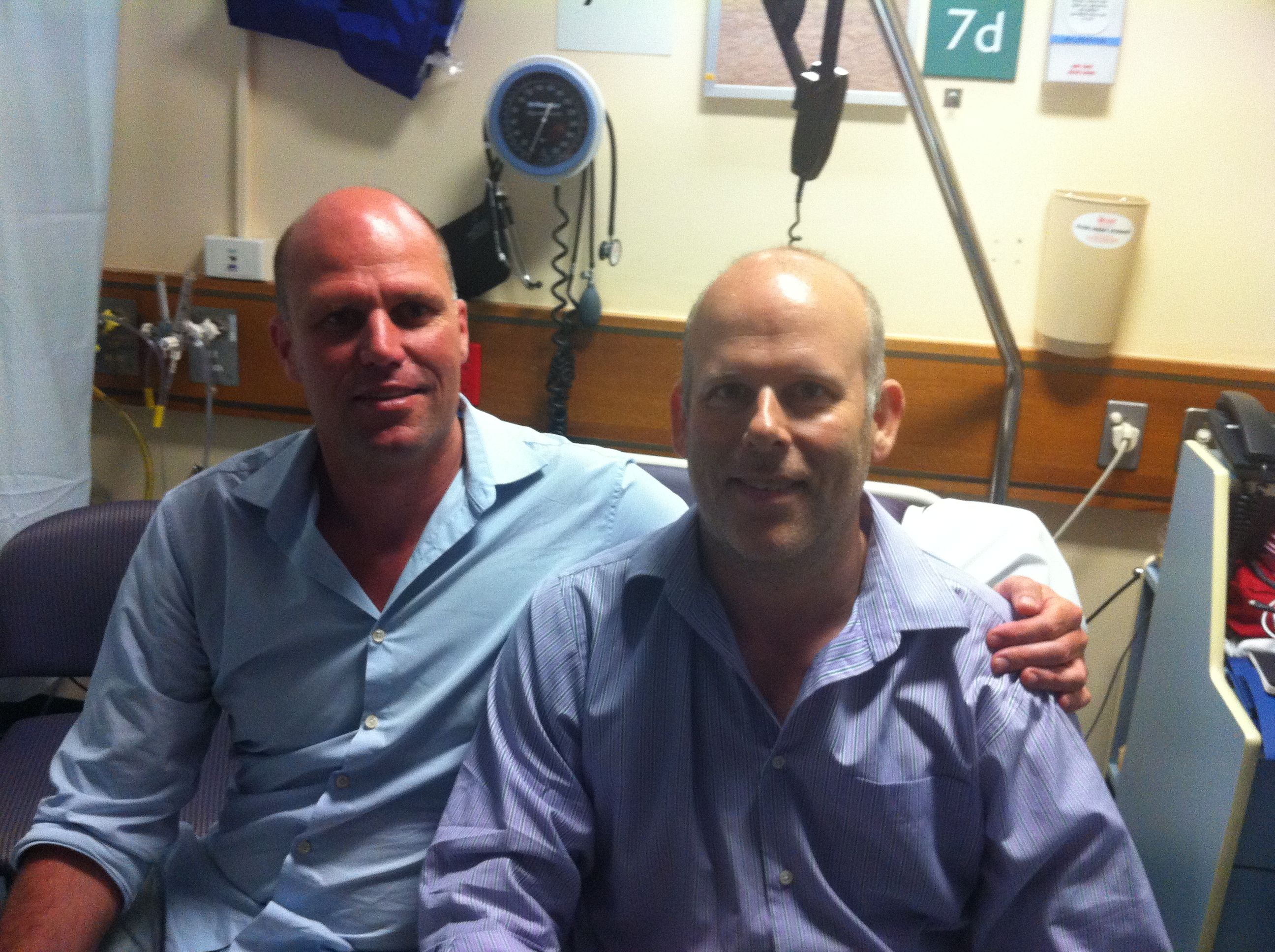 This song has been on my mind since my brother died.
There is a small dug-out bar which plays all of the classics on vinyl. It is located next to the cafe I was sitting in when my brother died. The night he died, I went into the cafe and requested this song while having a quiet beer thinking that there would be no more opportunities to do that with my brother himself.
While the original version is from The Hollies, I prefer this cover recorded in the wake of the Hillsborough tragedy.
Like we are seeing in Sydney now, loss and tragedy brings the best out in everyone.
The title for the song comes from a story first recorded in 1884 of a scene in Scotland of a little girl struggling with her brother who she is dragging up some stairs in a bag. Somehow appropriate given the situation I find myself in, especially as I have my sights to head to Glasgow next.
The lyrics for this song are lovely, and need no explanation. Please read them, and I think you will also know why this song resonates with me at the moment.
The road is long
With many a winding turn
That leads us to who knows where
Who knows where
But I’m strong
Strong enough to carry him
He ain’t heavy, he’s my brotherSo on we go
His welfare is of my concern
No burden is he to bear
We’ll get there
For I know
He would not encumber me
He ain’t heavy, he’s my brotherIf I’m laden at all
I’m laden with sadness
That everyone’s heart
Isn’t filled with the gladness
Of love for one anotherIt’s a long, long road
From which there is no return
While we’re on the way to there
Why not share?
And the load
Doesn’t weigh me down at all
He ain’t heavy, he’s my brotherHe’s my brother
He ain’t heavy, he’s my brother
He ain’t heavy, he’s my brother
Sorry Business
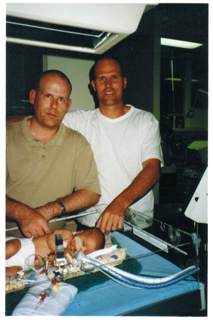
My brother, Stephen, died last week fairly suddenly following what could best be described as complications associated with leukaemia. Stephen had faced every challenge thrown at him head on with impressive courage.
I was in Seoul when my mother told me he was admitted into hospital at the beginning of last week. I asked him if I should return immediately to see him in Melbourne, and he responded in his typically stoic and pragmatic manner: “No, don’t come back. Stay there and keep doing what you are doing.”
My brother and I shared a mutual admiration, which we showed in ways that other people might not recognise. His words to me were his way of showing not just that he valued what I was doing, but that he was proud of me for having the courage to set out on an uncertain journey.
This uncertain journey has become an epic quest which is called the 10 City Bridge Run, and framed around a stunt where I am running 10 sub-marathons each of 24 km in 10 cities across 10 countries. The point of the stunt is to open a conversation asking: “how might we use our networks to improve the delivery of child survival?”
The question of child survival was always a very personal matter for my brother and I. Together, we carried the small white coffin of his baby son Xander out of the church following his funeral when he had died of medical complications after living a short life of 36 hours.
Similarly, I learnt of the amazing ability of medicine to combat a disease like leukaemia after my brother was first diagnosed two years ago. Conversely, I saw the way disease can take its toll through my brothers death. The human body is remarkably resilient, and remarkably fragile both at the same time.
My good friend Gloria is a wonderful Aboriginal lady who has taught me a lot about Indigenous culture. We have been involved on a number of work tasks together where Aboriginal culture was the central issue driving the project.
She wrote me a lovely note in the wake of my brother’s death, and passed on her regards “as I went about my sorry business with my family” to use her words.
I responded with thanks, acknowledging her comment about sorry business, but still thinking it was more akin to a mourning period rather than something that you actually do. For all of the conversations I have had with many Indigenous friends over the years, the penny hadn’t dropped.
I think she understood, because she wrote back the next day with an unsolicited, lovely comment:
Trust your intuition cause whatever you do to respect his memory will be the right thing to do Matt. You will know what to do for sorry business
It was a remarkable note, because I was wanting to make sense of my brother’s final words to me and it seemed at the time that the journey I was on was an appropriate way to honour my brother’s legacy. I began to see that my eulogy was to be action-orientated.
Gloria’s words didn’t persuade me either way, but they did frame my thoughts in a way that was helpful.
I contacted my family to talk about what I ought to do. This wasn’t a decision I was going to make independently or in isolation. They immediately understood exactly why I was thinking to do this and supported me entirely.
Now, I am writing this post from Seoul ahead of my brother’s funeral on Friday. I will remain in Seoul at that time, and go and sit quietly in the small cafe where I was when he died. It is a friendly place whose owners I know well and has good wifi. Just as I was able to be connected to my brother at the time of his death, I will also be able to be connected to my family at the time of his funeral.
After the funeral, I expect I will go and have a quiet meal somewhere with a few friends, and then set about recommencing my journey first headed towards Glasgow. It would be my intention to gather for a wake in New York after completing this journey, and be back in Melbourne in time to celebrate the New Year with my mother.
I wanted to write this here, both as a way of picking up the journey which was gone a bit silent over the last few weeks as I looked for inspiration for the way ahead, but also to explain why I chose to continue at a time when social expectation might be for me to return to be with my family at the funeral.
I know my brother would approve and admire my determination to persist, so that together we can make a difference to the lives of many.
Son Kee-chung: Unknown Hero Making Incredible Things Possible
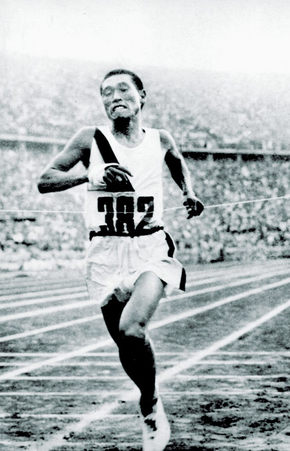 Son Kee-chung is among the all-time world’s running greats. And he is almost unknown outside of Korea.
Why is he so significant? He smashed the existing world record in 1935 for marathon running 2:26:14, beating the previous record which had stood for the previous 10 years. After setting the record in 1935, it stood for another 12 years until one of his trainees set a new time at the Boston Marathon in 1947.
Son Kee-chung is best known for winning the marathon at the 1936 Berlin Olympics where he ran under the Japanese flag because of the colonial annexation of Korea in 1910. Defiantly, at the medal ceremony, Son Kee-chung sought conceal the Japanese flag on his uniform and remains a political act of Korean patriotism that continues to be widely celebrated in Korea.
He went on to become an exceptional coach, not only training Suh Yun-bok for his 1947 win, but also ensuring first, second and third places to Korea in the 1950 Boston Marathon, as well as Hwang Young-cho who won gold for South Korea after winning the marathon at the 1982 Barcelona Olympics.
His legacy is one of inspiration. Visiting Son Kee-chung’s old primary school in Seoul that has been turned into a Memorial Centre, the Manager summed up Son Kee-chung’s legacy in one word as: “challenge”.
It is the adaption of a quote from Son Kee-chung that inspires the theme of a human bridge for the book Life Bridge which will help to illustrate the importance of our connections in overcoming challenges. Son Kee-chung said, and I have adapted the words to replace his mention of ‘the human body’ with ‘the human bridge’:
The human bridge makes incredible things possible when supported by strong commitment and passion.
I will be running the seventh leg of the 10 City Bridge Run here in Seoul on this Sunday at the Son Kee-chung Marathon event.
- ← Previous
- 1
- …
- 9
- 10
 Building Bridges