United Nations
8 Days to Go: 8 MDG. MDG 1- Eradicate Extreme Poverty and Hunger

Eight days to go until the first run on 14 October commencing the 10 City Bridge Run!
I thought it might be timely to revisit the Millennium Development Goals and try to shed some light on where progress is occurring. More importantly, also examine where the shortfall might occur on 2015.
Millennium Develop Goal 1: Eradicate Extreme Poverty and Hunger
There are three targets under this goal:
- Halve, between 1990 and 2015, the proportion of people whose income is less than $1 a day
- Achieve full and productive employment and decent work for all, including women and young people
- Halve, between 1990 and 2015, the proportion of people who suffer from hunger
Conflict and the global financial crisis is cited as the reason for a disappointing backsliding in some of the progress last decade. Some comments from the United Nations of progress are:
- The global economic crisis has slowed progress, but the world is still on track to meet the poverty reduction target
- Prior to the crisis, the depth of poverty had diminished in almost every region
- Deterioration of the labour market, triggered by the economic crisis, has resulted in a decline in employment
- As jobs were lost, more workers have been forced into vulnerable employment
- Since the economic crisis, more workers find themselves and their families living in extreme poverty
- Hunger may have spiked in 2009, one of the many dire consequences of the global food and financial crises
- Progress to end hunger has been stymied in most regions
- Despite some progress, one in four children in the developing world are still underweight
- Children in rural areas are nearly twice as likely to be underweight as those in urban areas
- In some regions, the prevalence of underweight children is dramatically higher among the poor
- Over 42 million people have been uprooted by conflict or persecution
The one thought I want you to consider today
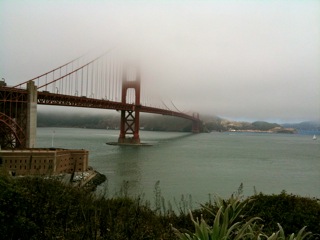
Where does the time go?!
Dear reader, thanks for your patience- it has been now about a week since I made my last post. A lot has happened in that time, and many ideas and thoughts to write about. I will endeavour to share some of that with you later today, but not everything at once.
A few updates about the 10 City Bridge Run.
Firstly, I’m pleased to say that enough funding through sponsorship has been received to make this endeavour possible, that is to commence the journey. While the first hurdle is cleared, there is still a fair distance down the track to cover.
Secondly, a quick note about date changes. The date for the commencement of the 10 City bridge Run has now slipped twice. I want to be open about the planning to share with you the challenges and difficulties I am encountering. I think to present the vulnerabilities and uncertainties, for all its lumpiness is important in learning to take the crunchy with the smooth as Billy Bragg might say. Let’s be clear that this is an ambitious and difficult venture with a deliberate tagline of “Is the seemingly impossible possible?” At the same time, for as much of the experiential learning that might come from this to mirror an understanding of the challenges to eradicate extreme poverty, it also should be acknowledged that there is a difference between the two. We all have a choice to some degree of what difficulties that come into our lives: those in extreme poverty do not.
The reasons for the date changes relate to a number of issues. The most significant is the clearance of funding through PayPal. This issue has been resolved, although may still have some impact on successfully initiating the run on 8 October. Make no mistake: the run is going ahead, and the objective to present a pictorial petition to the G20 Summit remains a key outcome.
There are two institutional events framing this initiative- two bridge supports if you like. The United Nations Conference which commenced on 20 September and the G20 Summit in November. The last date to commence the running is 14 October should the time need to slip another few days. This would involve an (already identified) curatorial team in Seoul compiling the petition and presenting it to the G20 Summit on our behalf prior to the last leg of the 10 City Bridge Run coinciding in Seoul with the last day of the G20 Summit.
Please let me know if you have any thoughts about how the 10 City Bridge Run might be better organised, communicated and presented. I am particularly interested to know what your response is to the changing of dates. If it frustrates you or disappoints you, if you feel let down or if it challenges your confidence, or if you see this as an unwanted but inevitable part of attempting something that is difficult. Or maybe you are happy to just watch it unfold without having an opinion- that is fine as well.
Just a thought from me I ask you to consider: if you are disappointed by these date changes which have minor consequences apart from how to organise the delivery of the petition, how did you feel after the United Nations Climate Change Conference in Copenhagen, and how will you react in 2015 when the United Nations is called to report on the Millennium Development Goals?
New York- UN MDG Summit Offers Hope
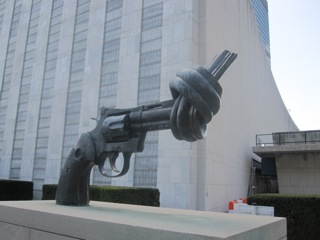
This week in New York, a United Nations Millennium Development Goals Summit is underway.
10 years after the Millennium Development Goals were first announced, this is an opportunity for the world leaders of 150 countries to come together and review progress.
Australia is represented by our Foreign Minister, Kevin Rudd.
What can we expect from this conference? The news bulletins have rung with the sounds of billions of dollars expenditure, and initiatives for improving education, health and eradicating poverty. What happens once the bureaucrats and politicians have finished on Wednesday? Is it really that easy to solve extreme poverty?
Translating the media spin into meaningful action is important. But it is good this Summit is being received with such optimism offering a hopeful future. A big change from Copenhagen.
See what AusAID, Australia’s Aid Program had to say here.
Please support the 10 City Bridge Run to highlight small actions which will make a big difference in showing that the impossible can be possible. Please sponsor me with $24 here.
10 City Bridge Run- Objectives 1, 2, 3.
There are three objectives for the 10 City Bridge Run:
- Raise the awareness of an individual’s capacity to act to positively influence the eradication of extreme poverty from our world.
- Make representation of a global ‘pictorial petition’ to the G20 leadership at the 2010 G20 Summit to be held in Seoul as well as to the United Nations Secretary General. The ‘pictorial petition’ will be in the form of a book featuring 24,000 photographs of people as ‘bridge builders’- connecting with each other symbolically to raise the awareness of this issue.
- Identify 10 actionable items which people across the globe can participate in which will make a difference over the next five years to help in the eradication of extreme poverty. These action items are not pre-determined, and will be arrived through a crowd-sourcing process during the month of running.
Join us on the journey: be part of the difference that makes a difference.
Inspiration…why do this to yourself?!

What has most shaped me to want to commit to the 10 City Bridge Run?
The idea for the 10 City Bridge Run was thought of and developed by myself (Matt Jones). My experience running a similar event called the 9 City Bridge Run last year left me with a sense of responsibility from the lessons I learnt to do something meaningful with that knowledge in 2010 which over time emerged into the 10 City Bridge Run.
My outlook in relation to this project has been largely influenced by my experience through my previous extensive service as an Australian Army Officer. This is broad and includes encounters with ‘unseen’ neglected and dilapidated Indigenous communities in Central Australia during the late 1980‘s, and later deployment on Active Service in East Timor seeing the often wasted efforts of a number of inefficient charity projects aside good examples of well run government and charity interventions.
Additionally later responsibilities as Desk Officer standing up and managing Australian Army response to the 2004 Aceh Tsunami relief effort showed the incredible power of media and the ‘fund raising industry’ to reap focused attention and financial contributions globally. The level of accountability following such efforts is often overlooked, along with less glamorous, unaddressed, longer-term, systemic issues which fail to have the capacity to ‘sell’ themselves. In these circumstances I witnessed the awesome efficiency by which the corporate machine is able to mobilise brand, but sadly often with disturbingly very little real impact on the ground to boast about other than a handful of photographs and well conducted fund raising efforts.
While this might seem overly critical, having worked in support of the United Nations in different capacities while serving in the Army I am concerned about the likely outcome of the Millennium Development Goals (MDG) due to be reported on in 2015.
Jeffrey Sachs in his book The End of Poverty paints a picture where the eradication of extreme poverty might be possible to achieve by 2025, which is to some degree based on the successful achievement of the MDG in 2015.
Can we be sure that the necessary attention can be maintained by countries and institutions to achieve this? The influence of the global financial crisis is likely to be disruptive, and the outcome of Copenhagen last year was not a promising indicator.
Meanwhile, every day children continue to suffer and die as a result of the conditions of extreme poverty they are borne into. What can we do to change this?
Is giving more money enough? Should we start up more ‘not for profit’ organisations with a focus to eradicate poverty? Should we turn our backs on the situation? What will it take to move action forward on the MDG? Will a conference of leaders in New York this September cut it?
I recently conducted in person an informal survey of contacts I met across five countries between March and May this year. I was surprised that most people had never heard of these MDG. Even so, every person I spoke with was fully engaged when presented with the statistics on child mortality.
I contend that action needs to come from the global community, with people acting as bridge builders. What might this look like? I am not sure, but through the 10 City Bridge Run I intend to stimulate discussion to identify a crowd-sourced list of 10 actionable items that people can engage in to make a difference. Is this naive? Possibly, but nothing ventured, nothing changed. Two-thirds into the first time period for reporting on the MDG, progress is slow and maybe falling short. Maybe it is naive not to try all options which we are presented with, regardless how facile they might seem.
The significant output from the 10 City Bridge Run will be a book published featuring the photos of 24,000 ‘bridge builders’- people who are building a bridge between themselves and another- which will be presented to the G20 leadership as a pictorial petition.
Maybe you have a different view. Go ahead and prove me wrong, or give me a better option. I start running in 19 days.
United Nations Millennium Development Goals
2015 marks an important time horizon for the United Nations: reporting on the achievement of the Millennium Development Goals (MDG). These are eight international development goals that all 192 United Nations member states and at least 23 international organisations agreed to achieve by the year 2015.
Speculation exists whether this will be possible. Is it time to make excuses and analyse “what went wrong”, or is now the time to create massive change and set a determined course to achieve the goals successfully?
Talk alone will not have the necessary effect. How is it possible to translate this objective from the United Nations in New York into meaningful actions which we as a global community can engage in?
With only five years left until the 2015 deadline to achieve the MDG, the United Nations Secretary-General Ban Ki-moon has called on world leaders to attend a summit in New York on 20-22 September 2010 to accelerate progress towards these goals.
I recently conducted an informal survey of contacts I met across five countries between March and May this year. I was surprised that most people had never heard of these MDG. Even so, every person I spoke with was fully engaged when presented with the statistics on child mortality.
What will it take to move action forward on the MDG? Will a conference of leaders in New York this September cut it?
I contend that action needs to come from the global community, with people acting as bridge builders. What might this look like? I am not sure, but through the 10 City Bridge Run I intend to stimulate discussion to identify a crowd-sourced list of 10 actionable items that people can engage in to make a difference. Is this naive? Possibly, but nothing ventured, nothing changed. Two-thirds into the first time period for reporting on the MDG, progress is slow and maybe falling short. Maybe it is naive not to try all options which we are presented with, regardless how facile they might seem.
For my previous experience with the Australian Army assisting in Timor Leste and later in the wake of the 2004 Tsunami, my instinct says that just giving money and leaving it to the bureaucrats is not the answer. It will help, but there has to be more we can do.
What do you think?
24,000 children died today, and yesterday, and will also tomorrow…
UNICEF reported in 2009 that 8.8 million children under the age of five died during 2008. Tragically this would be the same as 24,000 children dying every single day. For comparison, it is worth noting the stark contrast that 50% of these deaths occurred in sub-Saharan Africa while only 0.1% occur in the “Industrialised Countries”.
UNICEF, the United Nations funding agency for the relief of children in need, is a reliable source of information. In their November 2009 publication The State of the World’s Children Special Edition: Celebrating 20 Years of the Convention on the Rights of the Child gives insight into how different the lives of others can be, and how great their need can be often in comparison to our own. For example, UNICEF report that in 2008:
- 2.5 billion people lacked access to improved sanitation
- 1 billion children were deprived of one or more services essential to survival and development
- 148 million children under the age of five in developing regions were underweight for their age
- 101 million children were not attending primary school, with more girls than boys missing out
- 22 million infants were not protected from diseases by routine immunisation
- 4 million newborn babies worldwide died in the first month of life
- 2 million children under 15 years of age were living with HIV
- 8.8 million children under the age of five died, equivalent to more than 24,000 children dying daily
- 500,000 women died from causes related to pregnancy and childbirth
(Source: UNICEF The State of the World’s Children Special Edition: Celebrating 20 Years of the Convention on the Rights of the Child, November 2009, p.18-19)
Anup Shah produces a website with much of this information presented clearly for easy reading and can be found here.
How should we respond to this information? Shock, disbelief, vigilance, anger, compassion, sadness?
Maybe the bigger question is what are we prepared to do about it.
- ← Previous
- 1
- 2
 Building Bridges