Inspiration
The Small Things
Ok, here is a question for some discussion. Why is it necessary to do a ridiculous running stunt in order to open a conversation about child survival?
Are either of these two even necessary? Does it necessarily follow that by embarking on an ambitious running stunt that it will have enough significance as to open a meaningful conversation? Or to put it another way, would the resources of time, effort and money be better spent in organisation this conversation? And secondly, is this conversation about child survival even necessary, given that there is so much discussion on the world’s stage through institutions such as the United Nations about the issue of Sustainable Development Goals?
Again, to add to the conversation here I’m going to refer to the Brazilian philosopher Roberto Unger as I did in my previous two posts, and again take his writing slightly out of context but in such a way so that it still has a useful application.
Unger’s writing warns us of what he refers to as the ‘illusion of false necessity’, which is to say that a model or way of seeing is so structurally strict that it doesn’t allow the occurrence of any other adjacent possibilities. The question I am asking here is whether I have become fixated on the running stunt at the expense of the task itself?
I can see that there are better ways of going about the journey I have travelled to date, but I am also mindful of the richness of experience that came through the hardship and new horizons that I encountered during this quest. Without that hardship and expanded horizon, my awareness as to what is possible would be stunted and limited which would not be in the service of the task.
Retrospectively, it would be possible to see where I got it wrong and how I could do it better. That is a process called learning. Without the advice from others or my own experience, I must first explore and discover to find out.
I think it has been necessary because the closer I get to this conversation about child survival, the more I am aware of how enormous the body of work and experience that already exists. We should not be aiming at reinventing the wheel, but rather learning from experience to make a useful contribution.
Getting this process right I believe is a balance between the stunt and the conversation. I don’t believe I have succeeded there to date, and that is why I am again lining up for first a rehearsal exercise in March to work out how to do this most effectively ahead of a final push where we hope to bring this conversation to a head in September and October next year.
And there is a paradox in terms of what I am seeking to achieve from all of this. Again, my old school mate Phil prompted me to consider this yesterday by asking whether there might be some simple and small things that we could be doing that of themselves would have a disproportionate impact to improve child survival. I don’t know what those things are. And to be honest, I’m not sure whether for all of the conferences that have been held around the globe to date that we have really cracked this code.
It is an audacious claim, to the point of arrogance, that I propose that through these Design Forum next year we might unlock new potential to reduce child survival. Why wouldn’t that be the case? Breakthroughs happen all the time in many different fields, and not always by the ‘experts’ or the institutional gatekeepers. What is almost without doubt is that the answers, if we can find them, will be found from engaging with people who are most affected by the problem. We will need to draw upon a broad network to find out those things that we don’t know and then through a process of design thinking put together this information to potential arrive at new solutions to make a difference.
There are game changing ideas to be found. Unger declares in his writing that “deep transformations can begin in small initiatives.” So why shouldn’t we believe in the efficacy of what we are trying to achieve? What have we got to lose by trying?
My mate Phil pointed out that it is probably in the small things where a solution that will create a tipping point could be found. What if in the process of conducting these Design Forum we could unlock 10 small but important actions that through the combination of these being applied together they have a game changing impact?
The irony is that to find these small things, I’m proposing to do a very big stunt. Let’s hope it is a worthwhile exercise. We are seeking some simple and small things. Small interventions, which by their application can address the question “how might we use our networks to improve the delivery of child survival?”
It’s the small things that matter.
Turning Point Or Tipping Point?
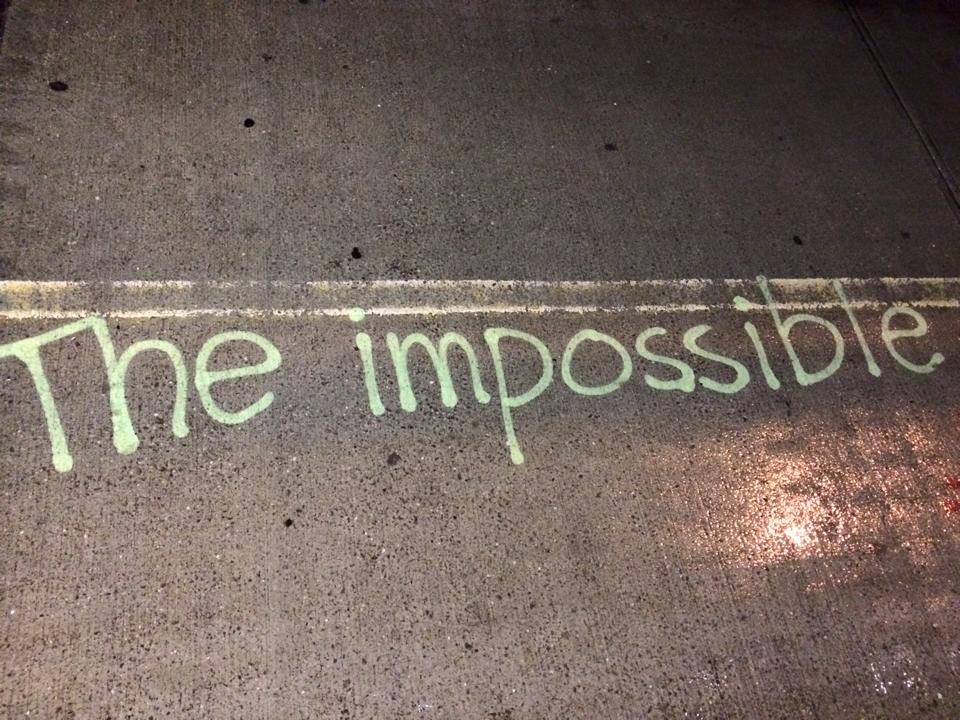
December marks the exhibition of my next public art work as part of a themed exhibition at the local gallery titled ‘Turning Point’. Turning Point is deliciously open to interpretation. Maybe your imagination begins considering a change of direction, then a change of season, a rite of passage, a traumatic event, a particular moment in time. Let your mind wander for a few moments and consider the possibilities.
I will be creating a work drawing upon my journey towards achieving this quest to improve child survival. My first submission to the curator was challenged with some great questions, and I have refined where and what the Turning Point means for me.
The work will be titled ‘The Next Step’, and points to 100 moments in my journey to date, any of which could be ‘the turning point’. The point of the work is that none of those moments, or neither the complete whole story told through this narrative of the 100 photos, is of itself the Turning Point. The Turning Point remains an elusive moment represented by the realisation of the collaborative effort necessary for this task of addressing how we might use our networks to deliver on the promise to improve child survival to be addressed. The Turning Point won’t be the completion of the journey. Far from it. The Turning Point will be the beginning of a new chapter in this journey, and only made possible by my efforts that were often inadequate at best in the past.
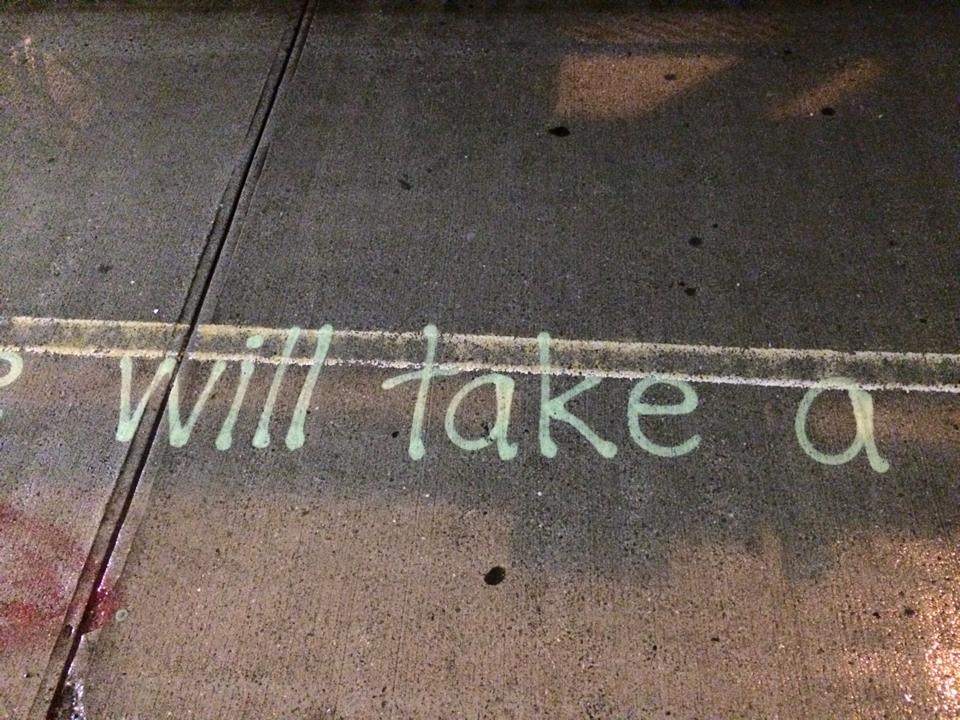 The work points to the hope that comes about from action, an action that is arrived at by being unreasonable in an ambition for change, and change that can only occur with radical collaboration with others. To achieve this Turning Point, it is necessary for us to take The Next Step, together.
Let me just explain how these 100 photos will be presented, because it is important to understanding a nuance in this work. They will form a 10 x 10 matrix in which the photos are close together, but not joined. Each moment is separate from the others, but at the same time part of a bigger journey. If a picture tells a thousand words, then this will speak volumes.
As I create the idea of work in my mind, I am becoming aware that somehow this gridded matrix of 100 photos will be bookended either side by two discrete grids, both also containing 100 tiles across the same 10 x 10 matrix. Every tile or photo will be the same dimension: 10 cm x 10 cm, and the two bookended grids will be empty containing no photos at the beginning of this work.
 Throughout the duration of the exhibition, these two adjacent grids will slowly take form. Photos will be added to each of the 100 tiles in each, ending up with three grids each containing 100 photos. 300 photos in all.
One of these adjacent grids will take the form of the 100 Champions of Change that I am seeking from the broader global community. People can nominate themselves, or even share the invitation to their networks. This is not just assembling a list of monitors to help with a project, but is an exercise that is rich with possibility. Who would we, from our small corner in Auburn of this expansive global community, like to see represented in this collective of Champions of Change? Is the request even too ambitious itself?
Seeking this participation of 100 Champions of Change to be assembled during the life of this art work draws upon another favourite quote from the Brazilian philosopher Roberto Unger who I referred to in my post yesterday titled “Hope Is The Consequence Of Action” . “To establish a transformative imagination at the centre of our understanding of society” is the task which Unger speaks boldly about. This art work is not just about my efforts and perspective during this project, but it demands the participation of others to be complete. That is risky. That is reality.
The other grid of 100 tiles will also begin absent of photos, and during the life of the exhibition will come to represent the 100 photos of human bridges that will comprise the photo essay to be featured in the book Life Bridge that is central to the completion of the 10 City Bridge Run. This will also be a co-created process, inviting people to contribute, and encouraging people to help assemble a wondrous deck of photos to tell this story of a human bridge drawn from people across the globe. Will we settle for less, or will we seek to attract an awesome collection of 100 photos of human bridges that will defy what the imagination at present even believes is possible?
It is the beginning of a conversation. It is both a statement and an invitation to collaborate.
A good mate today reminded me of the book ‘The Tipping Point’ by Malcolm Gladwell. Our friendship goes back literally decades. It was with two of our classmates from school that the kernel of this epic quest began. The journey has taken a completely different direction from the discussion of that evening, but it does go to further illustrate where we identify a Turning Point. Phil’s point is a good one, and I think that the Turning Point and the Tipping Point for this epic quest will be reached at the same time.
Hope Is The Consequence Of Action
 This has been a time of inspiration. Perhaps this is unwarranted, because it also has felt like a time when the sands of opportunity seemed to be avoiding my grasp as they slipped away through my fingers.
Trying something, and it not working. It is a very common experience. A quintessentially human experience. Is it strange that we have forgotten all of the failures from the early years of life during a time when walking might have seem to have been an impossibility? Perhaps it is stranger that we can get so hung up on a point in time when it would appear a plan has ended in failure. Not that we can remember, but if we were to think back to childhood, we would know that through perseverance we would eventually overcome.
I’ve been caught up in the words of a Brazilian philosopher called Roberto Unger recently. The title of this blog comes from a quote of his that I like:
“Change requires neither saintliness nor genius. What it does require is the conviction of the incomparable value of life. Nothing should matter more to us than the attempt to grasp our life while we have it, and to awaken from the slumber of routine, of compromise and prostration, so that we may die only once. Hope is not the condition or cause of action. Hope is the consequence of action. And those who fail in hope should act, practically or conceptually, so that they may hope.”
This post is an update about an epic quest I undertook in 2010 and have yet to complete. I called that quest the 10 City Bridge Run. The purpose of the quest was to address an ambitious question through a conversation asking: “how might we use our networks to improve the delivery of child survival?” The method was all the more ambitious to the point of ridiculous: I proposed a stunt to highlight the conversation about child survival where I would run 10 sub-marathons each of 24 km in 10 cities across 10 countries.
Long story short, I have completed the stunt, but not yet done justice to the conversation. And in between these two events there is a book I am yet to publish and send to my supporters. That book is to be called Life Bridge, and will feature a photo essay with 100 pictures of human bridges to illustrate that it is through our connections that change can take place.
I am very aware of ways this could have been simpler, or ways the execution to date could have been more effective. It has been lumpy in parts, but that too is part of the journey.
And so that brings me to this point about failure, about inspiration, and about hope where I began the post. A reasonable person would at this point in time cut their losses and apologise saying that it was all too much trouble, and that they were not up to the task. As I write that, I know that I cannot accept this as failure, and hear the words of George Bernard Shaw. You know the ones: “the unreasonable man persists in trying to adapt the world to himself.”
And so yes, I have been staring down failure as I interpret what this journey has meant.
Staring down failure because there is inspiration. Inspiration from the fresh initiative called the Sustainable Development Goals which will replace the United Nations Millennium Development Goals when they expire at the end of this year. Inspiration because I know there is purpose in holding this conversation, and that hardship is part and parcel of trying to achieve difficult things. And inspiration from a conversation I had in Newcastle recently where someone challenged me to look again at what I had achieved.
Let me explain this incident from Newcastle briefly. Back in 2009, I ran what was the initiative that preceded this 10 City Bridge Run initiative. In 2009, I called it the 9 City Bridge Run, and it was undertaken in response to the suicides of many friends as an effort to show that resilience and community wellbeing could be counterpoints to the conversation that was prevalent about depression and suicide. Long story short, that journey was personally a success, but a complete failure in attempting to have some impact on an issue which I considered to be important.
Unger refreshingly argues that change can be piecemeal, fragmentary, gradual and experimental. His words help to reframe our perspective: “we should not associate radical change with wholesale change, and gradual change with inconsequential change.”
The strength in Unger’s words to me is this: “To grasp what it can become” is necessary to embrace is we are to overcome the failure of structural imagination. To be sure, I have take Unger’s words out of the context they were written for, but I believe that remain entirely relevant to this situation.
And so from that conversation in Newcastle, I realised a few things. And this is where you come into the picture.
I realised that my efforts have been too much me pushing. As valiant as that might be, it leaves little room for the ‘us’ to truly collaborate on this epic quest.
I realised that concluding this quest through the publication of the book Life Bridge and the holding of a series of Design Forum to address this conversation about child survival required more input from others. It was possible, but it wasn’t just a matter of pushing harder from where I am now. I need to relent a little to invite others in to this space.
I also realised that what I achieved in 2009 and in the recent 10 City Bridge Run was worth exploring further. And this has pointed me to the next steps. And I’ll come to that shortly at the end of this blog.
Mao famously had a quote to ‘let a hundred flowers bloom’ which was actually a ruse to out the intellectuals within Chinese society so that their influence could be purged by “enticing the snakes out of their caves.” I think that Mao was definitely onto something. Not the crackdown of dissidents, but an openness to others being involved.
One of the last acts of the 10 City Bridge Run involved me delivering a letter to The Hon Julie Bishop MP, Australia’s Foreign Minister, asking her to be the champion for this initiative. Her staff replied in time, and I recorded a video when I was in Korea earlier this year just after receiving their message. Watch it below:
And this is where you come in. I’m asking for some help. I’m inviting 100 people to be our champions of change, to pick up the slack where Julie Bishop is unable to put her shoulder to the wheel. Returning to Unger, I note his words: “Great ideas are not beyond the reach of ordinary people.” So please note that I am looking for 100 champions of change, and you could be one. There will be more on that in a later blog post.
But here is the final comment, and the point of this blog post. Hope is the consequence of action. What I am proposing is to return to my initiative from 2009, and next year in March 2016, to run 16 runs in 16 towns across NSW in 16 successive day, and in each of those towns it is conducted where there is a group, individual or organisation that is prepared to host a Design Forum. The issue will be the same one I championed in 2009 which was to address the taboo issue of depression and suicide. The reason for this activity in March is to provide a rehearsal for the big event in September/October 2016.
So then in mid-September through until mid-late October over the course of a month, I undertake to run 17 sub-marathons each of 24 km in 17 cities across more than 10 countries. In both the March and the September/October dates, I will be inviting others to run with me, and more about that later. And importantly for the September/October event, in each of the cities, and in other cities even where running doesn’t take place, I will be asking people to organise these Design Forum for me. Why 17? Because that is the new number of Sustainable Development Goals. What about child survival? That remains a key focus, but also we will be taking a holistic focus in line with the Sustainable Development Goals.
Many friends have given me very good counsel about my execution of the 10 City Bridge Run, noting my shortfall on a reliable team, social media strategy and media coverage. Those are all very good comments, and I completely accept the need for improvement in those areas as well as many other. We now have an opportunity to get this right, but I seriously need the help from others.
We are at a Turning Point where Hope is the consequence of Action. And to achieve this Turning Point, it is necessary for us to take The Next Step, together.
Threading The Needle
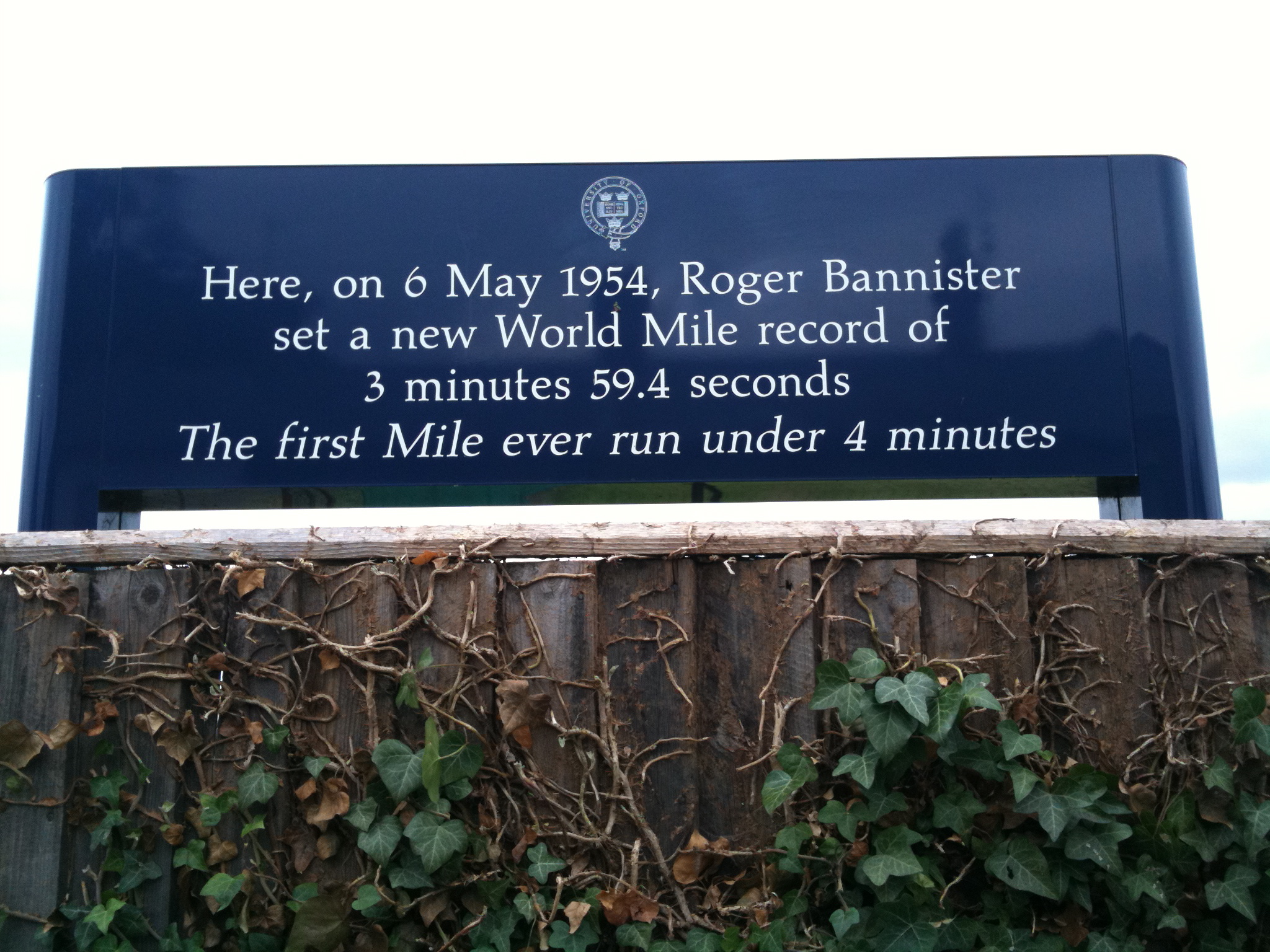 The first photo that appeared on this blog was at the beginning of September 2010, only a few days after I had committed to the journey.
The photo is taken in Oxford, outside of the running track where Roger Bannister broke the four minute mile as a record for the first time.
The story about Bannister is now well known in summary, or at least the bit about what happened after he broke the record. So the story goes, after he broke the record there was a flood of people who broke the record, now that some elusive so-called psychological barrier was lifted. This is no actually the case. Yes, there were people who broke the four minute mile after Bannister, but it hasn’t been many, and only men.
What is perhaps more telling is the process he used to break this record. It was only made possible with the help of fellow-runners as pacemakers. And this is a most interesting piece of no-so-trivial trivia.
I took this photo while in Oxford in 2009 during the conduct of an earlier ridiculous challenge that I had set myself: the 9 City Bridge Run, where I ran 9 sub-marathons in 9 cities across 9 countries inside of one month. The similarity between the two initiatives that the execution both times left a lot of room for improvement. The 10 City Bridge Run was ‘threaded onto this needle’ in making a patchwork of 100 stories by what I considered to be an unsatisfactory effort in 2009.
How did I miss this important factor in Bannister’s success? In fact, how does this one small fact escape all of our attention?! It is so elementary, yet critical to performance. The help of fellow-runners as pacemakers.
It is no good having those fellow-runners and pacemakers if you are either not listening to them or not communicating to them. It implies an intimate level of trust and teamwork. A common goal. A shared vision.
The good news is that the race is far from over. Bannister, must like others, must have tried dozens if not hundreds of time to smash this record with these pacemakers, or at least trained hard together in practice. Consider the stunt that this 100 patchwork tapestry that I am now blogging about as the practice, and the main event coming in the form of the Design Forum.
Will you share this same impertinent level of audacity that we can, together, smash a world record for the benefit of those most in need?
Delivering on the promise of improving child survival. First, we must know what defines the race, and secondly, how our performance will be measured. We are competing against ourselves, and we must succeed.
This is the second patch of 100 stories that defines the journey I have recently concluded. Leave a comment and let me know how you like my handiwork!
Patchwork Reflection: 100 Threads Of A Journey
 How do I say thank you?
Recently, actually nine months ago which is not so recent, I completed a journey called the 10 City Bridge Run. It was immensely more difficult and challenging that I could ever have imagined. Perhaps I made it harder than it needed to be, and some of the circumstances of my own life at the time didn’t exactly contribute to making it a talk easy to achieve.
But achieve it I did. I ran 10 sub-marathons each of 24 km (some slightly shorter, and a few much longer) in 10 cities across 10 countries in a month.
But that didn’t complete the epic journey I was on.
There are two deliverables unfinished. I still have the book Life Bridge to deliver which will contain an inspiring photo essay of human bridges to capture a thought that it is they connections between us is what is most important to change any problem.
The second is the culmination of the conversation that emerges from this epic quest which I have called the Design Forum. A conversation to ask: “how might we use our networks to deliver of the promise to improve child survival?”
This journey was made possible from the generosity and support of many people who contributed small amounts to ensure I could sustain myself along the way. Without this help it would have been impossible. It was a tough ask as it was. Much of the journey was spent essentially homeless while overseas, often with little or no money for food. This was an unexpected part of the stunt, and a factor that I felt unable to readily share with the community of followers partly because I thought it would degrade their confidence in my efforts, and partly because the sense of shame I felt was too great for me to share that experience at the time.
So before I complete these two outstanding deliverables, first I am going to say thank you to the supporters who made this journey possible. And that will be done through a patchwork of photos from the journey. 10 x 10 photos. 100 squares, with each square part of the journey. I’m getting this printed shortly, and then I will send it. What took place might make more sense to you, and also to me with some benefit of retrospective hindsight as I reflect on what took place.
So this is the first square. My intention to say thank you.
Another 99 stories to come. And it’s good to be able to share this with you.
Thank you for your support.
Checking In
 It’s been a while. It’s been a while since I last posted. I didn’t check, but maybe it was back in February when I last posted. That’s a while between then and now. But since then, I have been thinking a lot about you, our supporters, and also our mission here which is to ask a question: “how might we use our networks to deliver on the promise to improve child survival?”
And it’s also been a while since I first put this idea out there on this website back in 2010. I remember that day well. It was in August, and my friend Kelley was visiting from the US. She patiently sat and listened while I explained my doubts, and after I had finished talking she told me bluntly in her best Bostonian-New York style to just do it already.
Many of you will know how the journey has progressed. I commenced a stunt running 10 sub-marathons each of 24 km in 10 cities across 10 countries last September in Port Moresby and then finished the running in New York in early January this year on a cold, dark and wet night. That stunt frames the question we are going to be asking in order to help improve child survival through a series of Design Forum.
There are still a lot of uncertainties as to how the future will play out, but we are forming a good foundation to engage on this question. The hard work comes now: it is ahead of us, and I want you to be part of that journey. How that will play itself out, as well as an explanation for my recent delay, will follow in the coming days and weeks, but for now I have posted a video to check in with our supporters and let you know we are still well and truly in the game.
The video was in Luoyang, Henan Province in China. I refreshed while away, and am coming back stronger. Thanks for being part of the team. Let’s get to work.
We Are The Dead
Major John McCrae’s poem has immortalised the symbolism of the poppy in Western culture. The words are haunting:
We are the Dead. Short days ago
We lived, felt dawn, saw sunset glow,
Loved and were loved, and now we lie
In Flanders fields.
He writes about those taken too early. But it is the legacy someone leaves that is what matters. This too is contained in the final stanza of this poem, paraphrased here on the anniversary of the MH17 tragedy, one year on:
Take up our quarrel with the foe:
To you from failing hands we throw
The torch; be yours to hold it high.
If ye break faith with us who die
We shall not sleep, though sunflowers grow
In Ukrainian fields.
I have been absent from this blog for a few months. I’ll explain that later. But for now, let’s take stock of why it is important to press forward, as if our duty is to take up that unfinished quarrel with the foe. Nick Norris was passionate about thinking differently, and applying systems-changing thinking to co-create a better world. At the time of his death, while I was motivated to embolden my commitment to the 10 City Bridge Run journey as a tribute to his influence, I also at the same time felt constrained to do so because of the very public nature of the incident and media profile given to seeking stories about the family.
I look back now and can understand my actions. I think I did the right thing, but now it is also time for action, and now it is perhaps the right time to honour his legacy as an influence in this journey. And as I write that, my thoughts can’t be too far removed from my brother, especially as no one could have known at the time that on this anniversary this year it would be more poignant for our family to remember.
I’m back into it, and taking their legacy forward as a driving influence. I’ll tidy up this site and write more about that in the days that follow. For now, suffice to say that the torch has been caught and held aloft.
Do You Remember?

Think back to that time. That special time that only you can remember. Focus a little closer. Can you see it now? Do you remember?
Sometimes, it would seem that all we have left are delicate memories, maybe corroded by time. They remain in your head. You can write about them, but they can’t be seen by another because they are your memories.
What was it that you remember the most? A smell, the fragrance of flowers or the distinctive aroma of coffee; maybe it was hot and humid and you can remember the sweat pressing against your shirt; and maybe also the sounds, the mumble of crowds disturbing the moment in the background, the sound of the person in your memories; can you remember the colours as if it was yesterday, see the face of the person at the centre of the memories, their smile and their laugh. Do you remember?
It was with some mild anxiety that I searched for a video I made at Kuala Lumpur airport in early October last year. I had just completed the third leg of the 10 City Bridge Run and was headed to Osaka. I travelled to KL by bus from Singapore because it was cheaper, and even though the flights were inexpensive, the reality was that I almost has no money to even buy food.
Sitting in the departure lounge in Kuala Lumpur, I remembered Nick Norris, my uncle who was tragically killed about MH17 a year ago today along with three of his grandchildren. Kuala Lumpur was his destination on that fateful flight which never arrived. Wreckage and debris scattered across a previously unknown Ukrainian field, with no special respect given for human life.
So why this post? It is my first post after being absent from this site for a few months, but I will write about that later. Today, is a tribute to Nick Norris, and my brother Stephen. Stephen attended the memorial service for Nick’s three grandchildren in Perth with my mother last year. For my mother, that will have been a bittersweet memory, as in December my brother would also die.
When I was in the Army, I was deployed on a tour of Rifle Company Butterworth, located close to Penang. We trained across Malaysia and Singapore, engaging in some excellent jungle warfare and urban terrain exercises. My credit card was scammed while I was in Malaysia, and my brother showed his true generous spirit to always nurture others by covering the debt until the bank could reaccredit my account after the fraud had occurred. Nick would have leant back in his chair and laughed approvingly with his infectious roar if I ever told him the story, and would have been entirely pleased to see my brother and I helping each other out.
Almost everyone remembers the MH17 incident. It was a tragic incident that took on national significance, and even forced the outcome of negotiations at the United Nations. Before that, most people didn’t know where the Ukraine was, or that there was a conflict with Russia. It even led to Tony Abbott promising to shirt-front Putin at the G20 last year. Serious stuff. And today, a memorial service in excellent taste in Canberra. A fitting tribute. Love conquers hate. Do you remember?
I wanted to upload this video of the reflection I made in the departure lounge of Kuala Lumpur airport last October for you all here tonight, but when I searched my external hard-drive, it seems it is the one file that for some reason had not been properly transferred. I can’t find it. It was slightly distressing, and caused me some minor anxiety. I felt like I had betrayed my memories of Nick. I had cheated myself of a public expression of the tribute I thought was so important to make. And I thought how stupid was I not to post it there and then back in October.
But I also came to realise that it didn’t actually matter. Who is going to see it or even read these words? Crafting a message-in-a-bottle to be thrown into the amorphous mass of the interwebs. I stopped and thought: what really matters here? Did I remember? How would I remember? Those are personal memories I have of Nick and my brother. We weren’t always that close, but we were family. I can’t show you that on a video.
Remembering those we care for ought not to be reduced to an exercise of humblebrag. Tributes and legacy are incredibly important, and it is we who give them meaning, even if that meaning is only an individual experience.
So tonight, I’m asking you to just stop and remember for a minute. Everyone has a story, even though it might not be shared. Treasure yours, and respect the other.
Two Caves That Bookend Reality: From Plato To Campbell
 Plato’s Allegory of the Cave is well known by many people: inside this cave, people stand chained and facing a blank wall. On the wall they can see shadows projected of things, illuminated by a fire behind them. The shadows become the only things they know, and so they name these shadows as the frightening figures in their known reality. They give form to their worst fears.
Plato uses this allegory to suggest it is the philosopher who is able to walk unchained from the cave and see these things for what they are, and in doing so make sense of reality.
Perhaps Joseph Campbell was suggesting that Plato didn’t go far enough by suggesting that the true Hero must venture further in their epic quest to find the rewards of reality. Campbell suggested that people must re-enter the cave, but not that same cave they once came from, not the cave of bondage.
Here is how Campbell is quoted:
The cave we fear to enter holds the treasure you seek.
So let me ask you, where are you on this line between the two caves? Chained and frightened into submission of what society would have you think, free and exploring the reality of this wonderful world around us, or perhaps avoiding your quest to enter the cave which holds the treasure you seek?
Decide to be bold today. Now is the time to take that epic journey. Don’t hesitate a moment longer.
Few Will Have The Greatness To Bend History Itself
“Who are you doing this for?” This is perhaps the most frequently asked questions of me as I set about the epic journey which I had called the 10 City Bridge Run. I ran 10 sub-marathons each of 24 km in 10 cities across 10 countries. I wasn’t doing it for myself, and I wasn’t doing it for an organisation. Truth be told, I was doing it for the many millions of children born and unborn, along with their parents and communities to give them hope and the enjoyment of a good start to life by combatting child mortality. Audaciously, I proposed that through this crazy stunt that we could open a conversation to improve the delivery of child survival.
Initially, I did think this question about “who or which organisation was I doing it for?” was entirely reasonable. I now look back and see that instead that question is based on a flawed premise that it is only through having the juggernaut of a fundraising institution behind you that our efforts might have any credibility. We don’t need anything other than our own sense of daring and will to make change happen. It doesn’t mean will will be successful, but then again, not everything the large institutions do is successful either. Certainly there are questions about probity that need to be addressed, but that is also a matter of trust between those that might support me and my own personal integrity and conduct.
Can we really give ourselves permission to tinker a little as individuals collaborating together so as to put a dent in the universe?
Yes, it is about us as individuals and what we will do together. This thought returned to me as a startling epiphany today while I was re-reading “The End of Poverty” by Jeffrey Sachs. “The End Of Poverty” is a great treatise on how poverty can be eradicated by 2025 from the perspective of an economist. What struck me as profound in Sachs’ book is the final paragraphs are dedicated not to how the UN or the IMF or the World Bank will save the day, but he writes very pointedly:
In the end, however, it comes back to us, as individuals.
He amplifies this comment by quoting Robert kennedy:
Great social forces, Robert Kennedy powerfully reminds us, are the mere accumulation of individual actions.
And he goes on to end his book with a powerful quote from Kennedy, repeated below:
Let no one be discouraged by the belief there is nothing one man or one woman can do against the enormous array of the world’s ills – against misery and ignorance, injustice and violence… Few will have the greatness to bend history itself; but each of us can work to change a small portion of events, and in the total of all those acts will be written the history of this generation…
It is from the numberless diverse acts of courage and belief that human history is shaped. Each time a man stands up for an ideal, or acts to improve the lot of others, or strikes out against injustice, he sends a tiny ripple of hope, and crossing each other from a million different enters of energy and daring, those ripples build a current which can sweep down the mightiest walls of oppression and resistance.
I’m inviting you, asking you, challenging you, and imploring you to do something that maybe you might not have done before. Do something daring. Go ahead and take action, become an activist. Do it as yourself, an individual representing yourself, but as part of a collective experience. What that something daring is will to some degree be up to you.
We need your participation in the series of Design Forum that are unfolding. Let your little droplets of activity send out tiny ripples of hope, so that together we will build a current that will sweep like a tsunami of activity that might even bend history itself.
I dare you.
- ← Previous
- 1
- 2
- 3
- …
- 8
- Next →
 Building Bridges