Design Forum
I Began Questioning
 Where does your journey begin for making a difference that matters? We all have the same amount of time, and each are gifted in some ways, some more gifted than others. I’m interested in this question of when and why people chose to make a difference, rather than how much of a difference they might have made which is a very subjective measure of contribution.
I was delighted to meet up with an old friend Cynthia Smith in New York the previous week at the conclusion of my epic running stunt where I ran 10 sub-marathons each of 24 km in 10 cities across 10 countries. Many of you know already that the running was a stunt to thread a common narrative through 10 cities where an important question will be explored through a nine month period this year in a series of Design Forums asking: “how might we use our networks to improve the delivery of child survival?”

Cynthia is a curator of design at the Cooper Hewitt Smithsonian Design Museum in New York, located on the Upper East Side of Manhattan in what was once Andrew Carnegie’s home.
Cynthia Smith is a remarkable lady who has led a movement examining ‘design for the other 90%’. The idea is that most design is made for that 10% of the global population that can afford to live in homes, drive cars, enjoy discretionary entertainment, and then still have money left over for fashion, holidays, pets, and everything else that we seldom stop to think twice about.
There is a quote in a book she curated which I read once and carry with me as an inspiration. The quote talks about a decision to make a difference, rather than worrying about how ready we are to make that difference. She wrote:
“As a result, I began questioning: ‘In what ways could I, as a designer, make a difference?’
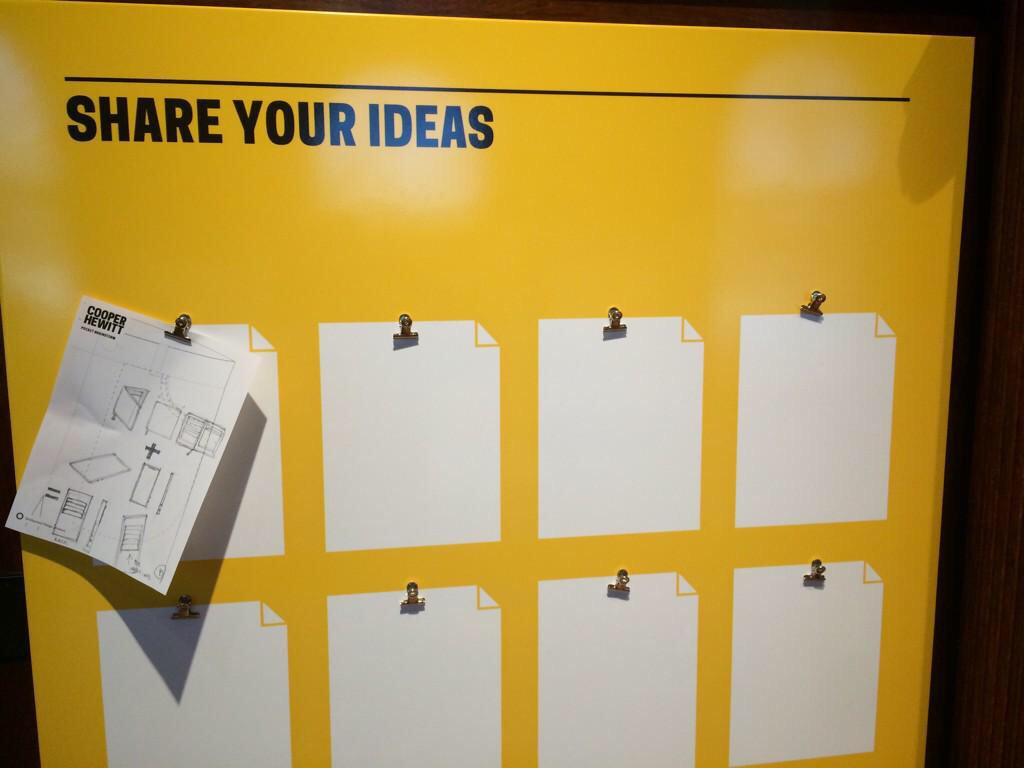
 We met for breakfast, and afterwards spent some time at the collection at the Cooper Hewitt. After saying farewell, I spent some time wandering around the collection myself. What impressed me most was the idea of accessibility of being a designer. One exhibition was about Human Centred Design, and was essentially a call to action for everyone who walked into the exhibition in the old library of Andrew Carnegie to become a designer.
So what does this mean for you and I? Are we any different to Cynthia? After all, she is a ‘capital D’ Designer. You know, a real one.
 I think what it means is that you need to read her quote above and own it for yourself. Take ownership of becoming a designer. And start by asking ‘will you decide to make a difference?’
If is not a new thought to you already, then there is one thing I want you to do for me. Share this post with someone who is ‘just ordinary’, but let them know they are far from ordinary. We need them as designers to make a difference. Maybe not in a big way, but with some sense of conviction that they can actually make a difference.
The centrepiece exhibition was about tools, and was thought-provoking. It took the ordinary and showed how everything has in some way been designed.
I like this thought because it comes back to the Design Forums I spoke about earlier in this post. In every city, we will have a particular focus. When we arrive in New York which I believe will be in May, I would like to pick up this theme of tools as it relates to child survival. It is a conversation I want to pick up with Cynthia, and in some ways I am opening up that thought with this post.

In a stroke of serendipity when we were walking to the Cooper Hewitt, we passed the church that is adjacent to the museum. Apparently, Carnegie’s wife gifted the land to the church knowing that the highrises of the city were starting to be build closer and closer to her house. It was an ingenious was to create a buffer to allow her garden to receive sunlight. That the church doesn’t have steeples confirms this story.
I visited the church the Sunday after we met as was totally inspired by the vision of the Minister who had created a real culture of questioning in what ways could the church make a difference to the local community. So my intention is to speak both with Cynthia and the membership at the church to ask, together in what ways could we make a difference?
But the person who I most want to engage in this conversation is you. In what ways as a designer could you make a difference?
Learning From Experience
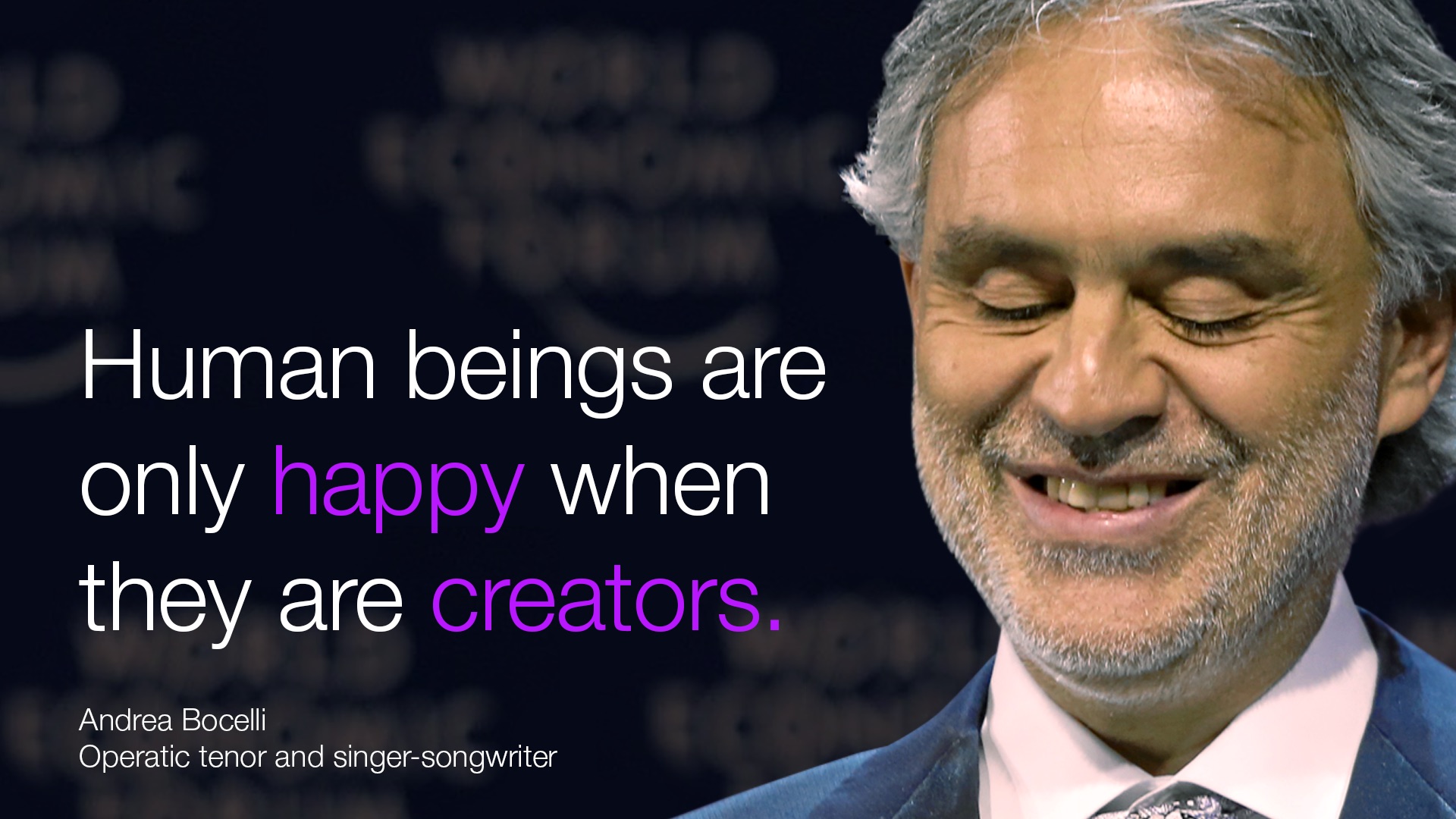 Don’t reinvent the wheel. Improve upon what already exists. Collaborate with others to find better solutions.
This is the spirit of the Design Forum that will unfold commencing in Osaka mid-February across a nine month period to address a question we are asking: “how might we use our networks to improve e delivery of child survival?”
We have begun already, and you are not too late to get involved. Presently, the Davos World Economic Forum is being held discussing some big ideas, among which includes issues like child survival. We can gain insights from those conversations, but perhaps more importantly get a perspective of what makes a good forum by observing Davos. And that is the role of the Design Forum in Osaka: to deconstruct what we know so we can find the best way of having a conversation that matters.
The Design Forum began with a simple idea in 2010 that would be highlighted through a crazy and epic running stunt. The stunt is behind us now, but we take it with us as it gives a thread of narrative to give a meaningful connection between the cities where the Design Forum will take place.
An invitation to be part of the Design Forum will be sent out later today. It will be free to attend, and you don’t need to travel to Osaka. The formal part of the first Design Forum will take place across a three day window, but you needn’t be involved for the whole time. How you ‘attend’ and contribute is up to you. We want your ideas and input.
Right now, please sign this petition for Julie Bishop. It is asking her to be our official Champion to highlight the Design Forum. We will deliver this after the second Design Forum in Papua New Guinea. I have written to her already requesting her to be our Champion. With so many other responsibilities, it is understandable that she might wish us well, but decline, and that is ok. We will then ask again after the third, fourth, fifth, and so on Design Forums.
By asking again and again, we are actually opening a conversation rather than trying to wear her down to relent. And so the objective will be for her involvement in some manner at the final culminating Design Forum in Seoul in October this year. Everything else is part of the conversation, and that is very important too.
Please visit, sign and share: https://www.change.org/p/the-hon-julie-bishop-mp-champion-the-global-series-of-design-forum-to-improve-child-survival
Your Turn
Seth Godin is at it again. Another book is very soon to be released to challenge, inspire and reframe the how-we-do-things-around-here in our day to day lives. The “How we do things” when the we is a singular ‘I’.
Seth talks about his idea http://www.yourturn.link. The book’s title is: “What To Do When It’s Your Turn (and it’s always your turn)”. Like a lot of stuff Seth does, it is about shipping.
Seth’s colleague Winnie has put the YourTurnChallenge out there by inviting anyone to join in by writing one blog a day from 19 January on the theme of Your Turn. Read more and see her video here where the submission instructions can also be found. You don’t need your own blog! How easy is that!
This is what will be covered across the seven days:
Day 1: Why are you doing the Your Turn Challenge?
Day 2: Tell us about something that’s important to you.
Day 3: Tell us about something that you think should be improved.
Day 4: Teach us something that you do well.
Day 5: What advice would you give for getting unstuck?
Day 6: Tell us about a time when you surprised yourself.
Day 7: What are you taking with you from this Challenge?
I think this is an important challenge because it helps us (individually) to move past being unstuck which is mostly associated with one form of fear or another. It is also important from the perspective of the Design Forum because at is a process which involves all of us. It is not a spectator sport. It is not a massive plenary. The Design Forum all of us rising to the challenge of engaging with the right questions to find answers that will address how to improve the delivery of child survival.
You can blog about anything you want to, but could I suggest you help opening this conversation about the Design Forum. You don’t need to have the answers. You just need to ship.
Here are the rules:
- Blog every day for 7 days.
- You can write on any topic as long as you share a perspective. We’ll also have different prompts each day to spur your creativity.
- Optional: share your posts on Facebook or Twitter and tag it #YourTurnChallenge. Your friends and family will know if you skipped a day….
Whether you do or don’t, I am going to, but I hope you do too!
Starting Small
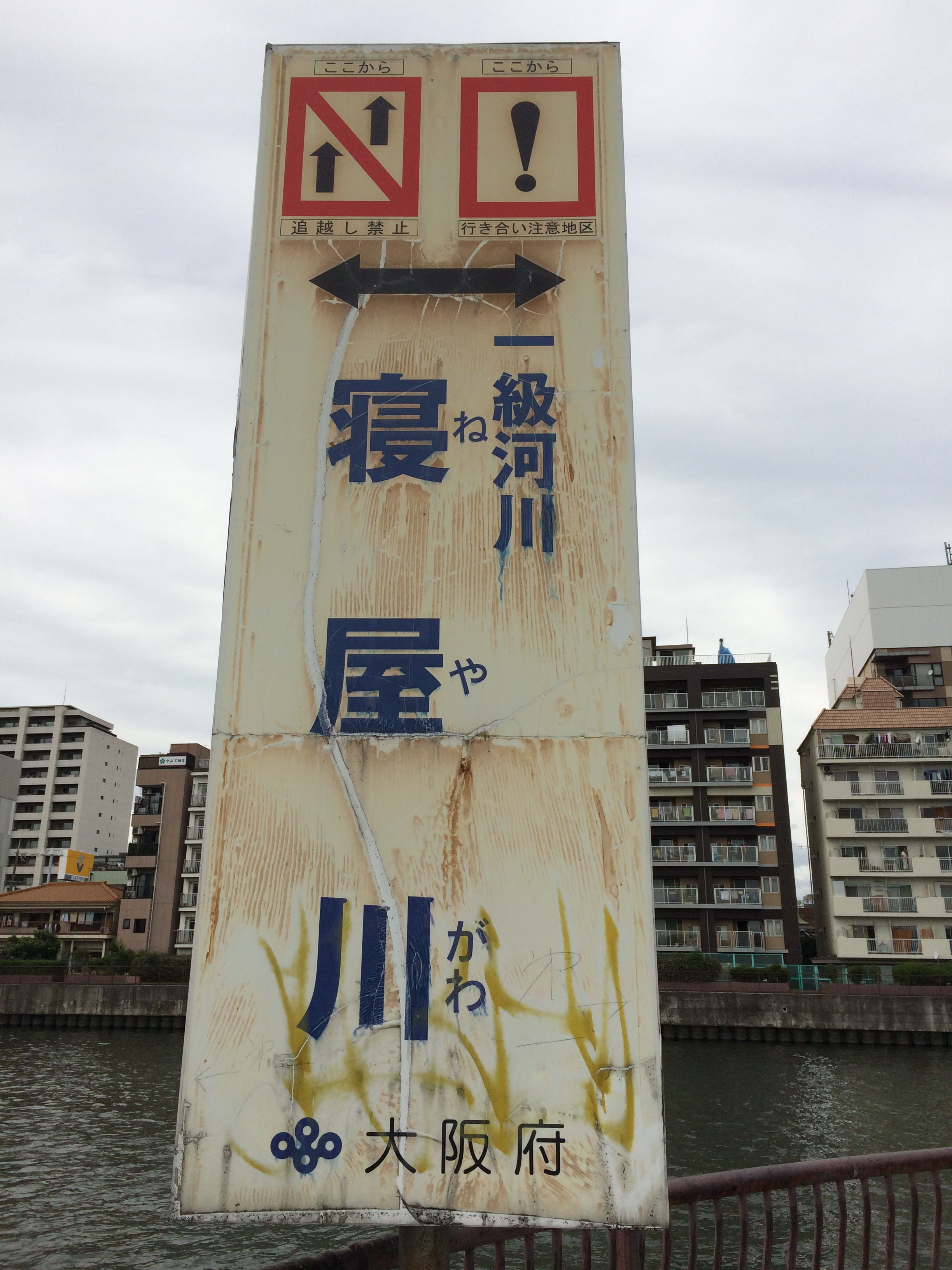 I have been writing to a friend in Osaka about the apprehension I harbour in beginning the first Design Forum next month.
She gave me some advice to persevere and not to worry, but just to begin with these words:
Starting small is the most important thing. No matter how small, it’s a start.
The Design Forum have become the second phase of an epic quest, and themselves mark the real work the comes from the effort expended in running the 10 sub-marathons each of 24 km in 10 cities across 10 countries as a stunt to open the conversation which is framed for the Design Forum. The conversation asks an important question: “how might we use our networks to improve the delivery of child survival?”
I was explaining to my friend the metaphorical deep breath that I am taking ahead of commencing this next phase of the journey.
Running was hard work. There were too many problems and challenges to recall without flinching. But it was worthwhile. And it was in some respects easier because it was just me running, and because of resource constraints not a team of people running. If there had been a team running, the journey would have been different. If the journey was well-funded from the start, it would have been different. Not only was it what it was, but I contend that it took on its own life in the way that Joseph Campbell describes the narrative of an epic quest being guided in his writing about the Hero’s Journey.
The Design Forum presents a different challenge, and I think harder work.
Even though the journey has began already, this new journey of the Design Forum has just begun. And the first Design Forum might be small.
I don’t know how large the first Design Forum in Osaka will be. Probably small. And I fell a little embarrassed about that. Why do I feel embarrassed, I ask myself? I think it because of the useless action of comparing our own work against the juggernaut of how big this conversation is as presented by many of the institutions are in the world. As a side note, over the last four years I did speak with plenty of these groups to somehow partner or work together in this pursuit, but mostly drew polite responses of rejection largely associated with their fundraising and messaging objectives.
The words of an old American Army Special Forces buddy are ringing in my mind when I think about the advice from my friend in Osaka. He was doing some post-graduate study in management when we met many years ago, and later taught me a memorable small saying his professor taught him: “SS – TS -DV -SF“. And so I will!
Start Small. Think Strategically. Deliver Value. Scale Fast.
There is not a moment to waste! As Campbell would no doubt say: Follow your bliss!
Strove

I friend reminded me of the humourous epitaph written by Walter Savage Landor on the weekend:
I strove with none, for none was worth my strife.
- Nature I loved, and, next to nature, Art;
I warm’d both hands before the fire of Life;
-
It sinks, and I am ready to depart.
Strove is the past tense of to strive which means “to make great efforts to achieve or obtain something”.
Hard work and the ability to persevere are their own reward quite often. After completing the first phase of the 10 City Bridge Run, having run an impossible journey around the world. I can say that I strove.
The Design Forum which mark the next phase in this epic quest are an opportunity for us to strive together.
Landor was most likely being idiosyncratically facetious with his short poem, and without getting lost in borrowing from the meaning of the poem, I can say that I want to strive with all of you, as the issue we are contending for is well worth our strife: improving the delivery of child survival.
Last week, I stumbled across a graffiti scrawled outside one of the many Chinese markets on Mott Street in New York. I don’t know if the author intentionally departed from Landor, but I think his inspiration is one we can share in together moving forward. You can see it at the photo on this page, and it reads:
Warm your hands with the invisible fire of hope!!!
So, please join me. Let us strive together, so that we can look back and say that we strove for something worth our strife.
What I Am Still In New York?
 It would be understandable that some people might be asking what am I still doing in New York now that I have completed the running stunt framing the 10 City Bridge Run. Or to put that another way, what happens now that the running is concluded?
It was my intention to have already left New York so as to travel to Melbourne where I need to spend some long-overdue time with my family in the wake of my brother’s death. It wasn’t my plan to be away this long.
There has been a delay, as if there weren’t enough delays already encountered with getting the 10 City Bridge Run to this point. Right now, I am waiting for the dispersement of funds raised during the final legs of the 10 City Bridge Run to be deposited into my bank account. The fundraising concluded on the evening of 1 January (US time), but the dispersement wasn’t put into effect until about 24 hours ago. Put simply, those funds are needed to enable me to take the next steps, which includes leaving New York. In many respects, and in a very real sense, I am stuck until that money clears.
 But just as delay and obstacle encountered during the running stunt of the 10 City Bridge Run gave rise to opportunity in unexpected ways, I am likely to return to Australia a little later than anticipated again, and travelling via a circuitous route that goes via Osaka and Seoul.
One reason for the extended route home is that it is cheaper. It actually works out cheaper (and less painful in terms of flying hours) to travel with a broken journey via Asia. The cost is slightly less than a single flight from New York to Australia.
How this opportunity to travel via Asia to Australia rather than going direct from New York came about was trying to resolve how I might attend a scheduled appointment I have in Seoul on 21 January. Additionally, my concern was how to best coordinate planning for the first of the Design Forum to be held in Osaka during the period 10-12 February 2015.
 Talking about something as a foreigner to that city might sound interesting, but it needs to be followed up with credible action for people to take you seriously. Having the opportunity to return to Osaka for a couple of days allows a requisite degree of consent and consensus from the host organisation in Osaka. It would be entirely unreasonable to fire off a couple of emails and expect for things to fall into place.
I will fly to Seoul after Osaka, which will be an opportunity to build some interest among possible satellite organisations who could participate in the first Design Forum from a location other than Osaka. Having one organisation agree to participate creates a model for others to follow.
Seoul is also the location for the final Design Forum, and so provides an opportunity for meaningful discussions around what might be possible and what might be needed to make the possible happen.
This first Design Forum is important to build momentum and a sense of identity for the conversation that follows. In the coming days, I will frame my vision of what that might look like, and welcome your involvement, steering and participation to make it a good event.
My friend Mary raised an idea a few weeks ago which was to explore ways of schools getting involved in the Design Forum. I think her idea is brilliant, and we are looking for other opportunities like that to expand and grow the opportunity for the Design Forum as a coherent and scalable conversation to address the important question driving this process asking: “how might we use our networks to improve the delivery of child survival?”
In the meantime, I have very cheap digs at an idiosyncratic New York flop-house, and will be using the few days I have remaining in the city to build support here and other cities as we move forward towards achieving this epic quest.
Why Glasgow?

Of all the cities in the UK, why on earth would I pick Glasgow? Why not London which is such a global hub with some key hospitals and organisations that have made enormous contribution to innovation, design and technology relating to child survival?
I had the chance to visit in 2013 as part of a Commonwealth Studies Conference. We had excellent access to this city which was a mercantile hub at the turn of the century, but fell into hard times as industry changed in UK. Today, it is a city that is rebuilding, and is strong like its people.
I was on the study tour with an eclectic assortment of leaders from across the Commonwealth. Three of the five countries with the largest proportion of child mortality are members of the Commonwealth and represented on the programme: India, Pakistan and Nigeria. Additionally, Sierra Leone is a Commonwealth member state with the highest rate of child mortality globally.
I was there not long after my brother was diagnosed with Leukaemia, and had just commencing his initial chemotherapy. I filmed the video below from Strathclyde University where we pad a tour through their research facility within the Public Health Department. Amazing people and exciting breakthroughs. It was stuff my brother would have loved, and taps into an important aspect of child survival which is combatting disease.
Strathclyde University is an old institution with impressive fresh thinking which is being recognised globally for their ability to steward entrepreneurial and innovative thinking. Additionally, Glasgow boasts a strong tech-med community with global reach. The answer to child survival is not going to be found in medicine, but public health is a broader discipline which probably bests describes the arena where the question: “how might we use our networks to improve the delivery of child survival?” can be mapped.
 The conversation will unfold in London before leaving the UK in April next year. Save The Children originates from London, and there are many best-practice hospitals in London that focus on child and maternal health. Additionally, London is a place where ideas thrive.
It is my intention to convene the Design Forum in Glasgow and London in April, straddling the Skoll World Forum to be held in Oxford. I attended the Skoll World Forum for many years in its early days since 2005 when it was free to attend by invitation. The conference has changed a lot since then, and has gained profile but maybe lost something by becoming a little exclusive in some regards.
Gathering people and coordinating the conversation for the Design Forum will be challenging, but is not impossible.
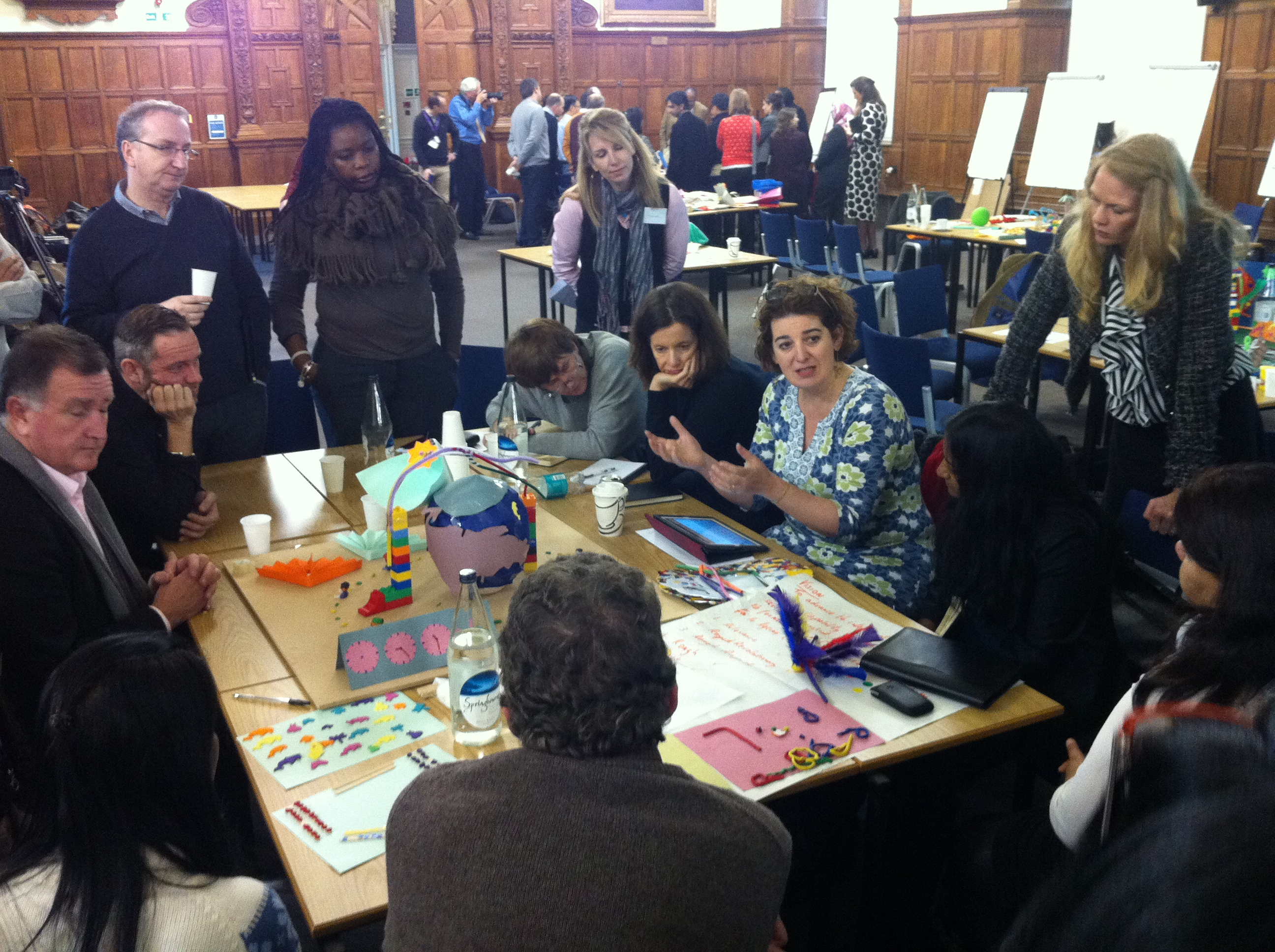
The Design Forum that will be held in UK will frame the conversation going forward after the initia hackathon which is to be held in Osaka in February, then a Design Forum in Port Moresby to get a better understanding of the problem itself.
Glasgow, Oxford and London will be important opportunities to bring important ideas into questioning ‘how might we’ improve the delivery of child survival. There is a lot of experience and workable ideas to benefit from. There is a lot of information. It won’t be easy, but it is important.
This is essentially why the running stunt is required. It is a very long way of going about building a conversation, and a way of threading together cities that otherwise have little in common of this issue of child survival. The discussions don’t have to be huge, but they will need to be effective. Making this happen will be the biggest challenge yet and will need the collaboration from many.
Will the G20 Cut It? Four Lessons From Brisbane
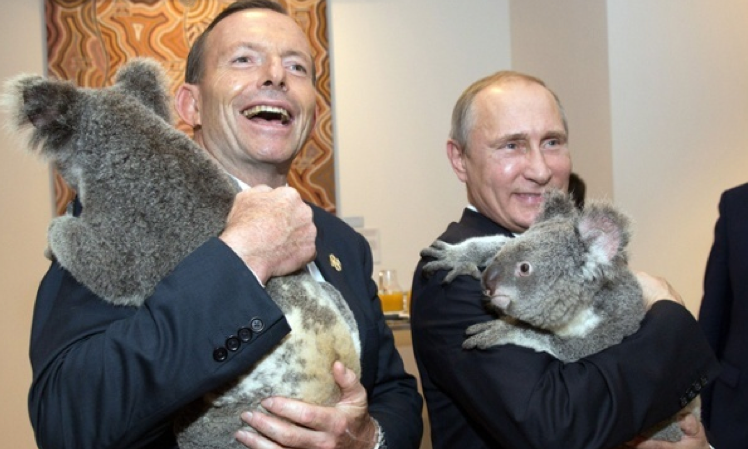
The G20 has been widely criticised in past years as being all talk and no action. When first framing the 10 City Bridge Run ahead of the Seoul G20 Summit in 2010, I asked “Will the G20 cut it?” at this link.
In the wake of the wash-up from the Brisbane G20 Summit, this question still is worth asking. What did we learn from Brisbane? Here is my analysis in four lessons:
Firstly, it is important to recognise that the G20 is a global economic institution. This means that the language will largely be around issues of trade, employment, debt, taxation and monetary policy. This does also include development issues relating to poverty as key to this equation. The G20 Development Working Group begins the 2014 Brisbane Development Update with a statement that is more than just a throwaway line:
Development remains a key element of the Group of Twenty (G20) agenda.
I sense that the G20 recognises both its ability and limitation to influence development through strengthening economic growth and resilience. This is at the heart of economic thought: how to best allocate the distribution of scarce resources.
The opening line from the G20 Leaders’ Communique flags the core priority of the G20, and consequently overshadows dilemmas this might bring in addressing issues of development:
Raising global growth to deliver better living standards and quality jobs for people across the world is our highest priority.
Secondly, the Summit is to some extent a forum of theatrics. It is misleading to think the G20 Summit as a dynamic roundtable to discuss all of the issues in detail. There is a lot of preliminary and behind-the-scenes discussions and negotiations that take place outside of the limelight to resolve how members of the G20 will orientate their national interest with the agenda for the Summit. It is more than a photo opportunity, and such gatherings are important.
Theatrics serve a purpose, and they also signal what people are keenly focused on. In focusing on one thing, they also steal a lot of the oxygen out of the occasion to more freely discuss a broader range of issues. In Brisbane, the theatrics was mainly seen through the grandstanding of and by Putin around the Ukraine incident. That is signalling how the Ukraine is fast becoming a place of heightened strategic value for leaders to communicate their sovereign will and power. The consequences of this grandstanding will not be immediately clear, but ripple through events that are yet to unfold.
Consequences are important, and the issue that receives the limelight will be at the expense of others that do not get discussed in depth. Obama flagged his theatrics publicly at a university address prior to the G20 to gain most favourable media attention to help sway his agenda.
Thirdly, wording is important and will ultimately drive action. The concluding G20 Leaders’ Communique and supporting documents give guidance for the future. If an issue doesn’t make the list, that would be troubling for those who see it as important. The question becomes one of what concrete and practical action will actually trickle down from this wording?
The 2014 Brisbane Development Update was quite clear about what that G20 sees as an important priority, quoted here directly from the document:
Our work has continued to contribute to the achievement of the Millennium Development Goals. Further, we reaffirmed our strong support for the ongoing intergovernmental efforts in the UN to conclude an inclusive and people-centred post-2015 development agenda and for its effective implementation. We reaffirmed the commitment of the international community to poverty eradication and a coherent approach to sustainable development, which integrates its three dimensions in a balanced manner. We underlined the central imperative of poverty eradication and are committed to freeing humanity from poverty and hunger as a matter of urgency. We look forward to the third Financing for Development Conference to be held in Addis Ababa in July 2015. We reaffirmed our commitment to ensure that G20 activities beyond 2015 are coherent with the post 2015 development agenda.
The wording from the G20 Leaders’ Communique shows that this responsibility is one that is for the United Nations to resolve, but one which has the support of the G20 for an ambitious post-2015 agenda: We support efforts in the United Nations to agree an ambitious post-2015 development agenda. The question of how an issue will strengthen economic growth and resilience is important to address to receive more attention.
Fourthly, who actually holds the G20 to account for their words? The declarations made at the conclusion of each Summit are not so much binding as aspirational guidance. The Seoul Consensus for the 2010 G20 Summit shown at the link at the beginning of this blog helped shape this central theme of a human bridge which supports the 10 City Bridge Run. The Seoul Consensus showed its priorities framed in the following statements:
We, the Leaders of the G20, are united in our conviction that by working together we can secure a more prosperous future for the citizens of all countries… The Seoul Consensus complements our commitment to achieve the Millennium Development Goals (MDGs) and focuses on concrete measures … to make a tangible and significant difference in people’s lives.
There is consistency between what was written in 2010 and most recently in Brisbane yesterday. This is comforting to know, and no small measure for optimism as we look to address child survival in the context of economic growth and resilience. Recent statements from Australia’s Foreign Minister Julie Bishop about embracing a new paradigm of development assistance through looking for innovative ideas is consistent with this as well to build concrete measures to make a tangible and significant difference in people’s lives through improving child survival.
The case for taking action is an ethical issue. It is a good thing to do and the right thing to do, as well as being just. It doesn’t need the imprimatur of the G20 to take action. As global citizens, the outcome from the G20 Summit in Brisbane indicates that the institution is something to be readily engaged with on this issue because we both share a common objective. Opening the conversation with countries from the G20 is an important step towards the Design Forum in 2015.
Running Man
 Ever had that experience of looking for something and not finding it?
Last night’s efforts to find a shirt and hat with the Running Man logo for the Korean improv comedy didn’t work out after a couple of weeks of searching. And I was so close!
Towards the end of the journey, I sensed I was trying to push a square peg into a round hole. Not an easy way to do anything…
Rather than seeing it as a fruitless effort, the story from this search gave me some good lessons:
- Collaboration underpins the Design Forum for the 10 City Bridge Run seeking to improve the delivery of child survival.
- Framing the Design Forum process with the thematic mantra for the Dongdaemun Design Plaza of “Dream Design Play”
- Challenging outcome will mostly be difficult. The impossible takes a little more time and effort.
This wasn’t failure. It was an outcome.
I have rescheduled the Seoul run until next Sunday (23 November) when I will participate in the Sohn Ki-chung marathon. Sohn Ki-chung was the great marathon runner who broke the 2:30 barrier by smashing the world record in 1935, then winning the Berlin Olympics Marathon in 1936. As a coach, he was successful, and in 1950 achieved first, second and third placing for all Korean runners in the Boston Marathon.
Sohn Ki-chung also gives inspiration for the photo-essay of human bridges to make the book ‘Life Bridge’, adapted through his words: “The human bridge makes incredible things possible when supported by strong commitment and passion.“
Lesson Eight. Keep moving forward
 Three cities remain following Seoul in this running stunt. Each of those cities are critical in threading together the intellectual engagement of this question: ‘how might we use our networks to improve the delivery of child survival?’ Glasgow, Toronto and New York are all critical cities renowned globally for their thinking.
For the time being, it would seem that those three cities are immediately out of reach. The sensible thing would be to postpone the journey until it is financially viable and less of a personal risk to myself.
Ought we to play it safe and accept what is reasonable? George Bernard Shaw would advise otherwise: “The reasonable man adapts himself to the conditions that surround him… The unreasonable man adapts surrounding conditions to himself… All progress depends on the unreasonable man.”
This image of a human bridge which inspires the photo-essay in the book ‘Life Bridge’ is in part inspired by words adapted from the legendary Korean marathon world champion Son Ki-chung who broke the world-record in 1935 and won the 1936 Berlin Olympic Marathon: “The human bridge makes incredible things possible when supported by strong commitment and passion”
Holding the remaining three cities in abeyance until 2015 is an option, and still allows for forward movement. But perhaps our frustration with an incomplete journey ought to inspire us to push harder to make incredible things possible now. Completing the running stunt directly from Seoul is an outcome that is not possible within my current resources, but achieving it would give an inspiring context to the Design Forum in the knowledge of a completed running stunt that the seemingly impossible is possible. This is why I am appealing for help from a select group of ‘bridge builders’.
The proposed schedule for the Design Forum would engage with a broad community of partners and stakeholders for participation proposed as follows:
| Proposed Schedule for Design Forum | ||
| Theme | Location | Date (2015) |
| Framing the problem: Focus on Papua New Guinea | Osaka | February (middle) |
| Port Moresby | February (late) | |
| Global context, ideation and opportunity | Glasgow, London and Oxford | April |
| Toronto | May | |
| New York | May | |
| Evaluating prototypes | Sydney | June |
| New Delhi | July | |
| Implementation, delivery and moving forward | Johannesburg | August |
| Nairobi | August | |
| Singapore | September | |
| China (TBC) | October | |
| Seoul | October | |
The importance of ‘bridge builders’ to support this initiative immediately is that it enables preparation of this schedule with confidence.
Lesson Seven. We underestimate the influence of our encouragement
- ← Previous
- 1
- …
- 3
- 4
- 5
- Next →
 Building Bridges