Inspiration
Setting the scene: A personal quest (Chapter 3)
 Sometimes the best place to begin a story is at the beginning.
It is a long way from the beginning as I look back across the past decade which has framed this journey. In telling this story, I am seeking to unpack an idea about failure and the role that failure plays in our journey to make meaningful change happen. Through this self-reflective journal, I hope that you too can find some space to examine your own endeavours.
What is this quest about exactly, and why did it become personal? I ended up undertaking a global endurance challenge to examine what an individual could do to impact pressing unmet needs. Circumstances dictated that this is how the journey unfolded. It wasn’t planned to go on for a decade, and certainly my intention had been to wrap things up a long time ago. It is not the length of time that has made this epic, rather it is the unfolding nature of this story which saw both opportunity and hardship seeking to thwart my resolve to continue.
How I arrived on this epic journey is told through the chapters that follow. I have come to believe that the circumstances that lead us towards wanting change to happen are maybe as important as our desire to make that change happen itself. For change to occur there needs to be deep-seated resolve fuelled by equal parts of passion mixed with an insatiable dissatisfaction in the status quo. My biggest point of self-criticism is that I began not knowing much about what I was wanting to change.
Why did this become personal? The truth is that my preference was to have the support of an institution. And it wasn’t for the lack of trying that no relationship formed where I could have sublimated my own personal engagement to their brand. If I had been successful in winning the support of an institution, it would have been an uneventful journey by comparison. I ended up being left with no option but to explore the role of the individual, and that individual at the time was me. Consequently, this journey because intensely personal.
I remember one time in London during this process, I think it was 2012. I came out of the Underground near Southwark where I had found some cheap accommodation for the additional night that I was in the city. That was during the messy and clueless phase of this journey, where I knew I had taken on a commitment which at that point in time had no idea how I was going to resolve. The issue was about child survival, this is the unacceptably high levels of mortality among children under the age of five. At that time, I was still only beginning to explore the edges of this problem. I had been fortunate insights through previous travel to have visited many countries where child mortality was a real problem. I went to those countries for other reasons. I was not there to ‘kick the tyres’ of the problem. Whether we like it or not, serendipity is always our companion.
I came out of the Tube station as was confronted by a “chugger”, a word that combines two other words: charity and mugger. You might have been intercepted by one of those representatives of a large charity on the street, seeking to persuade you to make an ongoing monthly commitment on your credit card. This person I encountered was from UNICEF, a key organisation charged with the responsibility to address problems confronted by children. Addressing child mortality is central to their role.
At that time, I had no credit available on my credit card, and in reality had almost no money. Embarrassingly, I was living in poverty myself. This was all the while attending some pretty fancy engagements with some great minds and change agents on the global stage whom I respect greatly. I couldn’t have been living a more divided life between what the public saw and my personal reality. No one, not even my family, knew of my poverty. It was one of those times that you know you just have to keep moving forward even though it seems completely ridiculous to plan anything due to the absence of resources. If you have been in this situation, and many have, then you will know what I am talking about.
I had earlier in those past years engaged with UNICEF and a number of other leading global charities to seek some way of opening a conversation towards partnering along this journey. I was unsuccessful, and probably because I wasn’t clear enough in what I was asking for. This is a classic example of backswing: opening the conversation but without the punchline to drive home a successful resolution.
The chugger was unaware of any of this. All she saw was a man in a suit who might just be her next target. I politely listened to her pitch about child mortality, and then respectfully asked her a few questions. I felt almost sickened by the absence of any knowledge of either UNICEF or the issue which she was presenting. She wasn’t to blame. In effect, she was just doing a job. But it did cast a serious question in my mind about the behaviour of large charities in this field.
I hold no grudge towards the institutions, and my later reticence to engage with institutions in preference to a focus on the individual was not entirely the creation of earlier rejection. But my experiences had left me questioning whether charities were nothing more than efficient fundraising machines that used their stories of social change as sophisticated marketing ploys.
There was one exception to the rejections I received from the large institution. An organisation called Save The Children provided a glimmer of hope, but all because of one person that made a difference. I can understand that large organisations become guarded because of the relentless barrage of fundraising requests they must receive, but this too must be balanced by their own acceptance of risk for endeavours that might be successful as much as they might be a complete waste of time. Much later in this book I examine this concept of backswing in relation to the institution.
This one person had become the human face for a global organisation. She was just being her own authentic self, but her kindness sent ripples of hope throughout my world more than she will ever know. Change making is far too important to be left to the gatekeepers. We are missing out on a rich vein of innovation. Can we do better as individuals and institutions? I believe we can.
No one sets out to be mediocre, but there it is! The decision to make a difference that will measurably change things is a daily and conscious choice that we all must make. The ease at which we can slip back into mediocrity cannot be underestimated. We must constantly resist taking the path towards mediocrity.
Many people and experiences shaped this journey. Some good, and some bad, but ultimately all worked for good. I’m not going to lie: it wasn’t pleasant. Homelessness and hunger really suck.
There are a lot of people to acknowledge who were of immense value as mentors along the way. Without these guides and without these difficulties I encountered, I would have ended up with an outcome that might have been prettier, but not as beneficial for my development. I now have something of value, but only if it is shared. Importantly, and while it has taken much longer to achieve, I am also closer to being able to influence a problem than I ever was before. But to do that, I need your help. This is the paradox of the individual taking action. They must have the assistance from others in order to succeed.
I am certain that you won’t agree with everything I write. I encourage you to read with a critical mind as I explain how I see things. I would agree heartily that there might have been a far better and easier way to do what I was seeking to accomplish. But this has become a story about the process of journey, not the cleverness of efficiency. It is not a celebration of incompetence, but rather recognising that to hit the ball, we must first strike out many times as we master our authentic swing. Understanding backswing is important if we are to become big hitters.
“The artist cannot be rushed” (Chapter 2)
 “The artist cannot be rushed”. Is this the worst excuse, ever? Or is this a statement of truth about The Creative Process?
This is an expression that came to mind as I was preparing to depart for a friend’s house party in Sydney’s Northern Beaches earlier this year. My friend had asked everyone to ‘bring a plate’, and we would share the fruits of our collective cooking abilities. I had known about the date of the party for easily three weeks.
In my fridge I had some left over nectarines. A box of apples from the markets was sitting on the dining room table. Prior to Christmas, I had baked a Tarte Tatin apple pie for another party. My friend asked if I would cook the Tarte Tatin pie again. It was the obvious thing to do. It would be simple. And after all, the box of apples was sitting there ready to be used.
But for some reason, I wanted to try something different. My appetite for the creative pursuit took over, and I started thinking about what I could bake. This was a mistake. I was thinking about doing something but never taking action.
I awoke the day of the party later than I had intended. I had just enough time, but not the right ingredients. I realised that I lacked some puff pastry that I would need to cook a Tarte Tatin if I was going to do what was easiest. I needed to find a solution.
As I was trying to work out what to do, my friend Tony texted me. “Would I like a lift?” he offered. A lift! How perfect, and so I accepted. The party was about an hour’s drive by car from Sydney, and a lift would mean that I wouldn’t need to take public transport. One less thing to worry about, but accepting a lift meant that I would would be constrained by the time I had available.
I raced off the go to the shops to buy some puff pastry, and was kicking myself that I had been closing the door to serendipity. How much time I had earlier to prepare for this party? Opportunity favours the prepared mind, and I had failed to fix a problem when it had arose earlier.
I arrived at the train station only to learn I had to wait another 15 minutes before I could travel to the supermarket to buy some puff pastry. It was too long and it wouldn’t work. I started to enter a mild panic, and was clutching at options that might work. It was a classic moment of lacking mindfulness, and being unaware towards a solution within the resources at hand.
I didn’t wait for the train, but instead visited my friend’s bakery nearby. I mumbled something to him about needing puff pastry and looking for a substitute. He responded with the best Korean politeness he could muster, not really knowing what I was exactly asking for or how he might be of help. I could have bought a cake from his shop, but my desire for creative output demanded that I cook for my friends myself regardless of the time available. I searched the internet quickly, and suddenly stumbled across a recipe that might just work.
All of a sudden, a brainwave! The conviction that I could do it! The recipe required me to make a base from thick-crusted bread into which a stewed fruit compote of apples and apricots would be filled. I had nectarines, and decided to use these as a substitute for the apricots.
But let’s just pause in this story for one moment. Why only at this point did I become so certain of my ability? A few minutes earlier I was stressing at the lack of time and ingredients, and saw the task as near impossible to achieve. Self-censoring and worry are such useless actions.
Arriving home with thick-crusted bread, I began cooking with pleasure. The nectarines were crushed in my hands with the juice and pulp messily wetting my fingers. Cutting the apples became a meditative process. My sense of hurry seemed to disappear. The fruit began to change colour in the pot where it was boiling, which was an act of modern day alchemy at its simplest.
I had to cut off the crusts the lovely fresh and thick bread which made the soft, white fluff crush together. A memory of playing with my food when I was a child.
Melted butted was painted into a golden, oily film on each side of the bread using my basting brush. The moist and sponge-like bread was then encrusted in a cinnamon and sugar dust. A bowl was lined, and the compote inserted before baking in a hot oven.
I texted my friend Tony. Time was against me and I was not going to make the lift he had offered. I would meet everyone at the party, and instead travel on the bus. Truth be known, this was my plan all along, and an option I preferred. But why did I prefer to travel alone? It wasn’t really because I enjoyed the solitude, or because I had the opportunity to ‘do some things’. I realised that I was embarrassed of my past failures. I felt like I was all backswing, and no hit.
The irony was that I was focusing on my past failures all the while creating a delicious dessert people would later crave. What is that if not success? It is also worth noting that the success was only possible because of the chemistry that came through the enjoyment of others. No one stands completely alone.
The pie was ready, and came out of the oven. I painted the surface as if my canvas with apricot jam which I had cooked the previous week. My basting brush moved in broad strokes that would be invisible to others. Those enjoying the dessert would only see the completed whole, and not the workmanship involved.
I was ready. Before leaving home for the party, I posted a photo onto Facebook for my friends at the party. I was coming, and had the pie to prove it, even if I was going to be a little late. It was then that I invented this quote to caption the photo: “The artist can never be rushed.”
Later that day while sitting alongside my friend Greg at lunch, we stumbled into a very engaged conversation about this quote in the context of my seeking to make this pie. Reflective conversations are important, and in that moment Greg became more than just a good friend, but a mentor as well. Even the hero’s journey is about the engagement with others. There are no lone heroes. To hit the ball, we first must be playing with others to make our own experiences worthwhile.
Too often, I believe we use the anxiety that comes from the hardship of creation an an excuse that that artist cannot be rushed. This hiding behind delay is complete rubbish. The bottom line is that we must crack on. We must get things done. We must push and strive if epic journeys are to be achieved. And only in ourselves can we become that person who ultimately demands that which comes from within.
This book applies to all endeavours regardless of how artistic you might think that they are.
Delaying and not being rushed are different, and this is the point I am making. Take the time to create, but do whatever you need to do to protect yourself from indulging in unnecessary delay.
Do what you can. You can’t do all things. Seek opportunities for collaboration. Be open to the expansive and generative process of creation. And get on with it. The world needs what you can bring into existence.
No Hit. (Chapter 1)
 Can we be honest with each other just for a moment and agree that failing hurts?
Failing sucks. Failing makes liars out of ourselves.
All of us at some time have tried something that didn’t work out. The reasons we tried that thing and the reasons it didn’t work out often will reveal more about ourselves than we care to stop and examine. In part, that is why this book was written: to examine something that didn’t work out as I expected, and to share the learning from that experience with you, the reader.
Before I get into this in too much detail, it is worth noting that what I did was in many respects a litany of failures, however it has culminated into something that is of some worth and value. If I were to cut my losses now and walk away, it might well have been wasted effort. It is as though I am now at a point of being able to effect change. The question is what will happen next. Let’s leave my story until a little later, for now I want to make the case for why this book is necessary.
As children, we fail constantly, and we also keep trying. And hopefully, we find some success along the way. Along with success, maybe more importantly than the success itself, is the encouragement we receive from others. The reality is that too often encouragement becomes devalued as lip service or otherwise no effort is made to extend a word of inspiration because we think we have nothing to offer or that the input is unnecessary. How wrong could we be! Later in this book, we’ll pick up the reason why encouragement is perhaps an overlooked jewel, as well as having a crucial role of putting success into perspective. But for the moment, this is a book about a difficult and somewhat unpleasant topic: failure. So please join me as we embrace it, try to define it, and fathom how failure is as much our friend as it is a necessary part of the process in achievement.
There is such optimism and excitement at the point of trying. And conversely, often such crushing defeat at the point of failure.
Failure. One of the great taboos. The question which I really want to explore though is not how to make ourselves immune to failure, as much as it might seem to be good to be able to limit failure. There is some need to protect ourselves from failing unnecessarily and in costly ways, but even so, all failure does bring with it the seeds of opportunity. This is the true meaning of disruptive intervention, and is also reflected in the Chinese word for crisis where this word is mixed with the word for opportunity.
There is a sense at which limiting failure makes good sense. By no means am I promoting failure as an enjoyable experience. The irony is that by protecting ourselves from failure we increase our capacity to create, to push through points of resistance, and enable our ability to be vulnerable, to learn, and to experience those things that will lead us towards new growth. But as much as we need to protect ourselves from the destructive influences of failure, it is also true that only through the experience of failure can we really find the hidden potential that drives our survival instinct to create. Vulnerability is interesting territory. But what is really interesting is what do we do at both bookends of this experience- both the domain where we shield ourselves from loss and failure, and the other end of the spectrum where we are completely out of control in an environment which is mercilessly ripping our expectations and dreams apart. Perhaps most importantly is now we respond in the events that happen after that point of failure which seems have shattered our plans and stopped us in our tracks. What we do after failure is the most important and difficult part of this journey. And it is also the part of the journey where we can exercise the most control, even though we find ourselves in a place often with the least amount of resources.
Inherent to the human condition is the capacity for resourcefulness. Imagination, grit, faith, hope, love are abstract qualities that we all possess, and too often we take for granted. We get to a position and feel as though we are finished and ruined, but often it is in those times that we are just getting started.
“What we do after failure is the most important and difficult part of this journey.” Let’s return to this sentence from the previous paragraph and examine the implications that this holds for us all. If the journey continues after this poignant place called failure, it would then follow that failure is not final. Of course, this is a decision that we must chose to make, and choosing not to make a decision is still a choice. In many circumstances, it is the toughest decision that people will ever be confronted with. It is at the rock bottom of our experience, and can be among the most hauntingly lonely existential places to visit. Some never return from that place. Some chose to remain there, alive but living a soulless existence for the rest of their seemingly pathetic lives.
In this book, I have drawn upon my reflections, and the first thing I was us to recognise is that failure is part of a process, and not a singular event. Time as a continuum exists well beyond that dark moment of failure. It might be hard to see at the time, but it is true.
Whatever it takes, we must find a way to keep going. This might mean that we have a requirement to surrender our dreams and expectations in accepting a new reality, but even if that is the case, we must keep moving forward.
The title of this book is taken from a saying I overhead once. I don’t know who said this saying, and I have rarely heard it since, but it stuck in my mind. Even searching on Google, I have not been able to find this saying in the lexicon of modern parlance. Was I mistaken in hearing this saying? That could have been the case, but even so, it still makes sense as an expression which captures the theme of this book. What was this saying I overhead: “All backswing, no hit.”
Can you make sense of this saying? It paints an image of a baseball batsman who is taking all the time to wind up in preparation to hit the ball, and in doing so looking spectacular awaiting to receive the ball that is about to be thrown in a pitch, except that the batsman never follows through to hit the ball. Or maybe it means that the batman does follow through, but completely misses the pitch. It is an expression of someone being of no substance, or no ability. In this regard, it might also be seen as a personal reflection of being unable to ever hit the ball and only ever striking out when at the plate awaiting the pitch to be thrown.
In sport, there is actually a correlation between not hitting and hitting. This is well documented through sporting statistics, and even the greatest sportsmen will tell you that there is a lot of failure that needs to be pushed through before finding greatness. Natural talent only counts for so much. Of course, there will always be those people who are much better at something than others, but there is a time when everyone experienced times of learning. Everyone had their seasons of not hitting and striking out in some way early in their careers. Even the best of those who walk among us have seasons of seemingly catastrophic defeat when they seem to be at their finest hours.
I have also taken this saying to explore the relationship between the wind up of the bat and the follow through in swinging at the pitch. Sometimes, when we have been held back by endless winters of failure, we can lose our resolve to follow through. Sometimes even winding up is an effort. Mostly, we get to a point where we will got through the motions of winding up, only to give up at the time of follow through and so there is never any potential for hitting. Defeating ourselves is the worst form of failure, and often it is understandably done because it at least seems in the short term to be less painful.
But don’t take my word for it. Go an look at some of the baseball statistics of some of the worst hitters and the big hitter so all time in the big leagues. The same holds true for cricket as well, as it does for basketball and for receivers in American Football.
Is this science? Probably not, but it has merit as anecdotal evidence that there is a pattern worth further examination.
The thing to remember is that not everyone is going to be a big hitter. Why is this? Is it genetic, luck, application, talent? And why are people who seemingly just as applied never suited to baseball? Is hitting big across the diamond the only measure of worth?
After a recent epic quest, I related more and more to this saying, often associating this with my own performance in my own internal dialogue. Initially, I heard it as critical and censoring. But then I saw the glimmer of hope and opportunity which is hidden within this expression. I want to explore that together, and I go further to suggest this illustrates how searingly deep this runs into our psyche: “Because no one likes to strike out.” It is a baseball metaphor. And through this book I want to unpack it with you.
So lets begin this journey. And as we do, let’s proceed by recognising that we, too, can be big hitters, but first we need a better understanding of what this means.
NOTE: I think this is too long for a single chapter. Ideally, I want to keep every chapter under 1,000 words. Your thoughts?
Dedication
Inge inadvertently enabled something worthy out of utterly tragic circumstances.
There are many people who have impact in our lives. Inge was one of these people in my life.
Her influence was modest, and she was only ever a friendly face in the crowd, but someone who would always take the time to make sure I felt welcomed.
It is worth us all reflecting that in moments of hopelessness, that our impact extends far beyond what we might ever know.
She protected me from a ferocious social setting, and the nastiness of convention. An unparalleled kindness, and a trait that was celebrated too often after the fact.
Let’s be mindful of the support others bring in our lives while we can express it directly to them.
A great Australian once exhorted a group assembled in Kalgoorlie of which I was also a part to “never, ever give up” in our pursuit of realising the justices that are warranted across society. By his own example, he has demonstrated this fact, and his words have echoed as inspiration through the lives of many more since then.
Inge almost certainly would have known this Australian who spoke at this conference at Kalgoorlie, and it is likely that he too benefitted from the reassuring counsel that she would deliver to all those in her orbit as an expression of encouragement to maintain a sense of resolve with a cheerful smile in spite of difficulties.
This journey described in this book could never have been mapped in advance, and was mostly an exercise in misadventure. Even so, but for the kindness of Inge this might never had been possible.
She was always here for us, and it is a shame we could have done more in her time of need.
Her death was a trigger that set me off on this journey, and her legacy remains something I wish to uphold through my dedication of this book (which I am presently writing).
Amos 5:21-24 taken from The Message:
“I can’t stand your religious meetings.
I’m fed up with your conferences and conventions.
I want nothing to do with your religion projects, your pretentious slogans and goals.
I’m sick of your fund-raising schemes, your public relations and image making.
I’ve had all I can take of your noisy ego-music.
When was the last time you sang to me?
Do you know what I want?
I want justice – oceans of it.
I want fairness – rivers of it.
That’s what I want. That’s all I want.”
All Backswing
 The next series of posts are essentially draft entries in the soon to be published book “All Backswing” which I am aiming for launch at the end of June 2016.
All Backswing will feature 100 chapters to talk about a manifesto for change by examining the motivation for what eventually became the 10 City Bridge Run, commentary about the journey itself, and importantly lessons learnt as it relates to undertaking epic endeavours that seek to make a difference.
Your feedback counts. Please edit, share, comment, or illustrate in any way you know best.
The book is being written for you. If you like something, please let me know. If you have questions, please ask me. If you think I am off the path, tell me. Your feedback is like oxygen to me. Thank you in advance.
The Next Step


It’s been a while, in fact too long.
I’m not sure I posted since December around the time I completed an art work that was on display at the local art gallery. The work titled “All Greatness Stands Firm In The Storm” was part of an exhibition themed “Turning Point”.
This art work featured my interpretation of the naval signal flag for “I require assistance (non-distress)”. This flag is identified by a red diagonal cross over a white background. The point of the work was that through the painting and exhibition of this canvas, I was signalling my acceptance that I could not do this journey on my own. It was an admission that I need help.
I need help. Three words that are easy to write, but difficult for me to express. As a statement, it is fine. As a request, it is as though I even need help to ask for help. I think that qualifies me for the category of lost causes and basket cases…
More on that painting later. Not in this post, but later. Here, I want to talk about what I have been doing in this past few months, and update you about this project: the 10 City Bridge Run.
So firstly, what have I been doing? I have been taking stock of a few things, as if I needed to allow the momentum of the previous journey to reach its culmination and come to a halt along that trajectory before riding the fresh movement towards the the next steps. That sounds like complete claptrap, and if that is what you are thinking then you are probably mostly right. Those who know me best would sense my idiosyncratic avoidance.
So why avoidance? Why didn’t I hoist the painting on this blog? What was holding me back?
All good questions, and to be honest I don’t have a satisfactory answer. I do know, deep down. There has been some make and mend needed. But epic questions are epic because they are inherently hard. If there was no struggle, it wouldn’t be worth writing about. Hiding from difficulty is I think a fairly common experience among humans. I’m guessing that you might have done this too at some point in time. If that is the case, then maybe you can relate to what it is I am trying to describe here.
The painting is still here. It is sitting in my living room, and as I promised I will write about that soon, but not right now.
I want to tell you what else I have been doing in relation to this journey.
If you have been following this blog in the past, you might remember that I was going to describe this past journey with 100 photographs. It became an overwhelming aspiration, and clearly that has not yet happened. In fact, that tapestry of 100 photographs ended up becoming the simply expression of the artwork featuring the naval signal flag for “I require assistance” which I mentioned above.
And so what happened to the 100 photographs? Well, those have taken the form of a book I am writing that reflects on what I have learnt from this journey to date. I am probably about half-way through, and I am keen to finish the book before the end of May, which is possible to do. The book features 100 chapters that outline the motivation for what became the 10 City Bridge Run, a commentary of the journey itself, and a third part which examines some of the lessons I have learnt about seeking to do something in order to make a difference.
I was going to wait until it was complete before I started sharing this writing, but I now realise that in the spirit of the collaborative process, that it is much better to put some of what I have written out there here for you to read as I set about this task. I welcome you to read, comment, correct, share, add to, and even help illustrate with you own examples or art.
My aim in sharing this book here is to write with more gusto, knowing that some people are reading. I am writing it for you, not essentially for me. I would like to have this book finalised and published, ready for launch at the end of June. I think that is ambitious, but achievable.
And secondly, what has become of the 10 City Bridge Run? Let me again first express my thanks to everyone who has supported this journey. None of this was possible without your help. Thank you.
At the beginning of 2015, I completed the running journey for the 10 City Bridge Run. I have yet to publish the book “Life Bridge” which I owe all of the supporters. And I am less than satisfied that I have been successful in convening the conversation to address the question: “how might we use our networks to deliver on the promise to improve child survival?” That conversation was the point of the whole endeavour. I see the journey as still a work in progress, even if that means it is long overdue.
So what comes next? This book I am writing turns out to be necessary for me to complete in order to allow the other things to happen. It is a big undertaking, and I believe it is worthwhile. Thanks for giving me this space to explore this territory.
Without linking this to a timeline, the book “Life Bridge” will be completed this year and distributed to all the supporters. I also see a renewed effort taking place to pick up this conversation about child survival, again using running as a stunt to draw attention to what needs to unfold. At this point in time, that is all I want to say about what is ahead. The only other point is to say that the journey continues, and that it could not have been possible without your help.
I need your help. That is both a statement and a request.
Thank you. Let’s get to work.
Change The World

What are we to make of Mark Zuckerberg?
If you have 20 minutes spare, I would highly recommend you take a moment to watch the video below where he delivers an address to Tsinghua University.
For me, what is intriguing is not the wealth or influence of Markey Z, or even that he has mastered language skills in Mandarin and speaks with aplomb to an engaged audience. I was really inspired by how much enjoyment, how much satisfaction, he is showing for his ability to being able to communicate and connect with the audience.
He speaks about how when he first build Facebook how he dreamt that one day there would be a similar tool built that would connect the global community. He says that at the time it never crossed his mind that he was in the process of building that platform.
We don’t know the impact of our actions. Often, we will never see their impact as the ripples extend far beyond our sphere of influence in ways we will never know. But what this video does confirm is that for change to occur, action must first take place, and that action must be guided with a sense of purpose. For Mark, he shows his humanness by expressing a desire that everyone should just care more.
It sounds simplistic, but what a formula. First decide on what you want to do, then care radically in such a way that the way forward manifests itself out of our efforts to realise our purpose.
This is no time to be spooked by large corporates or big institutions. If the answer was known to this question framing this epic journey, someone would have done it already. It is incredulous that after so much money has been spent, so much need remains. But this is no time for complaint. Rather, lets elevate the intensity of caring more, and act with intention to change the world.
The Small Things
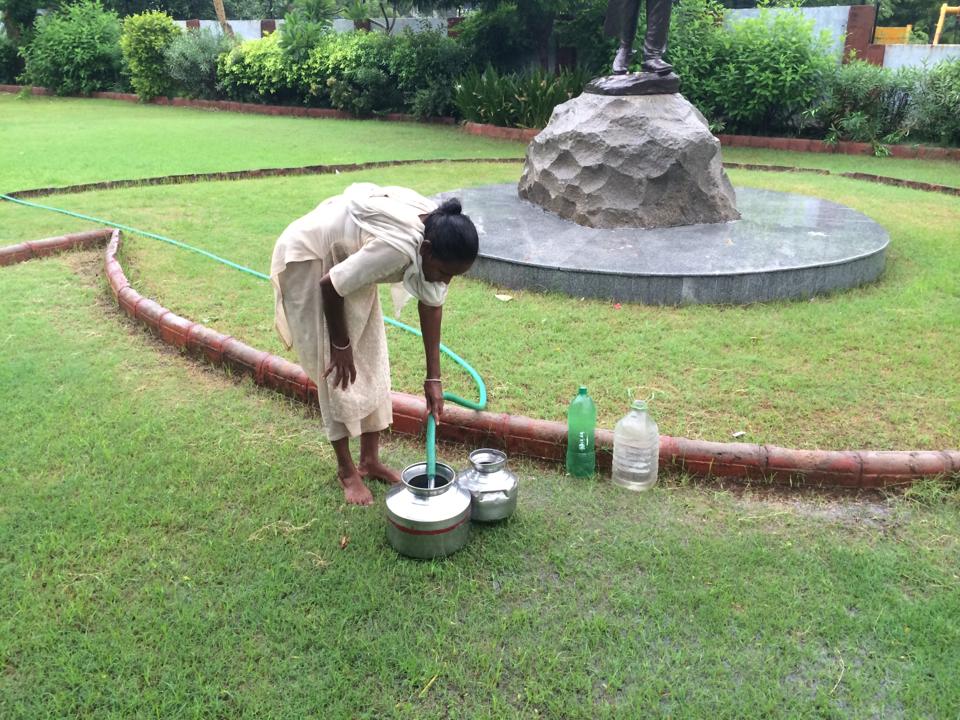
Ok, here is a question for some discussion. Why is it necessary to do a ridiculous running stunt in order to open a conversation about child survival?
Are either of these two even necessary? Does it necessarily follow that by embarking on an ambitious running stunt that it will have enough significance as to open a meaningful conversation? Or to put it another way, would the resources of time, effort and money be better spent in organisation this conversation? And secondly, is this conversation about child survival even necessary, given that there is so much discussion on the world’s stage through institutions such as the United Nations about the issue of Sustainable Development Goals?
Again, to add to the conversation here I’m going to refer to the Brazilian philosopher Roberto Unger as I did in my previous two posts, and again take his writing slightly out of context but in such a way so that it still has a useful application.
Unger’s writing warns us of what he refers to as the ‘illusion of false necessity’, which is to say that a model or way of seeing is so structurally strict that it doesn’t allow the occurrence of any other adjacent possibilities. The question I am asking here is whether I have become fixated on the running stunt at the expense of the task itself?
I can see that there are better ways of going about the journey I have travelled to date, but I am also mindful of the richness of experience that came through the hardship and new horizons that I encountered during this quest. Without that hardship and expanded horizon, my awareness as to what is possible would be stunted and limited which would not be in the service of the task.
Retrospectively, it would be possible to see where I got it wrong and how I could do it better. That is a process called learning. Without the advice from others or my own experience, I must first explore and discover to find out.
I think it has been necessary because the closer I get to this conversation about child survival, the more I am aware of how enormous the body of work and experience that already exists. We should not be aiming at reinventing the wheel, but rather learning from experience to make a useful contribution.
Getting this process right I believe is a balance between the stunt and the conversation. I don’t believe I have succeeded there to date, and that is why I am again lining up for first a rehearsal exercise in March to work out how to do this most effectively ahead of a final push where we hope to bring this conversation to a head in September and October next year.
And there is a paradox in terms of what I am seeking to achieve from all of this. Again, my old school mate Phil prompted me to consider this yesterday by asking whether there might be some simple and small things that we could be doing that of themselves would have a disproportionate impact to improve child survival. I don’t know what those things are. And to be honest, I’m not sure whether for all of the conferences that have been held around the globe to date that we have really cracked this code.
It is an audacious claim, to the point of arrogance, that I propose that through these Design Forum next year we might unlock new potential to reduce child survival. Why wouldn’t that be the case? Breakthroughs happen all the time in many different fields, and not always by the ‘experts’ or the institutional gatekeepers. What is almost without doubt is that the answers, if we can find them, will be found from engaging with people who are most affected by the problem. We will need to draw upon a broad network to find out those things that we don’t know and then through a process of design thinking put together this information to potential arrive at new solutions to make a difference.
There are game changing ideas to be found. Unger declares in his writing that “deep transformations can begin in small initiatives.” So why shouldn’t we believe in the efficacy of what we are trying to achieve? What have we got to lose by trying?
My mate Phil pointed out that it is probably in the small things where a solution that will create a tipping point could be found. What if in the process of conducting these Design Forum we could unlock 10 small but important actions that through the combination of these being applied together they have a game changing impact?
The irony is that to find these small things, I’m proposing to do a very big stunt. Let’s hope it is a worthwhile exercise. We are seeking some simple and small things. Small interventions, which by their application can address the question “how might we use our networks to improve the delivery of child survival?”
It’s the small things that matter.
Turning Point Or Tipping Point?
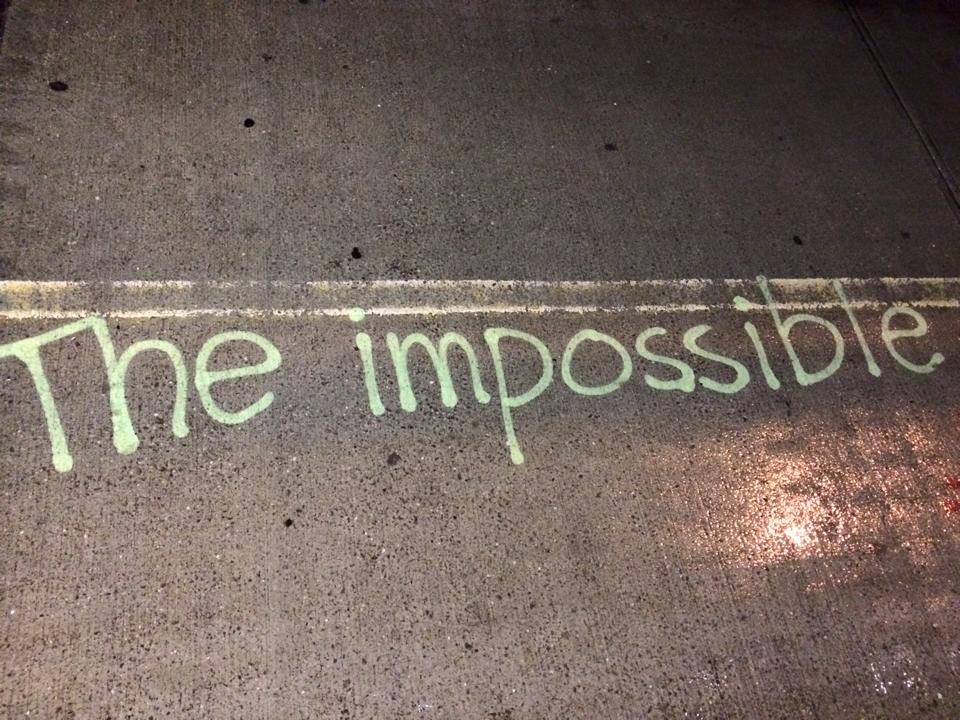
December marks the exhibition of my next public art work as part of a themed exhibition at the local gallery titled ‘Turning Point’. Turning Point is deliciously open to interpretation. Maybe your imagination begins considering a change of direction, then a change of season, a rite of passage, a traumatic event, a particular moment in time. Let your mind wander for a few moments and consider the possibilities.
I will be creating a work drawing upon my journey towards achieving this quest to improve child survival. My first submission to the curator was challenged with some great questions, and I have refined where and what the Turning Point means for me.
The work will be titled ‘The Next Step’, and points to 100 moments in my journey to date, any of which could be ‘the turning point’. The point of the work is that none of those moments, or neither the complete whole story told through this narrative of the 100 photos, is of itself the Turning Point. The Turning Point remains an elusive moment represented by the realisation of the collaborative effort necessary for this task of addressing how we might use our networks to deliver on the promise to improve child survival to be addressed. The Turning Point won’t be the completion of the journey. Far from it. The Turning Point will be the beginning of a new chapter in this journey, and only made possible by my efforts that were often inadequate at best in the past.
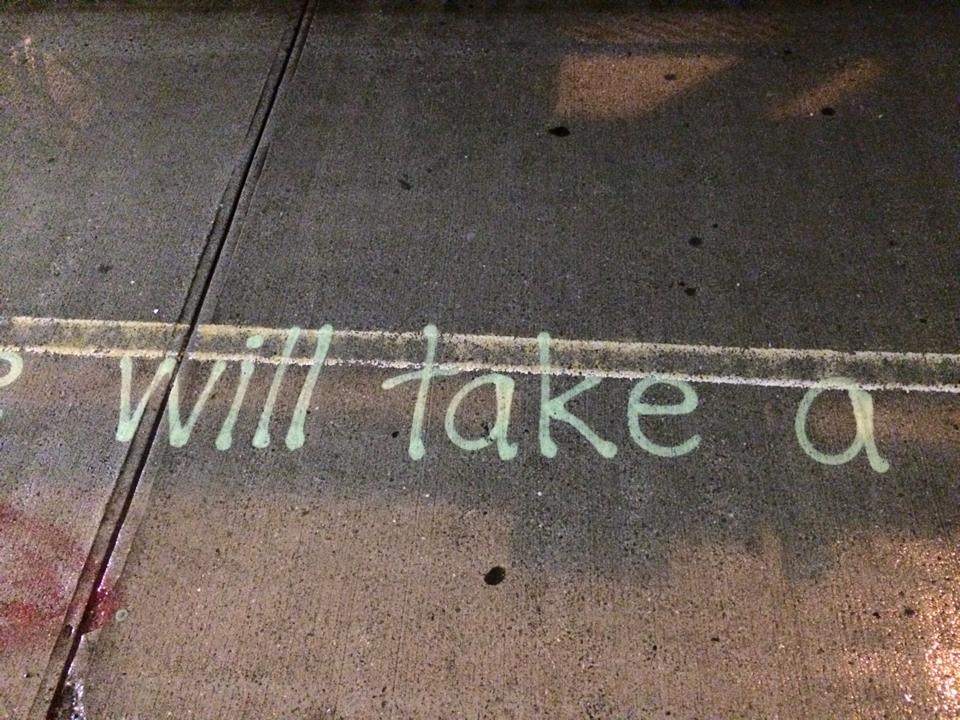 The work points to the hope that comes about from action, an action that is arrived at by being unreasonable in an ambition for change, and change that can only occur with radical collaboration with others. To achieve this Turning Point, it is necessary for us to take The Next Step, together.
Let me just explain how these 100 photos will be presented, because it is important to understanding a nuance in this work. They will form a 10 x 10 matrix in which the photos are close together, but not joined. Each moment is separate from the others, but at the same time part of a bigger journey. If a picture tells a thousand words, then this will speak volumes.
As I create the idea of work in my mind, I am becoming aware that somehow this gridded matrix of 100 photos will be bookended either side by two discrete grids, both also containing 100 tiles across the same 10 x 10 matrix. Every tile or photo will be the same dimension: 10 cm x 10 cm, and the two bookended grids will be empty containing no photos at the beginning of this work.
 Throughout the duration of the exhibition, these two adjacent grids will slowly take form. Photos will be added to each of the 100 tiles in each, ending up with three grids each containing 100 photos. 300 photos in all.
One of these adjacent grids will take the form of the 100 Champions of Change that I am seeking from the broader global community. People can nominate themselves, or even share the invitation to their networks. This is not just assembling a list of monitors to help with a project, but is an exercise that is rich with possibility. Who would we, from our small corner in Auburn of this expansive global community, like to see represented in this collective of Champions of Change? Is the request even too ambitious itself?
Seeking this participation of 100 Champions of Change to be assembled during the life of this art work draws upon another favourite quote from the Brazilian philosopher Roberto Unger who I referred to in my post yesterday titled “Hope Is The Consequence Of Action” . “To establish a transformative imagination at the centre of our understanding of society” is the task which Unger speaks boldly about. This art work is not just about my efforts and perspective during this project, but it demands the participation of others to be complete. That is risky. That is reality.
The other grid of 100 tiles will also begin absent of photos, and during the life of the exhibition will come to represent the 100 photos of human bridges that will comprise the photo essay to be featured in the book Life Bridge that is central to the completion of the 10 City Bridge Run. This will also be a co-created process, inviting people to contribute, and encouraging people to help assemble a wondrous deck of photos to tell this story of a human bridge drawn from people across the globe. Will we settle for less, or will we seek to attract an awesome collection of 100 photos of human bridges that will defy what the imagination at present even believes is possible?
It is the beginning of a conversation. It is both a statement and an invitation to collaborate.
A good mate today reminded me of the book ‘The Tipping Point’ by Malcolm Gladwell. Our friendship goes back literally decades. It was with two of our classmates from school that the kernel of this epic quest began. The journey has taken a completely different direction from the discussion of that evening, but it does go to further illustrate where we identify a Turning Point. Phil’s point is a good one, and I think that the Turning Point and the Tipping Point for this epic quest will be reached at the same time.
Hope Is The Consequence Of Action
 This has been a time of inspiration. Perhaps this is unwarranted, because it also has felt like a time when the sands of opportunity seemed to be avoiding my grasp as they slipped away through my fingers.
Trying something, and it not working. It is a very common experience. A quintessentially human experience. Is it strange that we have forgotten all of the failures from the early years of life during a time when walking might have seem to have been an impossibility? Perhaps it is stranger that we can get so hung up on a point in time when it would appear a plan has ended in failure. Not that we can remember, but if we were to think back to childhood, we would know that through perseverance we would eventually overcome.
I’ve been caught up in the words of a Brazilian philosopher called Roberto Unger recently. The title of this blog comes from a quote of his that I like:
“Change requires neither saintliness nor genius. What it does require is the conviction of the incomparable value of life. Nothing should matter more to us than the attempt to grasp our life while we have it, and to awaken from the slumber of routine, of compromise and prostration, so that we may die only once. Hope is not the condition or cause of action. Hope is the consequence of action. And those who fail in hope should act, practically or conceptually, so that they may hope.”
This post is an update about an epic quest I undertook in 2010 and have yet to complete. I called that quest the 10 City Bridge Run. The purpose of the quest was to address an ambitious question through a conversation asking: “how might we use our networks to improve the delivery of child survival?” The method was all the more ambitious to the point of ridiculous: I proposed a stunt to highlight the conversation about child survival where I would run 10 sub-marathons each of 24 km in 10 cities across 10 countries.
Long story short, I have completed the stunt, but not yet done justice to the conversation. And in between these two events there is a book I am yet to publish and send to my supporters. That book is to be called Life Bridge, and will feature a photo essay with 100 pictures of human bridges to illustrate that it is through our connections that change can take place.
I am very aware of ways this could have been simpler, or ways the execution to date could have been more effective. It has been lumpy in parts, but that too is part of the journey.
And so that brings me to this point about failure, about inspiration, and about hope where I began the post. A reasonable person would at this point in time cut their losses and apologise saying that it was all too much trouble, and that they were not up to the task. As I write that, I know that I cannot accept this as failure, and hear the words of George Bernard Shaw. You know the ones: “the unreasonable man persists in trying to adapt the world to himself.”
And so yes, I have been staring down failure as I interpret what this journey has meant.
Staring down failure because there is inspiration. Inspiration from the fresh initiative called the Sustainable Development Goals which will replace the United Nations Millennium Development Goals when they expire at the end of this year. Inspiration because I know there is purpose in holding this conversation, and that hardship is part and parcel of trying to achieve difficult things. And inspiration from a conversation I had in Newcastle recently where someone challenged me to look again at what I had achieved.
Let me explain this incident from Newcastle briefly. Back in 2009, I ran what was the initiative that preceded this 10 City Bridge Run initiative. In 2009, I called it the 9 City Bridge Run, and it was undertaken in response to the suicides of many friends as an effort to show that resilience and community wellbeing could be counterpoints to the conversation that was prevalent about depression and suicide. Long story short, that journey was personally a success, but a complete failure in attempting to have some impact on an issue which I considered to be important.
Unger refreshingly argues that change can be piecemeal, fragmentary, gradual and experimental. His words help to reframe our perspective: “we should not associate radical change with wholesale change, and gradual change with inconsequential change.”
The strength in Unger’s words to me is this: “To grasp what it can become” is necessary to embrace is we are to overcome the failure of structural imagination. To be sure, I have take Unger’s words out of the context they were written for, but I believe that remain entirely relevant to this situation.
And so from that conversation in Newcastle, I realised a few things. And this is where you come into the picture.
I realised that my efforts have been too much me pushing. As valiant as that might be, it leaves little room for the ‘us’ to truly collaborate on this epic quest.
I realised that concluding this quest through the publication of the book Life Bridge and the holding of a series of Design Forum to address this conversation about child survival required more input from others. It was possible, but it wasn’t just a matter of pushing harder from where I am now. I need to relent a little to invite others in to this space.
I also realised that what I achieved in 2009 and in the recent 10 City Bridge Run was worth exploring further. And this has pointed me to the next steps. And I’ll come to that shortly at the end of this blog.
Mao famously had a quote to ‘let a hundred flowers bloom’ which was actually a ruse to out the intellectuals within Chinese society so that their influence could be purged by “enticing the snakes out of their caves.” I think that Mao was definitely onto something. Not the crackdown of dissidents, but an openness to others being involved.
One of the last acts of the 10 City Bridge Run involved me delivering a letter to The Hon Julie Bishop MP, Australia’s Foreign Minister, asking her to be the champion for this initiative. Her staff replied in time, and I recorded a video when I was in Korea earlier this year just after receiving their message. Watch it below:
And this is where you come in. I’m asking for some help. I’m inviting 100 people to be our champions of change, to pick up the slack where Julie Bishop is unable to put her shoulder to the wheel. Returning to Unger, I note his words: “Great ideas are not beyond the reach of ordinary people.” So please note that I am looking for 100 champions of change, and you could be one. There will be more on that in a later blog post.
But here is the final comment, and the point of this blog post. Hope is the consequence of action. What I am proposing is to return to my initiative from 2009, and next year in March 2016, to run 16 runs in 16 towns across NSW in 16 successive day, and in each of those towns it is conducted where there is a group, individual or organisation that is prepared to host a Design Forum. The issue will be the same one I championed in 2009 which was to address the taboo issue of depression and suicide. The reason for this activity in March is to provide a rehearsal for the big event in September/October 2016.
So then in mid-September through until mid-late October over the course of a month, I undertake to run 17 sub-marathons each of 24 km in 17 cities across more than 10 countries. In both the March and the September/October dates, I will be inviting others to run with me, and more about that later. And importantly for the September/October event, in each of the cities, and in other cities even where running doesn’t take place, I will be asking people to organise these Design Forum for me. Why 17? Because that is the new number of Sustainable Development Goals. What about child survival? That remains a key focus, but also we will be taking a holistic focus in line with the Sustainable Development Goals.
Many friends have given me very good counsel about my execution of the 10 City Bridge Run, noting my shortfall on a reliable team, social media strategy and media coverage. Those are all very good comments, and I completely accept the need for improvement in those areas as well as many other. We now have an opportunity to get this right, but I seriously need the help from others.
We are at a Turning Point where Hope is the consequence of Action. And to achieve this Turning Point, it is necessary for us to take The Next Step, together.
 Building Bridges