Millennium Development Goals
Out of Reach? City of Sydney talks MDG
I am still working through the irony of hundred of people flying to New York to spend great sums of money on accommodation and the life’s littles luxuries like coffee to talk about poverty… Was anything achieved other than a gee-up from world leaders to say we have to do better? Could it have been better achieved with a couple of emails? I don’t know, and I wasn’t there either.
But before anyone set foot onto Manhattan, what the world did know was that it is not working. Back to the lead question: “Is the seemingly impossible possible?”
Want to know more? Find out at the City of Sydney presentation tomorrow night at the Surry Hills library. Click here to find out more.
I hope to see you there!
Stop the Clock!
Two days before beginning the journey, I need to make another difficult decision to delay the commencement of the 10 City Bridge Run.
- Do I go now because I said I would and risk being stranded with no cash mid-journey (in the event no sponsorship is raised during the run)?
- Do I just say it is too difficult (and in effect impossible) and give up, refunding all sponsorship received?
- Do I postpone the event, risking the integrity of ‘the bridge’ framed between the September UN Conference and the G20 Summit? Postponing also introduces significant considerations around adverse weather conditions. Soon it will be winter in Korea- not ideal for running.
I started thinking about what I had been learning about the Millennium Development Goals (MDG) over the last week especially through writing my blog:
- The likelihood of failure in meeting these in their entirety
- The excuse of the global financial crisis setting back earlier achievements with the MDG prior to 2008 (this is the reason cited for failing to deliver on commitments to the United Nations by many countries)
- The worsening situation of preventable unacceptable conditions in many locations, particularly sub-Saharan Africa
If you think that a delay of starting the run by a month is bad, consider these MDG.
Of course, there is no going back in time. I can’t make it September again. That is impossible. Neither can we make it 2000 again and retread progress of the MDG.
The reality is that there are not two days to go for the 10 City Bridge Run. There are 1905 days to go until the end of 2015 when the MDG will be assessed. This is what matters.
Rather than be frustrated, I ask you to consider the opportunity presented to optimise the impact of this 10 City Bridge Run.
The 10 City Bridge Run is a creative process of inquiry. It is a challenge. It is testing ‘the impossible’. It requires a little more effort than usual.
The bridge that has been defined between the United Nations Conference (20-22 September) and the G20 Summit on 10-12 November is far from redundant. It has formed the first of many (figurative) bridges that will be crossed. The G20 Summit becomes the near bank supporting a journey that bridges countries, bridges conversations, and bridges the small actions of many.
This journey is raw, real and live.
Thoughts, concerns, questions or advice? I welcome all feedback.
7 Days to Go: 8 MDG. MDG 2- Children everywhere able to complete primary schooling

Spotlight onto Millennium Development Goal 2 today:
Ensure that, by 2015, children everywhere, boys and girls alike, will be able to complete a full course of primary schooling
The United Nations provides sobering advice about the likely success of this goal:
- Hope dims for universal education by 2015, even as many poor countries make tremendous strides
- Sub-Saharan Africa and Southern Asia are home to the vast majority of children out of school
- Inequality thwarts progress towards universal education
Some of the broader metrics are presented here:
- Enrolment in primary education in developing regions reached 89 per cent in 2008, up from 83 per cent in 2000
- The current pace of progress is insufficient to meet the target by 2015
- About 69 million school-age children are not in school. Almost half of them (31 million) are in sub-Saharan Africa, and more than a quarter (18 million) are in Southern Asia.
Education is something so many of us just take for granted. It seems so simple. And the reality is that it can be a tough decision if the money available does not extend far enough to educate your children. Abolishing school fees in some of the poorest countries has made a big difference. Significant and important gender issues are being addressed through tackling this goal.
8 Days to Go: 8 MDG. MDG 1- Eradicate Extreme Poverty and Hunger

Eight days to go until the first run on 14 October commencing the 10 City Bridge Run!
I thought it might be timely to revisit the Millennium Development Goals and try to shed some light on where progress is occurring. More importantly, also examine where the shortfall might occur on 2015.
Millennium Develop Goal 1: Eradicate Extreme Poverty and Hunger
There are three targets under this goal:
- Halve, between 1990 and 2015, the proportion of people whose income is less than $1 a day
- Achieve full and productive employment and decent work for all, including women and young people
- Halve, between 1990 and 2015, the proportion of people who suffer from hunger
Conflict and the global financial crisis is cited as the reason for a disappointing backsliding in some of the progress last decade. Some comments from the United Nations of progress are:
- The global economic crisis has slowed progress, but the world is still on track to meet the poverty reduction target
- Prior to the crisis, the depth of poverty had diminished in almost every region
- Deterioration of the labour market, triggered by the economic crisis, has resulted in a decline in employment
- As jobs were lost, more workers have been forced into vulnerable employment
- Since the economic crisis, more workers find themselves and their families living in extreme poverty
- Hunger may have spiked in 2009, one of the many dire consequences of the global food and financial crises
- Progress to end hunger has been stymied in most regions
- Despite some progress, one in four children in the developing world are still underweight
- Children in rural areas are nearly twice as likely to be underweight as those in urban areas
- In some regions, the prevalence of underweight children is dramatically higher among the poor
- Over 42 million people have been uprooted by conflict or persecution
Lisa Asked: How Does It Work?

I was speaking with my good friend Lisa last night at GreenUps here in Sydney, and the conversation shifted onto the 10 City Bridge Run.
Lisa asked how did it all work. Good question. Here is my answer.
The start point would be to frame the 10 City Bridge Run: a global endurance challenge where I will run 10 sub-marathons each of 24 km in 10 cities across 10 countries within one month. The purpose is to raise awareness of an individual’s capacity to act to influence extreme poverty.
I will start running in Sydney on 14 October, and finish in Seoul on the last day of the G20 Summit 12 November.
These dates are part of a design to form a ‘bridge’ between two key institutional events: a United Nations Summit on the Millennium Development Goals held last month in New York commencing 20 September, and the G20 Summit in Seoul starting on 10 November.
I contend that what happens in between, the engagement of people like you and I, is of the same importance.
This is about much more than just running. Each run represents the 24,000 children under the age of five who on average die every single day. While 0.1% of this figure is from the West, a staggering 50% comes from sub-Saharan Africa alone.
This is an initiative about participation. Not through running, but bridge building. I am asking people to take photographs of themselves or other people making bridges between themselves and for these to be collated and then presented to the G20 Summit leadership (President of Korea). Together can we collate 24,000 of these photographs which will be printed, curated and then delivered to the President of Korea?
Another outcome is a book that will be published in electronic and print format containing 1,000 selected photographs from those in the petition. The book has a working title of “Above the Line”, a reference to the challenge of moving people often corporately identified as ‘The Bottom Billion‘ above the line of extreme poverty.
The 10 City Bridge Run is community funded, that is to say ‘crowdfunded’, by many sponsors who each pre-purchase the book “Above the Line” enabling the running to take place, and importantly the achievement of all Six Outcomes.
Sounds difficult? The tagline for the event is “Is the seemingly impossible possible?” I don’t believe we can fully address this question without first seeing what is possible ourselves through an experiential challenge.
What I propose is possible, but it requires the participation of others. Will you join me vicariously on the run as a sponsor? Sponsorship is $240 for a printed copy of the book or $24 for a electronic copy of the book.
Please be part of the difference that makes a difference and sponsor the 10 City Bridge Run.
The Three Most Significant Notes on MDG from Obama at UNNY
Put simply, the United States is changing the way we do business… For too long, we’ve measured our efforts by the dollars we spent and the food and medicines we delivered. But aid alone is not development… Instead of just managing poverty, we have to offer nations and peoples a path out of poverty.
Speaking from New York at the United Nations Summit on the Millennium Development Goals on 22 September, President Obama gave emphasis to a number of points in relation to the eradication of extreme poverty. Here is one opinion from an observer. For me three points stood out that should grab our attention:
- If we continue to keep on the same trajectory we won’t succeed and achieve the Millennium Development Goals (by 2015)
- To developing countries (read the G20 members): Resolve to put an end to hollow promises that are not kept. Focus not on money but on results.
- No one nation can do everything and do it everywhere. Just as this work cannot be done by one government, division of labor among a wide array of stakeholders is crucial.
What can we expect in 2015? Is this hope we can believe in?
Is the seemingly impossible possible?
The one thought I want you to consider today
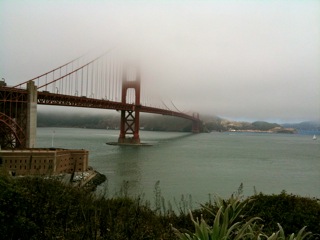
Where does the time go?!
Dear reader, thanks for your patience- it has been now about a week since I made my last post. A lot has happened in that time, and many ideas and thoughts to write about. I will endeavour to share some of that with you later today, but not everything at once.
A few updates about the 10 City Bridge Run.
Firstly, I’m pleased to say that enough funding through sponsorship has been received to make this endeavour possible, that is to commence the journey. While the first hurdle is cleared, there is still a fair distance down the track to cover.
Secondly, a quick note about date changes. The date for the commencement of the 10 City bridge Run has now slipped twice. I want to be open about the planning to share with you the challenges and difficulties I am encountering. I think to present the vulnerabilities and uncertainties, for all its lumpiness is important in learning to take the crunchy with the smooth as Billy Bragg might say. Let’s be clear that this is an ambitious and difficult venture with a deliberate tagline of “Is the seemingly impossible possible?” At the same time, for as much of the experiential learning that might come from this to mirror an understanding of the challenges to eradicate extreme poverty, it also should be acknowledged that there is a difference between the two. We all have a choice to some degree of what difficulties that come into our lives: those in extreme poverty do not.
The reasons for the date changes relate to a number of issues. The most significant is the clearance of funding through PayPal. This issue has been resolved, although may still have some impact on successfully initiating the run on 8 October. Make no mistake: the run is going ahead, and the objective to present a pictorial petition to the G20 Summit remains a key outcome.
There are two institutional events framing this initiative- two bridge supports if you like. The United Nations Conference which commenced on 20 September and the G20 Summit in November. The last date to commence the running is 14 October should the time need to slip another few days. This would involve an (already identified) curatorial team in Seoul compiling the petition and presenting it to the G20 Summit on our behalf prior to the last leg of the 10 City Bridge Run coinciding in Seoul with the last day of the G20 Summit.
Please let me know if you have any thoughts about how the 10 City Bridge Run might be better organised, communicated and presented. I am particularly interested to know what your response is to the changing of dates. If it frustrates you or disappoints you, if you feel let down or if it challenges your confidence, or if you see this as an unwanted but inevitable part of attempting something that is difficult. Or maybe you are happy to just watch it unfold without having an opinion- that is fine as well.
Just a thought from me I ask you to consider: if you are disappointed by these date changes which have minor consequences apart from how to organise the delivery of the petition, how did you feel after the United Nations Climate Change Conference in Copenhagen, and how will you react in 2015 when the United Nations is called to report on the Millennium Development Goals?
Goodooga. Postcode 2831

Goodooga, located 200 km from Lightning Ridge in Northern NSW has a population of around 270 people, of which more than 80% are Indigenous. Look it up yourself on googlemaps…it is real.
The town has a strong community spirit and is trying to survive by building grocery and petrol services to be run by a local cooperative.
What has this to do with extreme poverty you might ask?
Much has been written about aid- curse or cure. A lot has been written about the adoption of enterprise and design initiatives to overcome the effects of poverty (for example, child mortality in so-called “Third World Countries”). Some of the health interventions are in the form of aid, and some are made sustainable through enterprise.
These situations are complex, and not just about the grandeur of a large institution or the macro-economics of how statistics might be improved.
What actually happens among real people matters. There is no silver bullet delivered by any rock star or politician to solve these problems.
Please support the 10 City Bridge Run to highlight small actions which will make a big difference in showing that the impossible can be possible. Please sponsor me with $24 here.
New York- UN MDG Summit Offers Hope
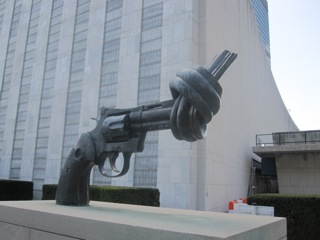
This week in New York, a United Nations Millennium Development Goals Summit is underway.
10 years after the Millennium Development Goals were first announced, this is an opportunity for the world leaders of 150 countries to come together and review progress.
Australia is represented by our Foreign Minister, Kevin Rudd.
What can we expect from this conference? The news bulletins have rung with the sounds of billions of dollars expenditure, and initiatives for improving education, health and eradicating poverty. What happens once the bureaucrats and politicians have finished on Wednesday? Is it really that easy to solve extreme poverty?
Translating the media spin into meaningful action is important. But it is good this Summit is being received with such optimism offering a hopeful future. A big change from Copenhagen.
See what AusAID, Australia’s Aid Program had to say here.
Please support the 10 City Bridge Run to highlight small actions which will make a big difference in showing that the impossible can be possible. Please sponsor me with $24 here.
The Number One Most Important Reason To Address Extreme Poverty of All Time

Hans Rosling again has caught my imagination. This time thanks to my good friend from Sydney, Arlyn Santos, for bringing this to my attention.
This is so important, I think you should know about it as well: The Number One Most Important Reason To Address Extreme Poverty of All Time. (Whew! That’s a mouthful!)
So what is it? I think the answer is in this TED Talk. Watch it below here:
What did you learn? Did you agree with Hans? Over-simplified, or genius? The reason to address extreme poverty? Unless we do this, the ‘Bottom Billion’ will become the ‘Bottom Four Billion’ sewing the seeds to an unsustainable planet, resulting in war, starvation and global crisis which are now unimaginable.
So what can we do about it? This is a question I am exploring through the 10 City Bridge Run- a creative process of inquiry.
Crowdfunded, you can support with a $24 sponsorship. The money goes toward the production of a book titled “Above the Line” to be presented as a pictorial petition to the G20 Summit in Seoul. If you are sponsor, you also receive a copy (electronic for $24 sponsorship, printed display book for $240). What makes the book special: it will contain 24,000 photographs of people making a bridge between themselves and other people.
Be the difference that makes a difference. Sponsor us today. Thanks for your support!
- ← Previous
- 1
- 2
- 3
- 4
- Next →
 Building Bridges