Design Forum
Human Junk
 Returning to Osaka, it was like coming back to visit an old friend. That’s the effect of running around a city. Long distance runners will know the feeling. The city opens up its secrets. Back streets and observations of life that pass the ordinary visitor. Osaka is a lovely city, with lovely people, a proud history and natural beauty.
It was with this in mind that I wondered what to make of the small community of people who I gathered with on Sunday morning after arriving on Saturday evening. Inside an austere hall, they greeted me warmly as I arrived. I hadn’t met them before, and someone might have been excused for thinking that there was nothing at all special about their very-ordinariness at first glance. How might they be described by others? Lonely misfits, trash, human junk, cripples. Not world beaters.
But within a few minutes, I saw a different side to them all. Warm, friendly, generous, talented. Not trash. Not junk. Gifted.
And while I had experienced the friendliness of the city on my previous visit when I ran in Osaka last October, this community showed me a hospitality I previously hadn’t recognised here.
To write anyone off as junk is more than unkind. Similarly, to think that to solve important social problems is only for those with a certain talent or income is equally as wrong. Bill and Melinda Gates have become poster idols for making change happen, but they are not unlike you or I. We are all human, and we all have the same capacity to care. Money has little to do with the equation. It is a question of commitment.
Who is invited to the Design Forum? Only the beautiful people? Just innovators, thought leaders, and forget the rest? No, there is no qualifying credentials required. Everyone is welcome.
The Design Forum is an ambitious journey of its own. It is the destination of the 10 City Bridge Run, and defines a conversation asking an important question: “how might we use our networks to improve the delivery of child survival?”
Drop in at anytime. Please bring your manners. And your imagination.
The conversation is about child survival. That is keeping children alive and flourishing past their fifth birthday. UNICEF calculates there are over 16,000 children under the age of five every day, and a high percentage those deaths occur within the first 48 hours. And we really have to ask ourselves: do these deaths really matter? Can we really be concerned? Or are these babies are just human junk and trash?
Do we care enough to act? I’m not talking about a donation to UNICEF or any other aid agency. Can we really take action to make a difference? Can you? Will you?
Osaka: Start At The Beginning
 Today begins a new journey as the Design Forum for the 10 City Bridge Run formerly commences. By way of introduction and explanation, this is a welcome note to many, and also an apology of sorts for possibly failing expectations, as we embark on this epic quest.
The Design Forum follows behind the 10 City Bridge Run, a running stunt that wove a narrative through 10 cities where the discussion will take place.
We have to go back to the beginning to understand where we are now. The 10 City Bridge Run was in response to an alarming rate of child mortality painted by large, institutional aid agencies. In 2010, much publicity was given to highlighting the 2008 daily rate of child survival: an average of 24,000 child deaths per day calculated by UNICEF. Considerable money and attention was given to highlighting this figure. I thought that we should instead be asking what we could do going forwards rather than be too caught up in educating a figure from the past. So the 24K formed a figure which framed a distance I then decided to run in 10 cities as a stunt that would culminate in a central Design Forum.
It was an ambitious journey. Epic. Impossible. Impossible because I made these plans with none of the resources at hand.
Friends and family responded by contributing, crowdfunding an amount to start the journey. The deficit fell on myself which has not been insignificant.
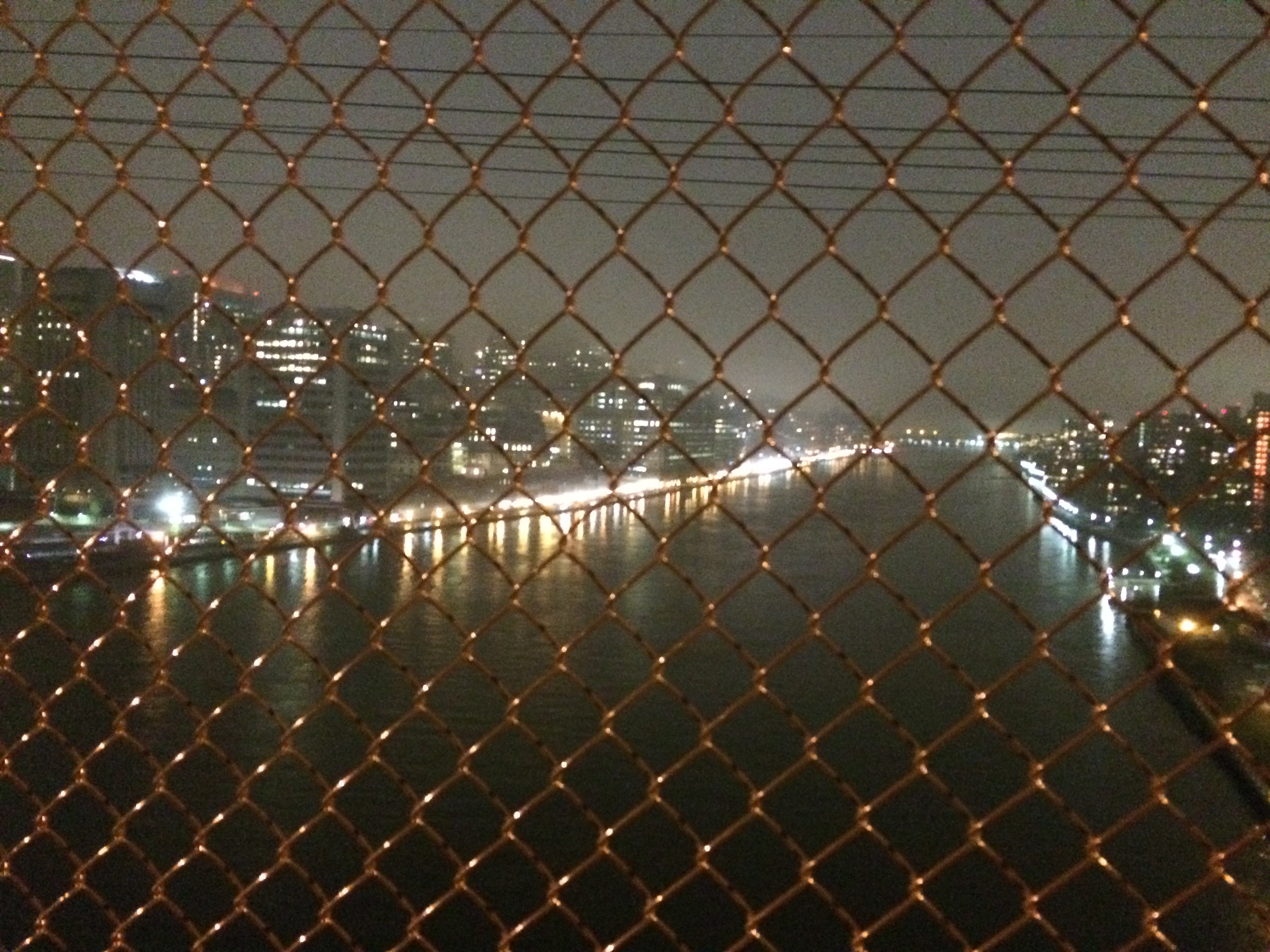
In early January this year, after a prolonged and difficult journey, the 10 City Bridge Run was completed in the cold rain on a dark night in Manhattan.
Many friends have said that media was key. Why didn’t I have more media? Why didn’t I have any media support for that matter? And they are right. Partly, the reason for not pressing ‘send’ on documents to the media is because it was just me doing this journey. Yes, me. For all of my failings. I admit fearing the thought of standing before the media, injured, unfit, lacking resources, with no certainty except for a foolish Quixiotic quest to drive me forward. Understandably, the media would want to know the plan, not just the dream. And there was a plan, but unfunded. I couldn’t say with any certainty what would come next even within days before the event because of a lack of resources.
Along the journey, out of necessity I chose homelessness over accommodation in many cities. To abstain from meals rather than to eat. There was no money for such things. And that made speaking with media all the more difficult. The rawness of the journey, the fraught nature of this quest is what has made it epic, but they are also circumstances that scare people. Their natural response is to tell you to stop.
Even getting to Osaka has been part of that narrative. I could point to a date on a calendar easily enough, but how to organise something without resources? I’m now not so sure if that is difficult, or foolish, or both.
The Design Forum began today because it was a date that ensured I was in Osaka ahead of HackOsaka tomorrow. A gathering of innovators and entrepreneurs to look at applications of the Internet of Things (IoT). When I first met the Director for this gathering after I ran in Osaka last October, it seemed to be a clear and definable line in the sand to start a series of Desig. forum. I used the expression “to convene a ‘Part B’ to HackOsaka” during that conversation, although it wasn’t clear to him what I meant exactly, partly because of language and partly because of lack of resources that I was reluctant to share a plan that was closer to a dream than to reality.
Before we get too far into a conversation talking about child survival, I think it is first important to ask how are we to ‘Design the Design Forum’. The Osaka gathering is in a foreign language to my own, set in a foreign culture, and format (hackathon) that I had a hunch might best be used to discuss the issue of child survival. A hackathon is a preferred format to a traditional conference setting involving a plenary which leans on the panel of experts to frame the conversation. I loved how Bono referred to that type of plenary at Davos in 2012 by saying, in a conversation about child mortality, “we don’t need another talking shop”.
Additionally, today’s date is important because it is the start of a free, seven-week, online course hosted by Acumen Fund and IDEO called an Introduction to Human Centred Design. A free course about Design Thinking. That date for the course was a coincidence, but very welcome, and it is that course along with the Hackathon tomorrow here in Osaka which defines this first Design Forum beginning in Osaka.
The HackOsaka event won’t be discussing child survival, but will be an opportunity to ask questions about conducting an event. Not just questions of the organisers, but amongst ourselves. I intend to conduct a straw poll of people who are attending about child survival, but only in as much as to find a baseline of where the current ‘person on the street’ conversation is found.
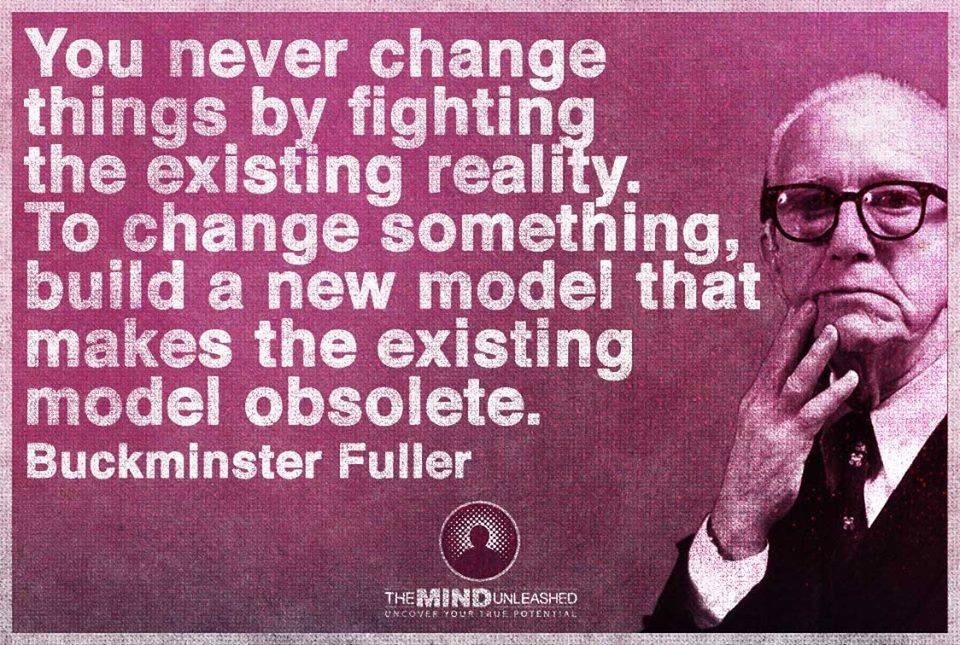
The seven weeks concludes close to the entry date for the 2015 Fuller Challenge, and the culmination of this Design Forum will both be framing a plan for the future as well as making a submission to the Fuller Challenge. The Fuller Challenge is inspired by the life and work of Buckminster Fuller.
In the meantime, I have been wrestling with Google Hangouts which I can’t get the Hang Of so that I might provide an overview of the journey to date. That too is perhaps an auspicious start to the begin of this new epic quest. Auspicious and not ominous. Auspicious because it highlights that there are many things we don’t know. I can’t just dismiss the problem by say “I’ll do it on an Google Hangout”. I have to really know how to do it, which serves as an allegory for our journey to improve child survival.
Why this is relevant is not because it highlights my own failings, but because it is a question I asked a number of people in an open ended way about six-months ago where I indentified that the most immediate challenge to be solved was working on a framework for collaborative exchange. I actually think that Google Hangout is close to the solution to that question, except for the fact that it can’t be accessed in China. By identifying that there was never a response to that earlier question six months ago, it is not blaming the earlier conversation, but addresses the fact that to resolve issues we need to have intentional commitment to a solution. Which brings us back to the Design Forum.
Another reason for the Design Forum, and approaching it methodically through Design Thinking is that it helps to engage unspoken and undiscussible assumptions and opinions about child survival. In a Facebook exchange yesterday, two friends shared informed view of funding about which organisations are best, and also by contrast which are less effective, for improving child survival. It is a welcome contribution, but this conversation is less about funding and more about our most precious and under-utilised resource: each other. Our networks are our most under-utilised resources, especially when it comes to solving problems. Our networks are fuelled by passion and imagination, not money.
There are some less conventional part to this Design Forum. One such example is using our networks to strengthen a petition (both in wording and in numbers) which is addressed to Australia’s Foreign Minister, The Hon Julie Bishop MP, requesting her to be the official Champion for the Design Forum (which will point to the culmination of this conversation at the final event in Seoul this October). Another example is a request to Bill and Melinda Gates to suggest a reading list for us to read right now. There is no time for delay. This is not a nice to have.
If you disapprove about anything relating to the Design Forum, that’s fine, but let us know why. This is a conversation. We needn’t agree with everyone on everything all the time. Share your perspective, and as loudly as you would like, but please remember your manners too. We need your voice, and I for one know that I am not always right.
Thank you. Thank you for being part of this journey, even if it is just through the reading of this blog. We really need you to be part of this journey for the Design Forum to ask an important question asking: “how might we use our networks to improve the delivery of child survival?” Bring your imagination, your enthusiasm, your criticism, your passion. But please do join us. This is an important question to address, and I suggest that the point of Bill and Melinda Gates Annual Letter this year which pointed to a reduction of child mortality over the next 15 years was to inspire action, not just Facebook Likes. Welcome to the conversation.
And with that, I am delighted to announce that this epic series of Design Forum has now commenced!
Some links:
Design Thinking course. Join here or leave a message below. https://novoed.com/hcd-acumen
Petition for Julie Bishop. https://www.change.org/p/the-hon-julie-bishop-mp-champion-the-global-series-of-design-forum-to-improve-child-survival
Question for Bill and Melinda Gates (and yes, you can forward this blog as well). http://youtu.be/tkrUlCm9GFs
10 o’clock Club
Much of my background in the Australian Army was serving in my capacity as an artillery officer. The old School of Artillery is still located up in North Fort at North Head in Manly, although the gates have long since closed after the school was moved down to Puckapunyal around 1996.
The last thing I did at the old school while it was still a military establishment was play tennis with Rob Rowe on the grass tennis court which sat on the harbour side behind the Officers’ Mess. From memory, we played barefoot, but I’m not so sure why. It probably had something to do with the bar the operated inside the Mess.
Brian the Barman had become an institution as inseparable from the identity which the Officers’ Mess had forged. He had been working behind the bar when I arrived as a young subaltern fresh out of the Royal Military College for longer than I had been alive, and knew the good, the bad and the ugly pasts of all the current generals who were also like myself young subbies when they first approached the bar and asked Brian for a beer.
Not much had changed over the 30 or 40 years that he worked at the School I suspect. Including the 10 o’clock Club. That almost never changed.
The 10 o’clock Club. Every evening at 10 pm when a course was in at the School, they would stop studying and assemble in The Blue Room of the Officers’ Mess. Some lighthearted banter would follow, and that was pretty much it. Well, maybe there was a little more to the proceedings, but that is enough for this post.
I’m bring the 10 o’clock Club back as we embark on the journey of the Design Forum, and I invite you to join in. Every (or any) evening at 10 pm, take a photo of where you are/what you are doing/who you are with and post it to Twitter with the Design Forum #hashtag which is #10cbr. Extra points for creativity and imagination.
I can’t promise to be in attendance every night, but I hope to see you there on the interwebs.
Don’t forget the #hashtag for the Design Forum! #10cbr
Let’s Collaborate!
 We are going to experiment with different process, platforms, and formats.
Platforms for collaborative exchange. There are many and this is just the start. So let’s begin with Google Hangout. There will almost certainly be some platforms that have better features, and some are suited to other tasks better than others. Part of the conversation will be working out what tools work best, and also how to coordinate the involvement of people together so that collaboration can occur optimally. This is not a simple question, and will involve trail, testing and error.
Process for problem solving and engagement. We will adopt a variation of Design Thinking known as Human Centred Design. We can play around with that as there are many variations, and it can develop and become modified according to our need. But neither should this become doctrinaire or a distraction from the task at hand. The process, much like the platform, is a tool, not a silver bullet.
The format for the Design Forum to be adopted is a little more involved. Roughly speaking, a framework of a hackathon is what I have thought might be best to adopt, but there are many different ways of executing a hackathon. We can look at other initiatives and model the best they offer. Creativity and invention that we also bring to the table are important to combine with what we like best in the work of others we model. Some start points could be among the following, where ‘the best of’ is combined for optimal value:
- Super Challenge Hackathon in Seoul this past week
- The HackOsaka Hackathon
- Davos, the World Economic Forum
- Bill and Melinda Gates Annual Letter
- Playing For Change
- The Your Turn Challenge
- Skoll World Forum
- Humans of New York
This list is far from exhaustive. The aspiration ought to be that the final Design Forum in Seoul brings together the best of what we have created together to generate meaningful impact as the next steps to make a difference in improving the delivery of child survival.
The 2015 Fuller Challenge gives us a guiding framework as to how to ‘measure impact’ for both the Design Forum and the outcomes of what flows from the next nine months activity. The culmination of the Introduction to Human Centred Design course which examines the process of Design Thinking will be close enough near completion when the Fuller Challenge is due, and this will both give us some clarity of how coherent our plan for the following nine Design Forums is towards meeting an objective, as well as a credible timeframe to gather together a team who are share a similar passion towards pursuing a question about child survival.
Here is a little bit about the inspiration behind the Fuller Challenge:
Buckminster Fuller led a prolific life of research, invention and social engagement, a practice he called comprehensive anticipatory design science. He established a set of rigorous design principles and ecological aesthetics. Fuller’s intention was to design new systems in which all of humanity could live lives characterized by freedom, comfort and dignity without negatively impacting the earth’s ecosystems or regenerative ability. He emphasized that the technology and knowhow exist to successfully surmount global challenges and advocated the creation of strategies that “do more with less” by increasing the overall performance of the resources invested in a system.
In all of this, when the size of the beginning might seem small compared to the juggernaught of institutional activity which typically defines this space, we would do well to remember the words of Margaret Mead:
“Never doubt that a small group of thoughtful, committed citizens can change the world; indeed, it’s the only thing that ever has.”
What does it take to build a bridge?

The Design Forum is an extended conversation across nine months, knitting together a series of 10 key events occurring in each of the cities where the 10 City Bridge Run wove a path. It begins with the first of these Design Forum in Osaka commencing on 9 February 2015. The Design Forum, much like any conversation, draws upon the alchemy between people to build a bridge.
We are beginning at the beginning. We will begin with a conversation. And that conversation will be both online and with people who are present in the same location. Rather than the formality of a conference, we will start with the familiarity of a conversation.
Like any conversation, there is certain etiquette but no actual rules. People can come and go as they would in real life (because this is actually real life!) Online or in person, it doesn’t so much matter. Still very much part of the conversation.
The theme of the first Design Forum is “Designing the Design Forum.” The Osaka Design Forum will be a discrete event in Osaka, and won’t conclude until a free, seven-week, online course which provides an Introduction to Design Thinking concludes.
 Some people might want to know how they can participate when their lives are busy and can’t afford seven weeks. That is completely understandable. I will be posting my notes from the Design Thinking course online in a weekly post, and so people can feel engaged even if this is only vicariously. Everyone’s contribution and questions would be very welcome at any time no matter how much time you can spare.
Seven weeks is a long time! Yes, the Design Forum in Osaka can more properly be seen as taking place over two days: 9-10 February. Because the Introduction to Design Thinking course is so integral to the theme of ‘Designing the Design Forum’, it defines the duration of the first Design Forum.
Moreso, the dates align with the opportunity to submit an entry in this year’s Buckminster Fuller Institute 2015 Fuller Challenge:
The Buckminster Fuller Institute announces the dates of the 2015 Fuller Challenge. Each year, BFI awards a $100,000 prize to support the development and implementation of an integrated design solution to solve humanity’s most pressing problems. BFI invites the world’s scientists, designers, architects, engineers, planners, artists, students and entrepreneurs to enter their strategies that simultaneously solve for the systemic context underlying the problem while dynamically transforming current conditions.
We will be designing the Design Forum that will continue through Port Moresby, Glasgow, Toronto, New York, Sydney, New Delhi, Singapore, China (city TBA, but I am hoping we could return to Shanhaigaun), and concluding in Seoul. Not only designing the journey that this epic conversation will take, but making a contribution that Buckminster Fuller himself would be satisfied with.
This is not about winning prizes. If we are good, any trophies we deserve will follow. But I contend that we should be more satisfied with making a difference. We have an important question to address: “how might we use our networks to improve the delivery of child survival?”
You can sign up for the Design Forum here, and register for the Introduction to Design Thinking here.
You are invited and you can invite anyone you want. Make new friends. Open the circle. Build a bridge.
Embryonic

Embryonic. It is defined as “of a system, idea, or organization) in a rudimentary stage with potential for development.”
The idea has been conceived. We have life, as it were. An embryo of thought, birthed of action and imagination.
This embryo now needs to be nurtured, fed, protected, strengthened.
Of course, it is not really an embryo. But it might as well be. If nothing else, it is a good metaphor through which to see the beginning of the Design Forum. It really is embryonic. That might be difficult to believe after tooling around with this idea since 2010, and spending the last three months of 2014 on the epic quest of the 10 City Bridge Run.
But yes, we have arrived at our destination: the Design Forum! And it is at the beginning! I especially think it is important to let this conversation develop organically. It is a real conversation, not a formal conference.
We are literally waiting to hear from you. I have my own thoughts about which way the conversation will be fashioned, but the wisdom of the crowd is far smarter than any one of us. It will be a journey that is as deliberate as it is serendipitous.
We do know what happens when an embryo grows. Granted, there is not a lot of room for serendipity there. But that is why the metaphor of an embryo is powerful.
Apparently when a butterfly transforms from a caterpillar inside its cocoon, it has what are called imaginal cells that transmutate and allow it to shape-shift. This strange alchemy of the imaginal cells is something which could also transform the Design Forum. Who amongst us can unlock the imaginal cells to morph into a spectacular butterfly-like recreation?
How radical will we let our ideas become? It could just be you we are waiting for. Let’s begin.
Sign up for the Design Forum here, and enrol in the free introduction to Human Centered Design made available through Acumen Fund/IDEO here.
Happenstance: Then There Were Ten

It was when I was in Osaka last October after completing the fourth leg of the 10 City Bridge Run that I realised the plan had to change.
Up until that time, a singular Design Forum was scheduled for the end of the journey in Seoul. The fourth leg I referred to above was part of an epic quest running 10 sub-marathons each of 24 km in 10 cities across 10 counties as a stunt to open a conversation asking “how might we use our networks to influence the delivery of child survival?”
It was a journey fraught with difficulty and uncertainty. Getting it started was hard enough, but at that point in Osaka, now that I had began, I found that my capacity to engage effectively on the issue while running was limited. And I knew the conversation was huge. Enormous. Not impossible, but tremendously big.
 I thought back to some of the earlier difficulties since I committed to the task in 2010. A crowdfunding effort commenced and fell slightly short of the sum required to pay for the round-the-world plane fare to undertake this epic quest which had been called the 10 City Bridge Run. Departure was delayed until sufficient funds were gathered, injuries followed, more delays, another crowdfunding attempt in 2012 which was successful but then thwarted with a badly torn calf muscle. Even though bad, those things were happenstance.
During this time, life continued on, winding and wending its way, day by hour by week by month by year. Time marches on and waits for no man, so says the idiom.
Many supporters remained a source of amazing encouragement. A “how’s it going?” here, a “have you been training much?” there. We underestimate the significant of the quiet word of encouragement like this. Those small things in effect became the resin I needed to stick to the task.
Then in 2013, happenstance brought a chance to recommit publicly while on a leadership forum focused on the Commonwealth. Not only an opportunity to renew this commitment, but a realisation of the importance the Commonwealth brings to this discussion. You can see my good friend Ellie encouraging me to put it out there in the photo above.
Happenstance. The insight which this blog refers to came one morning in Osaka in October 2014 while trying to once again figure out my schedule. I realised that time was a resource we needed to draw upon for this conversation. Not necessarily more time, but to take more time ourselves. It would take more than one meeting in Seoul. The afternoon of that insight, I was visiting the Osaka Innovation Hub. I had searched some places I wanted to meet with on the Internet, and other than that had little idea of who I was meeting.
Happenstance is the collision of preparedness with opportunity. Meeting with key staff in Osaka, I learnt of their HackOsaka being held on 10 February 2015. Right then, I knew that would be the start point for the Design Forum, and that there would need to be not one but ten conversations.
It will be a surreal feeling when the Design Forum in Osaka comes around next week. You are welcome to join us too. Go on, partner with us in this conversation. Create your own happenstance by turning up.
Question Everything, Even The Experts

2010 was the year an idea about challenging the action that was being taken to address child survival was conceived. The idea was bold, and from the beginning sought participation from others.
It was grounded in a plan to run 10 sub-marathons each of 24 km in 10 cities across 10 countries as a stunt to open a conversation asking: “how might we use our networks to improve the delivery of child survival?”
The reason for running 24 km was in response to the emphasis made by many organisations in 2010 promoting the 2008 figures of child death per day which had been released by UNICEF. The figure was 24,000 children dying on average daily. A wholly unacceptable figure, which has since been reduced by a third, and progress for the future shows signs of being promising.
I wasn’t an expert in the field, and it struck me that few were. Canvassing my friends about the importance of the issue showed the effectiveness of marketing campaigns from institutional aid agencies, but apart from that little more knowledge. I thought that in a networked age where communications and health infrastructure was better than ever, was there not more we could do to crowdsource and then implement some form of solution or positive intervention?
This was the point of the running stunt. I would run in 10 cities, simply to highlight the year 2010, and conclude with what I had loosely defined as a ‘Design Forum’ at the end to address the issue. There was no budget, no institutional backers. Just a mad Australian with a little bit of passion, who had been given legs by many friends each contributing a small amount through a makeshift crowdfunding campaign.
I took the idea to several institutional aid agencies and charities who had a vested interest in the idea. Would they partner, or was there somehow I could support their efforts? I wasn’t asking for money, and it just have been evident that perhaps lacked some experience in that sector. Their response, especially in hindsight having now completed that journey after much tribulation, was astounding. I was met with the same response, and that surprised me: “sorry, that is not consistent with our messaging”, “we can’t quite see how it ties in with our fundraising efforts”, and other such words that effectively closed their door to my invitation.
I was at a loss as how to respond to this response from the aid agencies that so effectively had appropriated the issue of child mortality. Was I mistaken, and maybe my ideas were ill-conceived and ridiculous?
Reflecting on their response, I remembered back to Boxing Day 2004 when a catastrophic tsunami would smash against Aceh and many other towns in the Asia Pacific. It was an unprecedented event. At the time, I was still serving as an Australian Army Officer and then had a responsibility for planning emerging operations across the region. From the moment the first phone call was received on Boxing Day afternoon and being probably the first person in Australia to hear about the incident, we spared no effort for the following weeks with literally no rest or respite so as to respond with critical support to assist the logistical, recovery and humanitarian needs which were many.
Aid agencies of every manner were part of what I describe as a third wave of tsunami after a second wave of tsunami crashed around the world as the general public awoke to the horror of what had happened. Many aid agencies were quick to adjust their messaging to receiving funding from an empathetic public.
A short while later, reports in Aceh were of degraded roads and bottle-necks from the inundation of traffic of aid agencies wanting to be the first organisation to be seen to arrive and distribute food and blankets. This hampered getting water and other critical supplies to remote areas. It would have made more sense for the aid agencies to coordinate their efforts in Kuala Lumpur and deploy as a collaborative effort without concern for which person from what organisation arrived first.
Now, a decade on, we look back on Aceh. There are questions about where some aid money ended up. Such questions are worth examining, but not too pointedly perhaps. The generosity that allowed the aid in the first place does deserve accountability, and that is a separate issue from that which is being raised in this post.
Child survival is an issue which has been strongly advocated for, from politicians such as Hilary Clinton to actors the like of Ben Aflick. All have spoken with the same staunch plea, demanding urgent attention, mirroring the words of Tony Lake the Executive Director of UNICEF who in 2012 rightly described child mortality as a “moral obscenity” and a “moral abomination”.
Earlier this year, we saw a very positive report from Bill and Melinda Gates in their Annual Letter which has taken a different approach to the ‘alarmist’ view of an appalling situation that has underpinned the messaging of institutional aid agencies to date. We have turned a corner. He future looks bright.
There is no better time to conduct the Design Forum for an issue like child survival. Just because the future is painted as a bright place to visit, it doesn’t mean the road is downhill from here. There is still a lot of work today, but through collaborating with those interventions that we know work and learning from interventions that have been less successful.
The Design Forum is a conversation that will last nine months and beyond. Is picks up a conversation which has started many decades prior. And everyone is welcome. I expect many people will watch to see how it unfolds, and then get involved once it takes shape closer to May. In the meantime, there is a lot of information out there, there are many people with first-rate experience to draw upon, there is a lot of data.
There is no ownership in this conversation. It is a collaboration. Part of that involves challenging and questioning that which has been said in the past. Even Bill and Melinda Gates’ aspiration should be challenged in order to understand it better. Theirs is a bet. I don’t propose we refute it, but we definitely should examine and scrutinise it rather than just accept everything because it is already on the interwebs. What better form of respect can we give reasoned thought than to challenge it with our own intellect, rather than just accept it blithely?
We are breaking new ground in a conversation that is long established. We give ourselves permission to question everything, even the experts.
Free Introduction To Human Centered Design!
 The commencement of the first Design Forum in Osaka aligns with a free, online, seven-week course run by the Acumen Fund and IDEO which I am inviting you to participate in to help frame the series of Design Forum. The course can be done through examining any design challenge, but I am proposing that people join to help address the question framing the 10 City Bridge Run: “how might we use our networks to improve the delivery of child survival?”
Here’s how to get involved. It’s simple, and you can do it without needing any special qualifications:
- Register here, or drop me a note saying you want to participate.
- Join or form a small group of between 2-6 people where you live, or work with me and others online for the conduct of the course. If you are forming a small group, you could meet in a coffee shop once a week. And if you are joining me online, I’ll make a schedule when we can connect by video-conference or Skype, or some other way to collaborate.
- Follow the course across the seven weeks exploring this question: “how might we use our networks to improve the delivery of child survival?” as together we work to ‘Design the Design Forum’.
- At the end of the course in early April, not only will we have framed how these Design Forum might play out culminating in Seoul in October, but you will also receive a certificate to prove to the world that you have in fact become a Designer.
Please accept the invitation, and join us to frame the Design Forum.
There is no limitation on attendance. Please forward this link to others, and please especially ask them to join with us as we look at this question of improving child survival. Thanks in advance!
Let’s Begin: Osaka
 Starting 9 February 2015 is the first of 10 Design Forum. The reason we are doing this is to improve child survival.
It’s free, and you can join, no matter where you live. Here is the link.
More details will be written shortly. Sign up now to stay connected!
- ← Previous
- 1
- 2
- 3
- …
- 5
- Next →
 Building Bridges