Inspiration
Blackbird
 The rhythmic whirring and tapping sounds coming from the life support machines sound like a reassuring metronome. If only it was that idyllic…
The video below is self-explanatory by the comment which accompany the clip from Chris describing his bitter-sweet experience as he sings to his son Lennon following the death of his wife:
Chris Picco singing Blackbird to his son, Lennon James Picco, who was delivered by emergency C-section at 24 weeks after Chris’ wife Ashley unexpectedly and tragically passed away in her sleep. Lennon’s lack of movement and brain activity was a constant concern for the doctors and nurses at Loma Linda University Children’s Hospital, where he received the absolute best care available. During the pregnancy, Ashley would often feel Lennon moving to music so Chris asked if he could bring his guitar into the NICU and play for Lennon, which he did for several hours during the last days of Lennon’s precious life. One day after filming this, Lennon went to sleep in his daddy’s arms.
Can you feel that crushing blow which must have accompanied Chris through this song and for the days, weeks, and years that will follow as he remembers his wife and child?
Many child deaths are irrevocable, and in the West in developed countries this is by and large the majority of incidents of child mortality. My brother’s son Xander is one such case as this. Lennon is another. Some reading this will have a very personal connection with that too, and I write these words with much care because I know that any reminder must be hurtful for you in ways only you could understand.
But what about those in so-called developing countries where we have no visibility of their deaths through YouTube or media? The sadness shared by their parents is no less. And the figure, while diminishing because of improvements in child survival is still too great, still over 16,000 children under the age of five per day. More than 16,000 parents singing their own version of a broken-hearted Blackbird daily. And that is not to mention the large numbers of women who die while pregnant or during labour. Life is a risky business. It is a situation we hope to address through the Design Forum accompanying the 10 City Bridge Run. Join us.
Standing In Front Of A Blank Canvas
Did you hear the news? I am now an artist, officially!
Yes, I have my first public work displayed in an exhibition at the Auburn Peacock Gallery which launched on 21 February. It is a wonderfully curated exhibition, and a great collaboration to be part of. I’ll return to this point about collaboration a little later in this post.
In actual fact, anyone can be an artist. This was the emphasis placed on understanding art by our professor when I studied Art History back in the day during my undergraduate studies. Taking Art History happened by serendipity, and the opportunity arose only because I was quota-ed out of my primary choices of studies. It was an influential and instructive time for me where I learn a new way of seeing. It was the stepping stone to other opportunities in learning and education, including picking up studies in English Lit a year later where I first met my good friend Fay.
The professor in his opening address for the beginning of the Art History course urged us to look beyond just studying because it might lead to opportunities in curation, or because of some romantic dream to study at the great galleries of Europe. He instead placed more emphasis on making a difference wherever you found yourself, and in a very local context. He said that if we were able to subsequently engage with and appreciate art at even a local gallery and find the joy in doing that, it would be his measure of success. It was a profound statement, although I don’t know if I fully appreciated this at the time.
My perspective of the 10 City Bridge Run has changed since it began in 2010. It is a circuitous story of how I came about to engage in this epic quest, and sometimes I wonder whether it is more a fools errand because of the personal risks I am taking. Even so, I move ahead. My perspective has changed, and with it my ability to communicate has changed as well. When I first commenced this initiative, some might remember a couple of monthly newsletters I emailed out to supporters at the time. I look back at those as cringeworthy productions, but that was where I was at then. Now, I am wiser for the experience, and have an epic journey behind me with the recently completed running stunt all but finished in New York in early January this year. I have written this elsewhere already, but it took longer than expected, and in every way I took on much more than I had bargained for.
Now we have began the next phase of this journey. I say we because this current phase of the Design Forum is about us. I could do the running alone, but I can’t do the collaborative designing on my own. Now, it is about us, and the conversation has began. This email is part of that conversation, and you reading it is another part. All of these small parts will all add up, like droplets of water forming a pond that then runs into a much larger river and eventually into a sea of activity. In that metaphor, individually and together we are like the droplets that make that pond, and the pond to some degree defines our efforts through the Design Forum. In order not to stagnate, the pond needs to connect to the existing rivers of experience that flow into and shape the great sea of activity. It is a bit of a dramatic metaphor I know, but it is a way of saying that the Design Forum is not ‘it’. There is much to learn and some amazing work going on around the world to help improve child survival, and our aim is to contribute to that somehow.
My last post continued thoughts about The Hero’s Journey and shame. It is where I find myself now. Shame is not the same as ashamed. Shame is an expression of how we view our own sense of adequacy, and it is the entry point to experiencing vulnerability. I know there will be some tough guys out there who might want to say “just suck it up , buddy”. If that is your response, I think that you still have some distance to travel on your own road in order to explore your own personal limits of vulnerability. We all have them, and that is where true courage and invention is found. Vulnerability in that space which requires us to draw upon our immense reserves of imagination, creativity and innovation to find a way through a situation that is inherently difficult. Of course, there is one special group of people in society that experience no shame. These are not super-soldiers, but in fact psychopaths.
It is actually good and healthy to experience shame because it lets you know you are human. And it is what you do with it that matters most too. If you (like me) are paralysed by shame into inaction that leads you to not engage media, that is not such a good outcome, but all the same it is an outcome. We live and learn. Much like my journey with the 10 City Bridge Run, it has been a learning journey. To be honest, I don’t know that I was fully equipped to lead a global conversation about child survival until now. If I had attempted it earlier, there still would have been an outcome, and that outcome might have been great, but it still would have been premature.
And so now I am back in this familiar place. Standing in front of a blank canvas again. Actually, this time we are all here. But for me, I sense that there is some reasonable expectation to shape the conversation to get this work underway. It is a familiar feeling, and I’m sure we have all been there before commencing anything of significance. I felt it last year when finally drawing on the blank canvas which my friend Anoop gave to me to draw on. He asked me about nine months after he gifted the canvas to me: “so what has happened to that canvas?” I know he was asking casually as a friend, but he also pushed me into action. I painted that canvas, and it lead to the work that is currently being exhibited in the Peacock Gallery.
When I first visited the exhibition and saw my work on the wall, I had a wonderful insight into the collaborative process which had in fact begun with Anoop’s prompting. During the making of the work for this exhibition, I engaged with Penny and Nicole, the two curators for the exhibition, as well as Dani who helped to get my image formatted digitally. That was also all in context of being part of a holistic expression of what the Centenary of Anzac meant for the Auburn community. It was a real awakening to collaboration, and in some ways provided an opportunity to better glean what the professor of Art History had been hinting at all those years ago.
Similarly, I am inviting you to be part of this collaborative process as the Design Forum unfold. I can’t say what your part will be, and in fact I think to some extent serendipity will be our guide as this opportunity unfolds. It is not a singular experience, there is no ownership, and it will involve the flowing of many ponds of inspiration into a river of experience to flood that great sea of activity ahead.
Returning To The Ordinary World
 My first visit to Papua New Guinea was life-changing. I was taken to villages on islands that were a million miles from where I existed, and found people that lived lives of contentment but without the trappings of infrastructure that we take for granted. I’m not taking a romantic view here, and appreciate that their existence is also not without problems.
Have you been there before? Not necessarily to Papua New Guinea, but somewhere where you were taken out of the Ordinary World. It changes you. That is the great thing about travel.
Being taken out of the Ordinary World happens in darker times too, when you don’t actually leave the familiar surroundings of home, but when events conspire to wreck and ruin your world. You leave and return to the Ordinary World you once knew. And again you are changed. Hopefully for the better, but not always. There can be pain and loss involved. Being changed means that things are not the same as they were before.
It is in this experience that we find the Hero’s Journey that was defined best by Joseph Campbell. You have to both leave and return to the Ordinary World to complete The Hero’s Journey. This post is about returning.
It is now more than 10 days since my last post here. A long time. Why the delay?
I’ve come to realise that I am on the return from the Hero’s Journey. The return doesn’t happen when you clear customs at the airport. It is more intrusive than that. And I think that accounts for the delay.
Partly, it was because I spent some time with my family in Melbourne. That was a very good opportunity and connect, especially in the wake of my brother’s recent death.
But I am also back from the epic quest of the 10 City Bridge Run. Ought it not to be Full Steam Ahead pushing ahead into the Design Forum to unpack this question “how might we use our networks to improve the delivery of child survival?” Well, the answer to pushing ahead Full Steam Ahead is both yes, and no.
Yes, it is Full Steam Ahead, and this question about child survival is being examined with a number of teams working using the framework of the Acumen Fund/IDEO Introduction to Human Centred Design online course to start giving some definition to where we should go next.
But I found it was on a personal level time to wind myself back from being in a Full Steam Ahead mode. I needed to change gears a few times. Reflect on what happened. And then finally last night, it was clear to me that I was on my way home, returning to the Ordinary World. That is part of the Hero’s Journey. The Hero’s Journey is not something that is behind me, and this is an administrative requirement to find my own way home after passing through the pageantry of the finish line.
There is nothing mechanical about The Hero’s Journey. And I think there is a need to distinguish a fine line between ‘The Hero’s Journey’ and ‘an heroic journey’. Both are intriguing, and often they overlap, but in reality our appetite for media fuels our hunger for a straight diet of heroic journeys, and we shy away from The Hero’s Journey because it forces us to confront questions about ourselves that are better left undisturbed. The Hero’s Journey is far more entertaining to enjoy from the comfort of the audience watching the latest instalment from Hollywood.
I’m a little sceptical of workshops that take you through this process, allowing the exploration of a Special World from a sanitised and fluorescent-lit room. Far from being cynical, I’m instead suggesting that if we are serious about story-telling and exploring the Special World’s that adventures calls us to explore, then we should open ourselves to that journey. Be vulnerable. Abandon the Ordinary World for a moment.
So what has helped me return? Three things.
Firstly, it was spending time with my family. That was important.
Secondly, it was taking time to review where I had been and where the rest of this year is likely to take me, and in doing so looking beyond this obsession with the Design Forum. I still have a lot of things to write about the trip away and the Design Forum to come, but one thing at a time.
And thirdly, it has been the opportunity to share part of this journey with friends. One way that is being done is through the 10 o’clock Club. You can join us there too. It is free, and happens every night at 10 pm in your time zone. Post a photograph of where you are and what you are doing onto Twitter at 10 pm using hashtag #10cbr . Share your journey with us. We might not know it at the time, but you could well be documenting part of your own experience throug your own Hero’s Journey there too!
Looking forward to seeing you at the 10 o’clock Club!
Shame
 Shame: it is such a strong, taboo word. Many people won’t even open this post because of the demons conjured up by the word shame.
I amended the title of this post from ‘Home’ to ‘Home, and insights into shame’. Here is the earlier blog post.
But in fact there is nothing demonic about shame. It is just a word. And far from about conjuring, it is about being open to express your own feelings of vulnerability which is a big step needed towards moving in the direction of creativity, innovation and collaboration.
Watch the video from Brene in the post, especially from 16:30, and then reflect on that for a while. Give it some thought. You don’t have to leave a comment, but I think you do owe it to yourself to work out what this word shame means to you.
And here is the video from Brene Brown:
Life Bridge: true voyage of discovery

The vision for the 10 City Bridge Run was ambitious. Ridiculously ambitious, but even though it is taking longer than first thought, I believe that delay is acceptable towards achieving a far better outcome and lasting legacy.
The initial concept from when it was first conceived in 2010 is unchanged. The execution has differed, but only in ways so as to improve the journey. There are three parts to that concept:
- Running 10 sub-marathons each of 24 km in 10 cities across 10 countries as a stunt to open a conversation about improving child survival (completed successfully!)
- A Design Forum to address the conversation asking “how might we use our networks to improve the delivery of child survival?” (commenced, in progress, culminating at the end of October 2015)
- A book with a working title ‘Life Bridge: the importance of connection’ which will feature 100 photos of human bridges to illustrate the importance of our connection which is necessary to both flourish and also to solve any problem
The concept for Life Bridge is simple enough. A human bridge might be a photo which would describe the importance of connection in the mind of the photographer, maybe in collaboration with the subjects. Each photo is a design project in its own right.
While the concept is simple, organising this task has taken time. It is a collaborative effort. Soon we will be underway.
I will be the first to admit that the delay in the book Life Bridge is unwelcome, but I also acknowledge that the space which has been created because of the time has helped to mature the concept defining the book. Presently, I see the curation, design and distribution all being events which will compliment and contribute towards the conversation that is unfolding through the Design Forum.
I just finished reading a book which I highly recommend by Alan Gregerman called “The Necessity of Strangers: the intriguing truth about insight, innovation and success.” He opens the book with a quote from Proust which succinctly frames the concept for Life Bridge:
“The only true voyage of discovery would not be to visit strange lands but to posses other eyes, to behold the universe through the eyes of another, of a hundred others, to behold the hundred universes that each of them holds, that each of them is.”
The 10 City Bridge Run involved a journey, and through the Design Forum we are learning to see. And not just to see, but to do.
Life Bridge will be an important book. It is a call to action for all who read it, by being stimulated by the imaginations of the holders of one hundred universes. It will be beautifully published in Korea, and present itself as a fitting coffee table book, but one with a difference. My hope is that every time anyone reads Life Bridge, it will change the world beginning with the reader.
By way of thanks, I also wanted to clarify that everyone who has contributed to this journey will receive a copy cod this book. I don’t regard your engagement as transactional, but it is the tangible thing which many have effectively pre-purchased by supporting this journey. There is no more you need to contribute to receive the book. And thank you for your patience as we uncover the alchemy to weave together these one hundred universes seen through the eyes on another.
Osaka: Start At The Beginning
 Today begins a new journey as the Design Forum for the 10 City Bridge Run formerly commences. By way of introduction and explanation, this is a welcome note to many, and also an apology of sorts for possibly failing expectations, as we embark on this epic quest.
The Design Forum follows behind the 10 City Bridge Run, a running stunt that wove a narrative through 10 cities where the discussion will take place.
We have to go back to the beginning to understand where we are now. The 10 City Bridge Run was in response to an alarming rate of child mortality painted by large, institutional aid agencies. In 2010, much publicity was given to highlighting the 2008 daily rate of child survival: an average of 24,000 child deaths per day calculated by UNICEF. Considerable money and attention was given to highlighting this figure. I thought that we should instead be asking what we could do going forwards rather than be too caught up in educating a figure from the past. So the 24K formed a figure which framed a distance I then decided to run in 10 cities as a stunt that would culminate in a central Design Forum.
It was an ambitious journey. Epic. Impossible. Impossible because I made these plans with none of the resources at hand.
Friends and family responded by contributing, crowdfunding an amount to start the journey. The deficit fell on myself which has not been insignificant.
In early January this year, after a prolonged and difficult journey, the 10 City Bridge Run was completed in the cold rain on a dark night in Manhattan.
Many friends have said that media was key. Why didn’t I have more media? Why didn’t I have any media support for that matter? And they are right. Partly, the reason for not pressing ‘send’ on documents to the media is because it was just me doing this journey. Yes, me. For all of my failings. I admit fearing the thought of standing before the media, injured, unfit, lacking resources, with no certainty except for a foolish Quixiotic quest to drive me forward. Understandably, the media would want to know the plan, not just the dream. And there was a plan, but unfunded. I couldn’t say with any certainty what would come next even within days before the event because of a lack of resources.
Along the journey, out of necessity I chose homelessness over accommodation in many cities. To abstain from meals rather than to eat. There was no money for such things. And that made speaking with media all the more difficult. The rawness of the journey, the fraught nature of this quest is what has made it epic, but they are also circumstances that scare people. Their natural response is to tell you to stop.
Even getting to Osaka has been part of that narrative. I could point to a date on a calendar easily enough, but how to organise something without resources? I’m now not so sure if that is difficult, or foolish, or both.
The Design Forum began today because it was a date that ensured I was in Osaka ahead of HackOsaka tomorrow. A gathering of innovators and entrepreneurs to look at applications of the Internet of Things (IoT). When I first met the Director for this gathering after I ran in Osaka last October, it seemed to be a clear and definable line in the sand to start a series of Desig. forum. I used the expression “to convene a ‘Part B’ to HackOsaka” during that conversation, although it wasn’t clear to him what I meant exactly, partly because of language and partly because of lack of resources that I was reluctant to share a plan that was closer to a dream than to reality.
Before we get too far into a conversation talking about child survival, I think it is first important to ask how are we to ‘Design the Design Forum’. The Osaka gathering is in a foreign language to my own, set in a foreign culture, and format (hackathon) that I had a hunch might best be used to discuss the issue of child survival. A hackathon is a preferred format to a traditional conference setting involving a plenary which leans on the panel of experts to frame the conversation. I loved how Bono referred to that type of plenary at Davos in 2012 by saying, in a conversation about child mortality, “we don’t need another talking shop”.
Additionally, today’s date is important because it is the start of a free, seven-week, online course hosted by Acumen Fund and IDEO called an Introduction to Human Centred Design. A free course about Design Thinking. That date for the course was a coincidence, but very welcome, and it is that course along with the Hackathon tomorrow here in Osaka which defines this first Design Forum beginning in Osaka.
The HackOsaka event won’t be discussing child survival, but will be an opportunity to ask questions about conducting an event. Not just questions of the organisers, but amongst ourselves. I intend to conduct a straw poll of people who are attending about child survival, but only in as much as to find a baseline of where the current ‘person on the street’ conversation is found.
The seven weeks concludes close to the entry date for the 2015 Fuller Challenge, and the culmination of this Design Forum will both be framing a plan for the future as well as making a submission to the Fuller Challenge. The Fuller Challenge is inspired by the life and work of Buckminster Fuller.
In the meantime, I have been wrestling with Google Hangouts which I can’t get the Hang Of so that I might provide an overview of the journey to date. That too is perhaps an auspicious start to the begin of this new epic quest. Auspicious and not ominous. Auspicious because it highlights that there are many things we don’t know. I can’t just dismiss the problem by say “I’ll do it on an Google Hangout”. I have to really know how to do it, which serves as an allegory for our journey to improve child survival.
Why this is relevant is not because it highlights my own failings, but because it is a question I asked a number of people in an open ended way about six-months ago where I indentified that the most immediate challenge to be solved was working on a framework for collaborative exchange. I actually think that Google Hangout is close to the solution to that question, except for the fact that it can’t be accessed in China. By identifying that there was never a response to that earlier question six months ago, it is not blaming the earlier conversation, but addresses the fact that to resolve issues we need to have intentional commitment to a solution. Which brings us back to the Design Forum.
Another reason for the Design Forum, and approaching it methodically through Design Thinking is that it helps to engage unspoken and undiscussible assumptions and opinions about child survival. In a Facebook exchange yesterday, two friends shared informed view of funding about which organisations are best, and also by contrast which are less effective, for improving child survival. It is a welcome contribution, but this conversation is less about funding and more about our most precious and under-utilised resource: each other. Our networks are our most under-utilised resources, especially when it comes to solving problems. Our networks are fuelled by passion and imagination, not money.
There are some less conventional part to this Design Forum. One such example is using our networks to strengthen a petition (both in wording and in numbers) which is addressed to Australia’s Foreign Minister, The Hon Julie Bishop MP, requesting her to be the official Champion for the Design Forum (which will point to the culmination of this conversation at the final event in Seoul this October). Another example is a request to Bill and Melinda Gates to suggest a reading list for us to read right now. There is no time for delay. This is not a nice to have.
If you disapprove about anything relating to the Design Forum, that’s fine, but let us know why. This is a conversation. We needn’t agree with everyone on everything all the time. Share your perspective, and as loudly as you would like, but please remember your manners too. We need your voice, and I for one know that I am not always right.
Thank you. Thank you for being part of this journey, even if it is just through the reading of this blog. We really need you to be part of this journey for the Design Forum to ask an important question asking: “how might we use our networks to improve the delivery of child survival?” Bring your imagination, your enthusiasm, your criticism, your passion. But please do join us. This is an important question to address, and I suggest that the point of Bill and Melinda Gates Annual Letter this year which pointed to a reduction of child mortality over the next 15 years was to inspire action, not just Facebook Likes. Welcome to the conversation.
And with that, I am delighted to announce that this epic series of Design Forum has now commenced!
Some links:
Design Thinking course. Join here or leave a message below. https://novoed.com/hcd-acumen
Petition for Julie Bishop. https://www.change.org/p/the-hon-julie-bishop-mp-champion-the-global-series-of-design-forum-to-improve-child-survival
Question for Bill and Melinda Gates (and yes, you can forward this blog as well). http://youtu.be/tkrUlCm9GFs
What does it take to build a bridge?

The Design Forum is an extended conversation across nine months, knitting together a series of 10 key events occurring in each of the cities where the 10 City Bridge Run wove a path. It begins with the first of these Design Forum in Osaka commencing on 9 February 2015. The Design Forum, much like any conversation, draws upon the alchemy between people to build a bridge.
We are beginning at the beginning. We will begin with a conversation. And that conversation will be both online and with people who are present in the same location. Rather than the formality of a conference, we will start with the familiarity of a conversation.
Like any conversation, there is certain etiquette but no actual rules. People can come and go as they would in real life (because this is actually real life!) Online or in person, it doesn’t so much matter. Still very much part of the conversation.
The theme of the first Design Forum is “Designing the Design Forum.” The Osaka Design Forum will be a discrete event in Osaka, and won’t conclude until a free, seven-week, online course which provides an Introduction to Design Thinking concludes.
 Some people might want to know how they can participate when their lives are busy and can’t afford seven weeks. That is completely understandable. I will be posting my notes from the Design Thinking course online in a weekly post, and so people can feel engaged even if this is only vicariously. Everyone’s contribution and questions would be very welcome at any time no matter how much time you can spare.
Seven weeks is a long time! Yes, the Design Forum in Osaka can more properly be seen as taking place over two days: 9-10 February. Because the Introduction to Design Thinking course is so integral to the theme of ‘Designing the Design Forum’, it defines the duration of the first Design Forum.
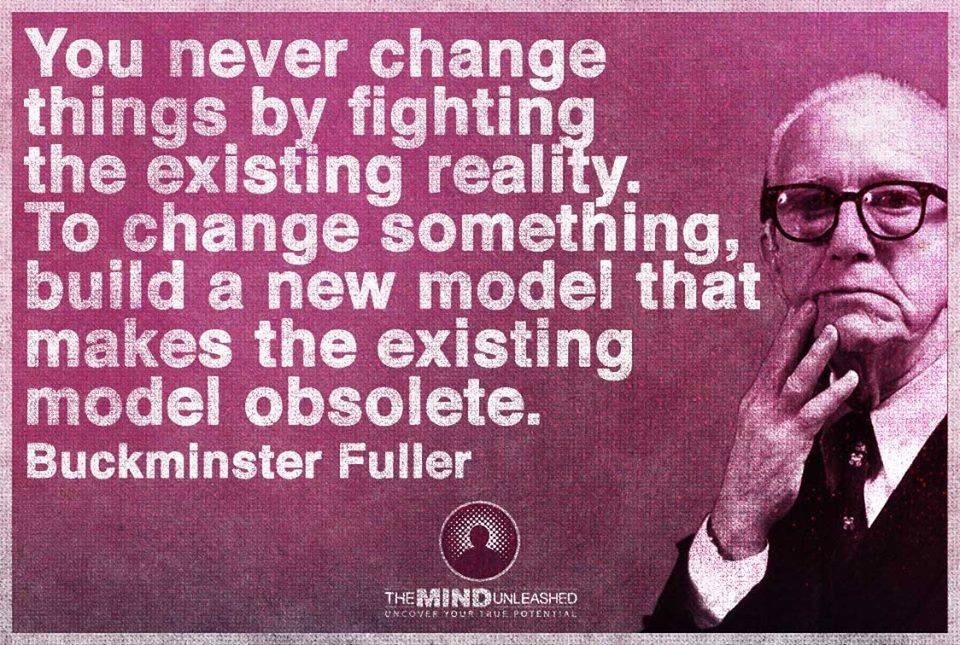
Moreso, the dates align with the opportunity to submit an entry in this year’s Buckminster Fuller Institute 2015 Fuller Challenge:
The Buckminster Fuller Institute announces the dates of the 2015 Fuller Challenge. Each year, BFI awards a $100,000 prize to support the development and implementation of an integrated design solution to solve humanity’s most pressing problems. BFI invites the world’s scientists, designers, architects, engineers, planners, artists, students and entrepreneurs to enter their strategies that simultaneously solve for the systemic context underlying the problem while dynamically transforming current conditions.
We will be designing the Design Forum that will continue through Port Moresby, Glasgow, Toronto, New York, Sydney, New Delhi, Singapore, China (city TBA, but I am hoping we could return to Shanhaigaun), and concluding in Seoul. Not only designing the journey that this epic conversation will take, but making a contribution that Buckminster Fuller himself would be satisfied with.
This is not about winning prizes. If we are good, any trophies we deserve will follow. But I contend that we should be more satisfied with making a difference. We have an important question to address: “how might we use our networks to improve the delivery of child survival?”
You can sign up for the Design Forum here, and register for the Introduction to Design Thinking here.
You are invited and you can invite anyone you want. Make new friends. Open the circle. Build a bridge.
Keep Going!
 We lack more than we have in some regards. But that doesn’t matter so much. We have what we need, and that is enough.
How many times along this journey have I held myself back because of the embryonic state of an idea or because of the absence of resources which were needed at that time or in the future? The whole journey has been like that, and getting to Osaka and back to Sydney is no different.
Planning for something in the future without the required resources in hand makes committing to action difficult. It is moving out onto a path where there is none. Hoping the ground appears before your feet. It is a pressure and a vulnerability that is not easily shared.
Do you know that feeling? Have you had that experience? It’s easy to feel a little sheepish when you are going without. When you are beginning. When everything is fragile and vulnerable.
But that is how it all begins. Yes, we were once just fragile, vulnerable embryos. Little and tiny. And we survived.
If you ever feel defeated or trumped, go back to the beginning and give thanks for a day you don’t remember. It’s brought you this far, no matter what the situation you find yourself in now. Keep going! Now is not the time to stop!
Map Check: preamble to the Design Forum
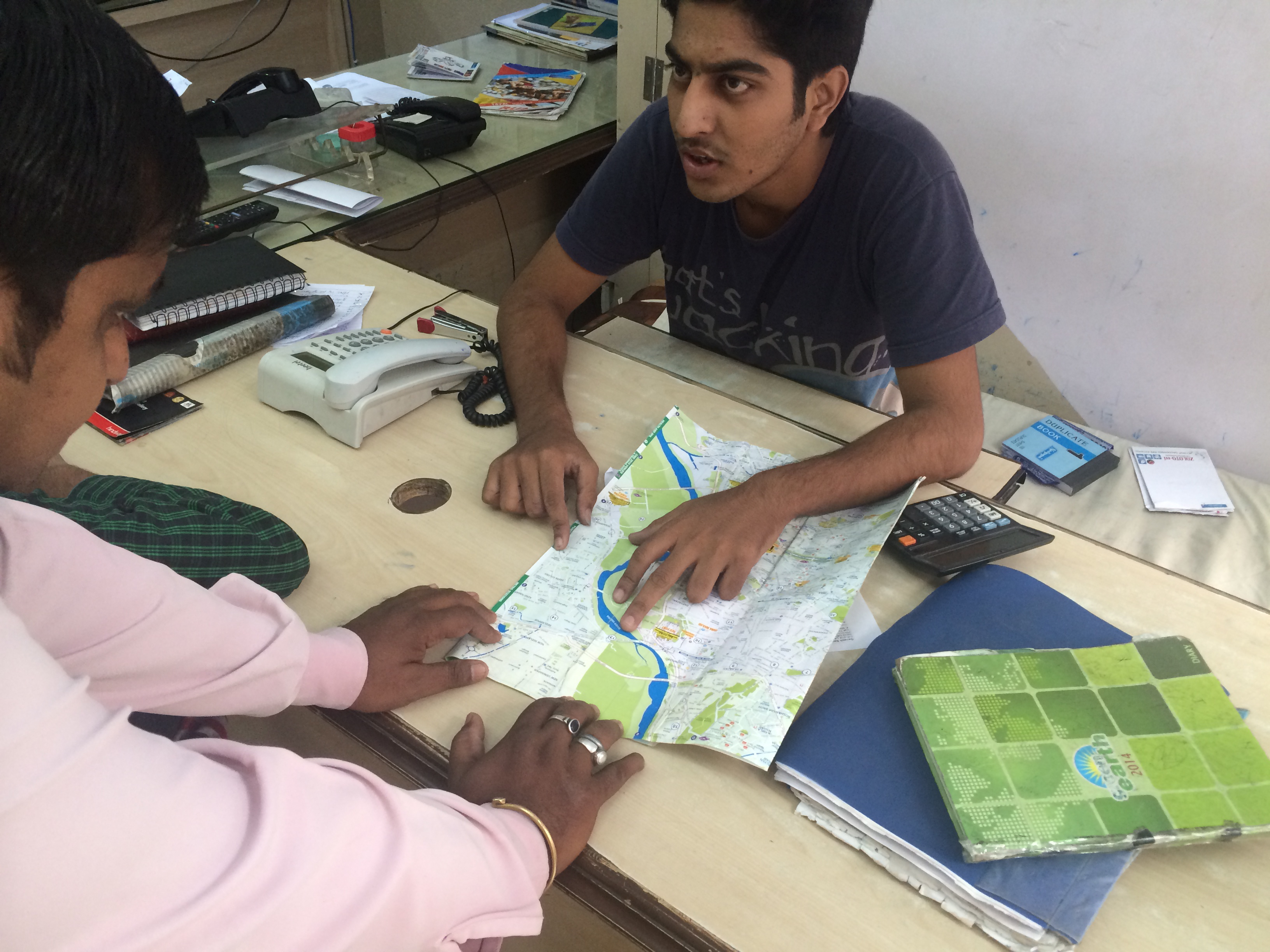 The 10 City Bridge Run Design Forum is a series of 10 events that will be convened in the 10 cities where running took place during the 10 City Bridge Run. The entire focus of the Design Forum is to address the central question to the 10 City Bridge Run which asks: “how might we use our networks to improve the delivery of child survival?”
Making decisions, and working out how to collaborate are two key tasks which we will need to work out how to do together. There are some obvious difficulties with that: we are in different time zones, we are not in the same location, not all of us speak the same language, access and ability to use technology is not evenly distributed. But we all share one trump card that can help us overcome any challenge: our imagination is the freely available resource that will make this possible.
Success will really come down to imagination. Imagination will drive the solutions to challenges of communication, collaboration, decision making. Resource issues, access to people, gaining information and knowledge are practical challenges and very real, but will also be overcome through imagination.
How to communicate and collaborate, and the platforms we might adopt to best enable this, remains the biggest immediate question to answer.
It is not simple, but it is possible.
At the conception of this idea back in 2010, it was an impossibility at that time. Now we are closer to making it happen. And if we can come this far, how much more can we achieve that we don’t know is possible from where we stand now?
This post provides some preliminary thoughts to a framework for the Design Forum which follows in the next post. This post is like a map which we can refer to. But what is important is that we don’t confuse the map for the territory. The plan will be amended and change. Ideas will emerge that are more expansive than we know now.
There will be 10 Design Forums. Well, there may in fact be more should people take the initiative to organise their own in a location other than the 10 key locations which this post relates to. The structure and conduct of each Design Forum can be, and possibly should be, distinct from those which precede it. The length of time (in days and hours) for each Design Forum is almost unimportant. We will need ‘enough time’ to do what we need to do, and this will depend on having clarity on a desired outcome at each step of the way.
The Design Forum are a conversation. Anyone can join, at anytime. We all have busy schedules, and so it is completely expected that people might drop in and out of the conversation. It is across a duration of nine months, and many personal events will take place in that time, some good and some less so. As a community, it is reasonable to expect that we can celebrate and if needed to commiserate in the news of others. The focus is child survival, but it is also a very human experience, and we should acknowledge that too.
During the Design Forum, we will look elsewhere to learn and to model what has worked and what hasn’t worked. While the subject is ‘child survival’, examining what happens in other disciplines will also be important. Inspiration might be found in unexpected places.
Before describing the framework for the Design Forum, I want to note two unfinished or unanswered items of business to date:
- A petition has been made for submission to The Hon Julie Bishop MP, the Australian Foreign Minister, to act as the official Champion for the Design Forum. That petition stands and will be accompany the conduct of the Design Forum, and be reframed to request her to be the official Champion for the final Design Forum in Seoul towards the end of October. Regardless of events that may or not unfold in the coming weeks in Australia, she will remain the person who the petition is addressed. You can read (and share and sign!) the petition in its current draft here.
- A video request has been submitted to Bill and Melinda Gates asking them to recommend a reading list of five books that might help to frame the issue of child survival. Even with the release of their recent Annual Letter, this has merit as Bill and Melinda Gates are two individuals who through their advocacy on this issue have developed a good degree of knowledge that deserves to be more widely shared through a reading list. As far as I know at the moment, this remains an unanswered request. I do think that more could have been done to make sure the video reaches them personally, and shortly I will write directly to them with a letter asking for their consideration. You can see the video here.
The biggest failing in my performance to date is my inability to engage media. There are many reasons for that and some of them relating to computer access or the serviceability of equipment, but it is worth noting that this is something I haven’t done very well. Based on that observation, it is a fair expectation that it will remain an area which I am not well suited to managing as we move forward.
I hope you might see from reading this post that this is a big task. Even before we get to talking about the Design Forum as a series of individual events, we can identify discrete tasks that perhaps can be better shared and managed across our team. How we organise ourselves for that is a task in itself, and let’s start to leverage our collective strength by each taking up a small piece of the strain so the effort is less for all as we put our shoulders to the wheel.
What’s The Plan, Stan?

“What’s the plan, Stan?” With these words, the familiar, raspy voice of one of my senior soldiers would ask what was happening next.
The radio squawked a low, crackly hum breaking the silence of the bush surrounding an unseen force of camouflaged men crouching patiently nearby. A dispassionate look on his face was challenged only by the steely glare of his eyes.
Rifle in hand, he looked relaxed, waiting for me to work out where the plan we just received was to take us next. Dragging back on a roll-your-own cigarette he held between his fingers, the lit end facing in toward his palm, he watched as I placed a map on a cleared space on the ground at the centre of the our small team that had gathered together.
That was then. An army works on command and control, orders and reports, and when it is at its best is like a finely-tuned machine with a mind of its own, responsive to any stimulus.
But this is now. The 10 City Bridge Run was a ridiculous stunt to frame a conversation that is shortly to follow. I ran 10 sub-marathons each of 24 km in 10 cities across 10 countries to gather attention so as to open this conversation asking “how might we use our networks to improve the delivery of child survival?”
Unlike the army, there is no authority given for me to do this. I just made it up and did it. Much of the time I was making up the journey not long before taking the next step.
It was only made possible because of the support of a community which had joined in, each with their different reasons to see th quest arrive at its destination which is the Design Forum.
The 10 City Bridge Run is driven by passion, imagination, leadership, vision, inspiration, collaboration and trust. It might have seemed that the journey to date was a one-man journey, but in fact it was a collective effort.
More so, the Design Forum which follows beginning next week is all about collaborations and collective effort. Individuals provide a background to the focus on a community which grows in the centre of this picture. It’s about us.
Shortly, I will post my thoughts about how the Design Forum might unfold. And then together we will navigate the way forwards.
Who is ‘we’ exactly? The ‘we’ is the team that is making this happen. I am part of the team, and you can be too if you want, but I can’t make that decision for you.
This is an invitation for you to join that partnership, this collaboration, our community. Upend the M and me becomes we. But if you do join the team, I want you to know one thing. In as much as you might be looks to me for inspiration for the next steps that follow, I will just as likely be asking you how it should unfold by asking your thoughts to answer the challenge before us: “What’s the plan, Stan?”
 Building Bridges