Awareness
The Girl Effect: The Clock is Ticking
My friend Tiffany sent me a wonderful link from The Girl Effect called The Clock is Ticking.
Watch it for yourself- it is its own explanation.
Tomorrow I will put focus on Millennium Development Goal (MDG) 3: Eliminate gender disparity in primary and secondary education, preferably by 2005, and in all levels of education no later than 2015 . Let’s see what the assessment is from the United Nations on MDG 3. So far the scorecard looking at MDG 1 and 2 is not good for a complete successful achievement of the MDG.
This is why a focus on child mortality and women is so important. So many other factors are woven into the same solution. Hans Rosling explains this indirectly in this TED video in an earlier blog I recorded here.
The most productive 50 million ways to influence extreme poverty are primed ready to be enlisted in the fight. It is a resource and an opportunity that won’t stand still- it sits on a knife edge of time to be saved or exploited by the environment. Is there anything we can do to influence this situation?
Complex

I was speaking with my friend last night, Armen, who lives in a part of Sydney known for its relative poverty. The area around Macquarie Park has changed radically over the last 11 years. Now there is a train line nearby, and with the university and shopping centre a short walk away you would hardly think it was once among the worst areas for crime and social neglect.
We spoke about poverty for some time, and about how complex this issue is to understand. Armen made a distinction between a physical poverty and spiritual poverty, and how this is sometimes overlooked. People can see the obvious signs of physical poverty so clearly.
Does this distinction matter when the physical needs of extreme poverty are so profound?
7 Days to Go: 8 MDG. MDG 2- Children everywhere able to complete primary schooling

Spotlight onto Millennium Development Goal 2 today:
Ensure that, by 2015, children everywhere, boys and girls alike, will be able to complete a full course of primary schooling
The United Nations provides sobering advice about the likely success of this goal:
- Hope dims for universal education by 2015, even as many poor countries make tremendous strides
- Sub-Saharan Africa and Southern Asia are home to the vast majority of children out of school
- Inequality thwarts progress towards universal education
Some of the broader metrics are presented here:
- Enrolment in primary education in developing regions reached 89 per cent in 2008, up from 83 per cent in 2000
- The current pace of progress is insufficient to meet the target by 2015
- About 69 million school-age children are not in school. Almost half of them (31 million) are in sub-Saharan Africa, and more than a quarter (18 million) are in Southern Asia.
Education is something so many of us just take for granted. It seems so simple. And the reality is that it can be a tough decision if the money available does not extend far enough to educate your children. Abolishing school fees in some of the poorest countries has made a big difference. Significant and important gender issues are being addressed through tackling this goal.
The Big Divide- Rich and Poor

The Sydney Morning Herald reported a story titled The big divide: the super rich versus struggle street. I thought it was worth looking at this further from a perspective of extreme poverty. Is there any correlation? Is this part of the conversation?
A short answer would be ‘No’.
The conditions of those in extreme poverty is so atrocious, it beggars belief. Try and comprehend 4,000 children dying daily from diarrhoea caused by unclean water and poor sanitation.
Just as this is not the ‘fault’ of someone else having a lot of money (or little money), it is not ultimately solved by more money or more aid being directed at the problem. Neither is ‘more awareness’ on its own going to solve the problem. Same for ‘more education’.
These are all pieces of how the problem should be addressed. Aid given through foreign policy could be targeted as much as the ‘super-rich’. It also becomes a big ethical question of what is super-rich and how should ‘they’ respond? Should being able to have a manicure (the opening example in the article) necessarily entail obligation and responsibility and more for someone who is less able.
My friend Virginia challenged me on how is the 10 City Bridge Run going to make a difference. I believe it will do this through leverage. And it is at its core an intellectual challenge. This does not mean that we all sit around and think our way out of extreme poverty. That would be nonsense and action is required.
How might this change things, really? That is a good question. Imagine many people (many in the thousands) who each change how they think about this issue a little bit, not just one but on a regular or occasional basis over the course of a year, and with their thinking their actions also change.
This is what I believe needs to occur. Maybe meeting the Millennium Development Goals is impossible. Noises from New York would already indicate that the global financial crisis is the convenient reason to explain why these targets have not been met.
If the conversation about extreme poverty is only measured in money and aid, rather than actions and outcomes my fear is that the end of poverty will be a long, long way from us yet. To create a change, we first need to change our thinking, and very quickly after that have our actions reflect this change in mindset.
If anything, the conversation about the ‘super-rich’ and ‘struggle street’ is an unwelcome distraction from what constitutes extreme poverty. Good for selling newspapers.
A demographer at KPMG, Bernard Salt, said rising inequality was beside the point as most Australians were better off than they were 20 years ago.
”If there is a divergence emerging it is because the super wealthy are doing so much better. I don’t think it’s because the battlers are going backwards. Everyone did well, it’s just that the upper end did well better,” he said. (quoted from the SMH article)
Target

Some people have asked ‘how much is enough?’ Here are my targets for sponsorship.
240 Span Sponsors @ $240.
2,400 Support Sponsors @ $24.
These will enable the Six Outcomes to be achieved. More importantly, doing so will raise awareness of an individual’s capacity to act to influence extreme poverty.
No one event on its own can solve the problems of the world. Together, we each play a small part toward making a bigger difference. Please join me on this journey as a sponsor for $24.
Lisa Asked: How Does It Work?

I was speaking with my good friend Lisa last night at GreenUps here in Sydney, and the conversation shifted onto the 10 City Bridge Run.
Lisa asked how did it all work. Good question. Here is my answer.
The start point would be to frame the 10 City Bridge Run: a global endurance challenge where I will run 10 sub-marathons each of 24 km in 10 cities across 10 countries within one month. The purpose is to raise awareness of an individual’s capacity to act to influence extreme poverty.
I will start running in Sydney on 14 October, and finish in Seoul on the last day of the G20 Summit 12 November.
These dates are part of a design to form a ‘bridge’ between two key institutional events: a United Nations Summit on the Millennium Development Goals held last month in New York commencing 20 September, and the G20 Summit in Seoul starting on 10 November.
I contend that what happens in between, the engagement of people like you and I, is of the same importance.
This is about much more than just running. Each run represents the 24,000 children under the age of five who on average die every single day. While 0.1% of this figure is from the West, a staggering 50% comes from sub-Saharan Africa alone.
This is an initiative about participation. Not through running, but bridge building. I am asking people to take photographs of themselves or other people making bridges between themselves and for these to be collated and then presented to the G20 Summit leadership (President of Korea). Together can we collate 24,000 of these photographs which will be printed, curated and then delivered to the President of Korea?
Another outcome is a book that will be published in electronic and print format containing 1,000 selected photographs from those in the petition. The book has a working title of “Above the Line”, a reference to the challenge of moving people often corporately identified as ‘The Bottom Billion‘ above the line of extreme poverty.
The 10 City Bridge Run is community funded, that is to say ‘crowdfunded’, by many sponsors who each pre-purchase the book “Above the Line” enabling the running to take place, and importantly the achievement of all Six Outcomes.
Sounds difficult? The tagline for the event is “Is the seemingly impossible possible?” I don’t believe we can fully address this question without first seeing what is possible ourselves through an experiential challenge.
What I propose is possible, but it requires the participation of others. Will you join me vicariously on the run as a sponsor? Sponsorship is $240 for a printed copy of the book or $24 for a electronic copy of the book.
Please be part of the difference that makes a difference and sponsor the 10 City Bridge Run.
Philanthropy at work

The 10 City Bridge Run is philanthropy at work.
Philanthropy doesn’t mean Not-For-Proft. It means doing good in the interests of others.
Please sponsor the book “Above the Line” for $24 and help make a difference to poverty in our world.
This will enable awareness to be raised, a petition to be present to the G20 Summit, and leverage to fund projects that address the two biggest killers of children globally. Diarrhoea (through water and sanitation) and malaria (through mosquito netting).
The 10 City Bridge Run is an initiative of Social Alchemy, a social business established in 2006. It is cause-driven, otherwise defined as for-benefit and for-purpose. No profit made by the organisation is able to be distributed in the form of dividend.
Luke Asked: What is this about?

My good mate Luke asked me a question this morning by email. “What is the 10 City Bridge Run actually about?” It is a good question. Here is an answer.
The central question that the 10 City Bridge Run seeks to address is: “How can you build a bridge to help close the gap on extreme poverty?” A response requires to you think and feel, as much as to act.
This is part of a bigger movement about social impact. In this movement, we are each playing a small part in a bigger change. The 10 City Bridge Run is a small part in a well-established ecosystem of other initiatives.
We all should know that extreme poverty is a problem. There is enough news and branding around the issue. But do we know the extent to the problem, or do we know how we might make a difference – a real difference- aside from donating money to charity?
The 10 City Bridge Run presents a global challenge. There is a physical challenge – the 10 sub-marathons across 10 countries, which is more of a symbolic act through a tough and demanding journey.
The bigger challenge, the real challenge, is asking people to engage intellectually; asking people to engage emotionally and take action. Small actions. Like taking a photograph of others building a bridge.
Is it possible? Does it matter? Can one person on their own make a difference? (I would suggest the answers are Yes. Yes. and No.) And these answers are reflective of the bigger questions facing humanity on the issue of extreme poverty.
It is a complex issue. I think it starts with building a bridge to help close the gap on extreme poverty. You might be doing this already, and if so please show us what that looks like by capturing that in a photograph.
There are larger global forces at work. Is the global financial system broken, at least in part? This is the importance of passing a petition to the G20 Summit leadership. Will the petition make a difference? Will President Lee Myung-bak acknowledge the receipt of the petition? There is only one way to find out, and that first requires the collation of 24,000 photographs online.
Please join us.
The one thought I want you to consider today
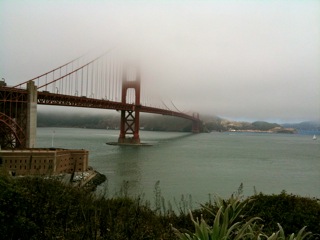
Where does the time go?!
Dear reader, thanks for your patience- it has been now about a week since I made my last post. A lot has happened in that time, and many ideas and thoughts to write about. I will endeavour to share some of that with you later today, but not everything at once.
A few updates about the 10 City Bridge Run.
Firstly, I’m pleased to say that enough funding through sponsorship has been received to make this endeavour possible, that is to commence the journey. While the first hurdle is cleared, there is still a fair distance down the track to cover.
Secondly, a quick note about date changes. The date for the commencement of the 10 City bridge Run has now slipped twice. I want to be open about the planning to share with you the challenges and difficulties I am encountering. I think to present the vulnerabilities and uncertainties, for all its lumpiness is important in learning to take the crunchy with the smooth as Billy Bragg might say. Let’s be clear that this is an ambitious and difficult venture with a deliberate tagline of “Is the seemingly impossible possible?” At the same time, for as much of the experiential learning that might come from this to mirror an understanding of the challenges to eradicate extreme poverty, it also should be acknowledged that there is a difference between the two. We all have a choice to some degree of what difficulties that come into our lives: those in extreme poverty do not.
The reasons for the date changes relate to a number of issues. The most significant is the clearance of funding through PayPal. This issue has been resolved, although may still have some impact on successfully initiating the run on 8 October. Make no mistake: the run is going ahead, and the objective to present a pictorial petition to the G20 Summit remains a key outcome.
There are two institutional events framing this initiative- two bridge supports if you like. The United Nations Conference which commenced on 20 September and the G20 Summit in November. The last date to commence the running is 14 October should the time need to slip another few days. This would involve an (already identified) curatorial team in Seoul compiling the petition and presenting it to the G20 Summit on our behalf prior to the last leg of the 10 City Bridge Run coinciding in Seoul with the last day of the G20 Summit.
Please let me know if you have any thoughts about how the 10 City Bridge Run might be better organised, communicated and presented. I am particularly interested to know what your response is to the changing of dates. If it frustrates you or disappoints you, if you feel let down or if it challenges your confidence, or if you see this as an unwanted but inevitable part of attempting something that is difficult. Or maybe you are happy to just watch it unfold without having an opinion- that is fine as well.
Just a thought from me I ask you to consider: if you are disappointed by these date changes which have minor consequences apart from how to organise the delivery of the petition, how did you feel after the United Nations Climate Change Conference in Copenhagen, and how will you react in 2015 when the United Nations is called to report on the Millennium Development Goals?
Goodooga. Postcode 2831

Goodooga, located 200 km from Lightning Ridge in Northern NSW has a population of around 270 people, of which more than 80% are Indigenous. Look it up yourself on googlemaps…it is real.
The town has a strong community spirit and is trying to survive by building grocery and petrol services to be run by a local cooperative.
What has this to do with extreme poverty you might ask?
Much has been written about aid- curse or cure. A lot has been written about the adoption of enterprise and design initiatives to overcome the effects of poverty (for example, child mortality in so-called “Third World Countries”). Some of the health interventions are in the form of aid, and some are made sustainable through enterprise.
These situations are complex, and not just about the grandeur of a large institution or the macro-economics of how statistics might be improved.
What actually happens among real people matters. There is no silver bullet delivered by any rock star or politician to solve these problems.
Please support the 10 City Bridge Run to highlight small actions which will make a big difference in showing that the impossible can be possible. Please sponsor me with $24 here.
 Building Bridges