Latest Event Updates
We want your photo!

Not just any photo. We are collecting photos on the theme of a ‘human bridge’ for a book that has been a while in the making called Life Bridge: The Importance of Connection.
Feeling creative? Please join us on this journey by submitting a photo of your human bridge.
There are two quotes which frame an ‘artistic brief’ for this project drawing inspiration from Bill Shore’s inspirational 2010 book: “The Imaginations of Unreasonable Men”.
The first quote is written by Bill Shore himself where he describes “the imagination gap: a narrow but vitally important space between the impractical and impossible.” He writes:
The imagination gap is a place where hope lies waiting to be discovered, and cannot be extinguished once it has. Most failures in life are not failures of resources, or organisation, or strategy or discipline. They are failures of imagination.
The second quote is taken from a graduation speech by Ophelia Dahl (cofounder of Partners in Health and daughter of renowned children’s book author Roald Dahl) when she quoted Adam Hochschild who earlier wrote about the importance of “drawing connections between the near and the distant”:
Linking our own lives and fates with those we can’t see will, I believe, be the key to a decent and shared future… Imagination will allow you to make the link between the near of your lives with the distant others and will lead us to realise the plethora of connections between us and the rest of the world… and this will surely lead to ways in which you can influence others and perhaps improve the world along the way.
The compilation of this book funds the 10 City Bridge Run which is a citizen led initiative that asks a simple, but important, question: “how might we use our networks to improve child survival?” The image of a ‘human bridge’ helps to illustrate this question.
So please, help us out and send us a photo of your human bridge. It won’t be the same without you!
If only More Joyous: Australia’s aid budget

John Singleton arrived to the More Joyous Inquiry today, and was described by the waiting pack of journalists as a “rockstar”. Everyone had a bit of a joke, and John Singleton batted away the flattering attention. A short time later, Tom Waterhouse who seems to always be smiling regardless of the situation, arrived with no comment. The camera and journalists were in force, and hungry for news.
There is a curious video on this link from today’s proceedings. It is a shame that this short of exposure isn’t given to issues of a little more substance. It is like watching an unbearable pantomime. If only it really was a comedy…:
Meanwhile Bob Carr, the Australian Foreign Minister was speaking on ABC Radio confirming weeks of speculation that Labor’s goal of increasing aid spending to 0.5 per cent of gross national income has been delayed for another year. The Federal Budget will be delivered this week in Canberra, and is going to be stretched significantly into a deficit. Bob Carr explained this matter-of-factly:
It simply reflects the reality that you can’t borrow money to spend on aid. (Bob Carr, Australian Foreign Minister)
Australia is now the third largest recipient of our aid budget after Indonesia and Papua New Guinea, with the majority of the money being spent back on ourselves catering for the needs of asylum seekers intercepted by boat.
Far from a comment about the politicisation of aid, this is more a pragmatic reflection of what can be expected moving forward. Not everything the Government promises will it be able to deliver. There are no surprises there, and while it is disappointing, it is also reality.
How will this affect the Millennium Development Goals? Some advocates for aid, such as Tim Costello will say that it will cost the lives of over a million people across the next four years. While this might be partly true as an assumption, it shows that we need to look beyond government assistance alone to combat these problems.
This is not the first time governments have failed to deliver on their promises with aid. In 2010 at the United Nations General Assembly, many governments pointed to the recent global financial crisis are behind their inability to make progress with combatting poverty.
The rise of philanthropy has been of great significance to combatting extreme poverty in the last decade. But that is neither a silver bullet nor the answer. The answer must be found beyond a reliance on aid and philanthropy.
It calls for intervention for many people, including people just like you and me, but not necessarily by throwing loose coins into buckets or being assaulted by the Charity Muggers at the local train station. No, it is time that we looked to more innovative solutions by bridging what already exists and helping through our networks to bring that to scale.
This is the idea behind the 10 City Bridge Run, and by working together we can make an enormous difference to issues such as the delivery of child survival.
It would be nice if things were indeed More Joyous for the aid budget, but that simply is not that case. All the while, we are distracted by circuses such as the tedious and banal “he said/she said” from colourful racing identities in front of an insatiable media pack. Nothing joyous about that. There are more important issues which deserve great attention. And that too, sadly, is reality.
Beneath the surface are seeds of possibility

Another inspiring talk from Sir Ken Robinson through TED, again calling for a revolution in education delivery.
At first glance, education might seem to have little to do with child survival, and in the context of this talk that is largely true. However, towards the end of the talk, he speaks about the role of culture and leadership for creating change. Inspiring stuff, and lessons we can use in other areas and not only in changing education. Great presentation technique. I don’t think he took one step in all 19 minutes of speaking. No powerpoint. Just the appeal of personality and persuasion through reasoned argument.
Here is the first thing that struck me, talking about the role of culture to influence opportunity:
(Paraphrased) The culture is absolutely essential…Right near the surface are seeds of possibility waiting for the right conditions come about in order to spring to life…. Not ‘Command and Control’, but the real role of leadership is ‘Climate Control’. Creating a climate of possibility.
The second point to note was about leadership:
Benjamin Franklin said there are three sorts of people in the world: there are people who are unmovable…, people who are movable…, and there are people who move.
This is what we need for a revolution. Move leaders who move.
Every day is Mothers Day, but especially today
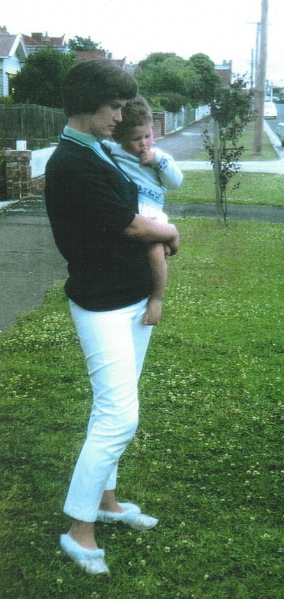
Can we ever thank our mothers enough for the gift of bringing us safely into the world?
Life is not always one big party, but it is wonderful to stop and remember all of the good things that we share, and all the reasons to be thankful for our mothers.
I have enjoyed watching my friends on Facebook record their journey as first time mums. It is a wonderful to experience their joy vicariously. Today, for all of you, I hope it is a very special day.
Mothers Day is not universal to this date. Iran was last week, Thailand is 12 August, and on it goes. And neither should it be limited to only one date. Every day should be a reason to say thank you.
So today, to my Mum especially, thank you.
Next Steps: Relaunch Party
Attention turns to planning the ReLaunch Party for the 10 City Bridge Run.
It has been a while in the making, and not without a few set-backs and challenges. Celebrating the commencement of this journey at the ReLaunch Party will be all the sweeter thinking about the obstacles overcome to get to this point. It wasn’t possible without your support and encouragement.
The ReLaunch Party is planned to be held in Sydney towards the end of July/early August. Adam Spencer has made himself available to be the emcee for the evening (depending on the date and his other commitments).
Theme, entertainment, speakers, location, time, date and registration details? Will be addressing those soon, and if you would like to get involved by volunteering to help with the ReLaunch Party, please let us know!
Connect like you give a damn!

Cameron Sinclair, co-founder of Architecture for Humanity and an accomplished designer from New York, in 2008 demanded of designers at the International Contemporary Furniture Fair in New York to “design like you give a damn!” He argued:
Forget these chandeliers and overpriced sofas; forget the whole New York design scene. Look to Africa and India, to the places where design is a matter of life or death.
During the 10 City Bridge Run, we are asking you to ‘connect like you give a damn!’
No one can effectively ‘do bridging’ on their own. Our networks are possibility factories, but only if we choose to use them.
What if women held the answers?

It has been over a month since I last posted, and in that time I have been busy. Busy thinking.
In March, I attended the Commonwealth Study Conference (known by its acronym CSCLeaders) across London, Glasgow and Oxford for what turned out to be an extraordinary gathering of 100 leaders from around the Commonwealth.
I was profoundly influenced by women I met at the recent CSCLeaders conference, especially those from across Africa, India, Pakistan, other parts of Asia and the Pacific.
Returning to Sydney, I attended a conference at the Alfred Deakin Research Institute which focused on Papua New Guinea. Again, there I was influenced greatly by the women who I spoke with.
Often, my conversation turned to the issue of child survival. These were seemingly ordinary women, and most of them mothers. Few of them were ‘experts’ in child mortality- there experience was found in other areas, but all of them had expert advice to offer.
I made me think:
What might this look like if women held the answers?
This is not to say that men have nothing to contribute. Far from it. It is an equally relevant question for men to address as for women. So much so, that the orientation of the design forum for the 10 City Bridge Run will be framed using this question.
I would be interested to hear your thoughts too. Do you think this question is helpful? Could it be expressed better?
CSCLeaders: An extraordinary opportunity
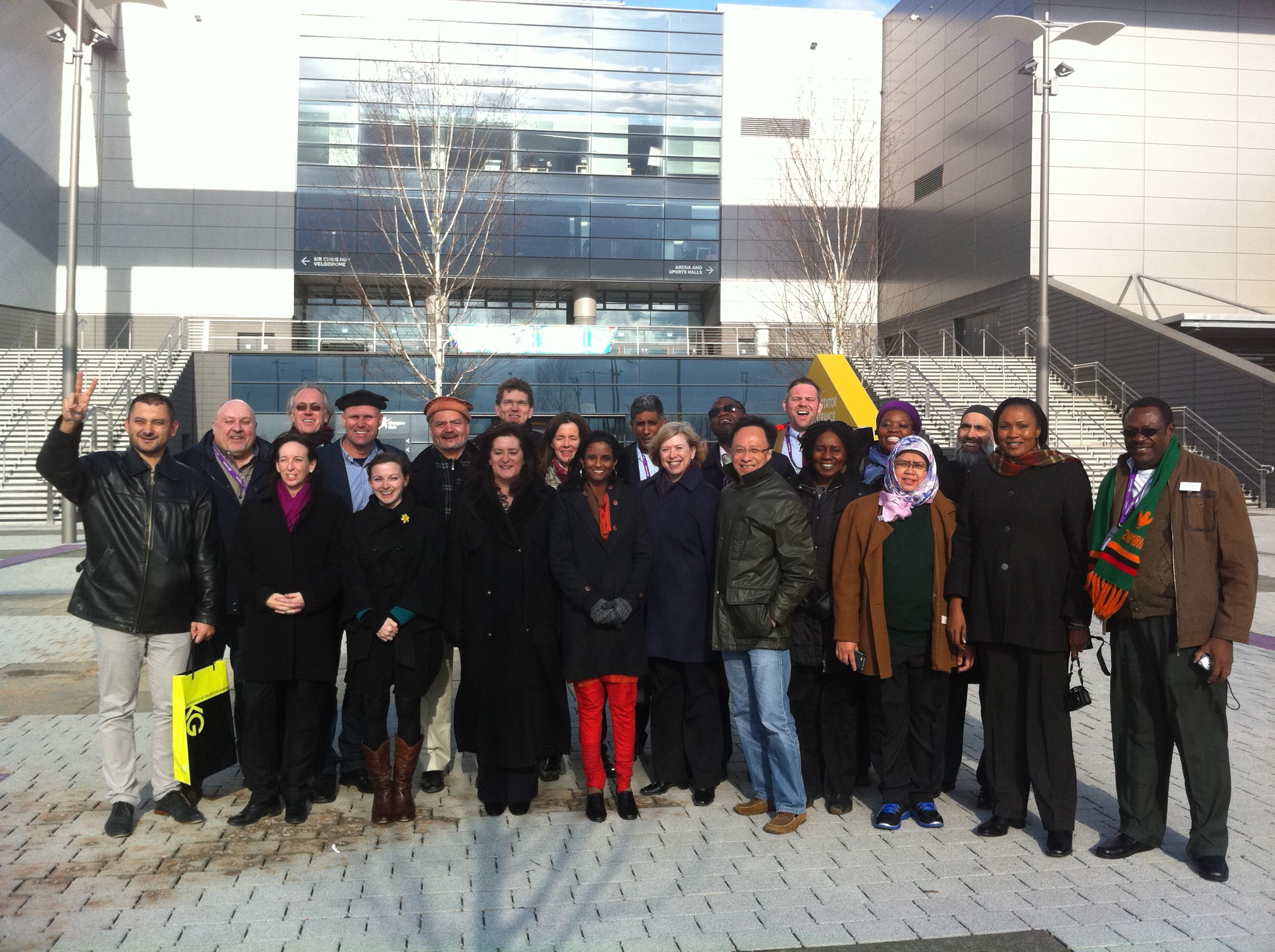
Recently I attended the first part of a two part conference called the Commonwealth Study Conference. Held between London, Glasgow and Oxford, I embark on what turned out to be the most extraordinary opportunity for learning and personal growth with 100 other so-called ‘best and brightest’ leaders from around the Commonwealth.
A picture tells a thousand words, so they say. Check out my photos from the visit here on Flickr.
Reframe: Improving Child Survival

My last post was a month ago, but in that space of time I have covered a very large distance in many different respects. I wrote as I travelled from Sydney to London to attend the Commonwealth Study Conference, otherwise known as CSCLeaders. That trip proved to be a turn-key moment in gaining a new sense of clarity about this initiative.
It has taken me some time to process everything that has taken place. One month in fact. There is much to share, but here I just wanted to start with one brief comment.
I have reframed the 10 City Bridge Run following the input of many people and much reading over the last month. The emphasis, I believe, needs to be placed on child survival not child mortality.
Let me explain why:
- Child mortality is easy to explain, and is a very tangible and very troubling measure.
- The 10 City Bridge Run is an initiative about how we might use our networks for the better.
- I have come to the realisation that together we cannot actually reduce child mortality. Larger organisations and countries can through their effort, but even then the reduction of child mortality is a lagging indicator of their success in something else.
- Where we can have success is in improving child survival. Through increased child survival, the result is a reduction of child mortality.
This is a subtle shift, but an important one. It means the entire effort goes towards working out what we can do to save lives, rather than spending time recording facts about deaths. Yes, the two go hand-in-glove, but as for directing the efforts of a network, we are better focused on documenting what is best practice in child survival.
Already, there is good data. It is shared widely. But we are still falling short.
This is not about reinventing the wheel, but rather bringing the considerable resources of an extended network of bridge builders to bear on working out where we can best make change to improve child survival.
Just over ago in this blog, I wrote these words:
Changing the name doesn’t change the facts. We are still falling short, and there is more work to be done. But with a renewed focus, maybe at least we can have a clearer view on where our emphasis is best placed.
I didn’t recognise this insight at the time, but now can see that what I had instinctively observed. We are working towards compiling a sharable resource documenting best practice in child survival. This is our journey. Let’s go together!
This video, produced last year, explains this concept well:
Opening a conversation: “Bridge-makers”. Your thoughts?
This week 16-24 March, I will be attending the Commonwealth Study Conference in UK held across six different cities. It will be a busy time, building new networks, and being challenged with new thoughts. An opportunity to share an collaborate as well.
The theme for the CSCLeaders is an interesting question:
How do people from communities which have spread across the world become bridge-makers in the global networks of the future?
Interested to know about your thoughts, questions and ideas which this question raises.
Also interested to know how I would be best placed to open a conversation around this question to share what comes out of the conference. This blog and Facebook both serve a purpose, but also have their limitations. I was thinking about something like Basecamp, but someone no doubt has a better idea. I would love to hear it!
My focus at the CSCLeaders is to build a strong enabling environment for the 10 City Bridge Run. More soon.
 Building Bridges