Child survival
Five Books For Change
 Last December, I was standing on a bridge crossing the Clyde River n Glasgow which was completely shrouded in fog. I stopped a moment to record a short video to Bill and Melinda Gates, and asked them for their recommendation of five books to help make change happen.
Maybe you saw this video if you were following my journey. It was the day after I had run the eighth leg of the 10 City Bridge Run that concluded in January this year where I ran across 10 cities as a stunt to open a conversation about improving child survival.
The video is below, and while I have forwarded it through social media, I don’t now that I have exhausted every avenue to pass the message to Bill and Melinda Gates. And even if it did reach their gatekeepers, there is no guarantee that they would see it personally, or even have the time to respond.
 Well, I haven’t given up on them, and will keep looking for ways to send this “message in a bottle” to them.
In the meantime, I made my own list of Five Books For Change that have most influenced my thinking as I worked through the 10 City Bridge Run epic quest ahead of a series of Design Forums to ask “how might we use our networks to improve the delivery of child survival?”
And here is the list, and in no particular order. They are all great books!
- Glimmer: how design can transform your business, your life, and maybe even the world, Warren Berger, Random House Nosiness Books, 2009
- Reframe: how to solve the world’s trickiest problems, Eric Knight, Black Inc, 2012
- On Becoming An Artist: reinventing yourself through mindful creativity, Ellen J. Langer, Ballantine Books, 2005
- The End Of Poverty: how we can make it happen in our lifetime, Jeffrey Sachs (forward by Bono), Penguin Books, 2005
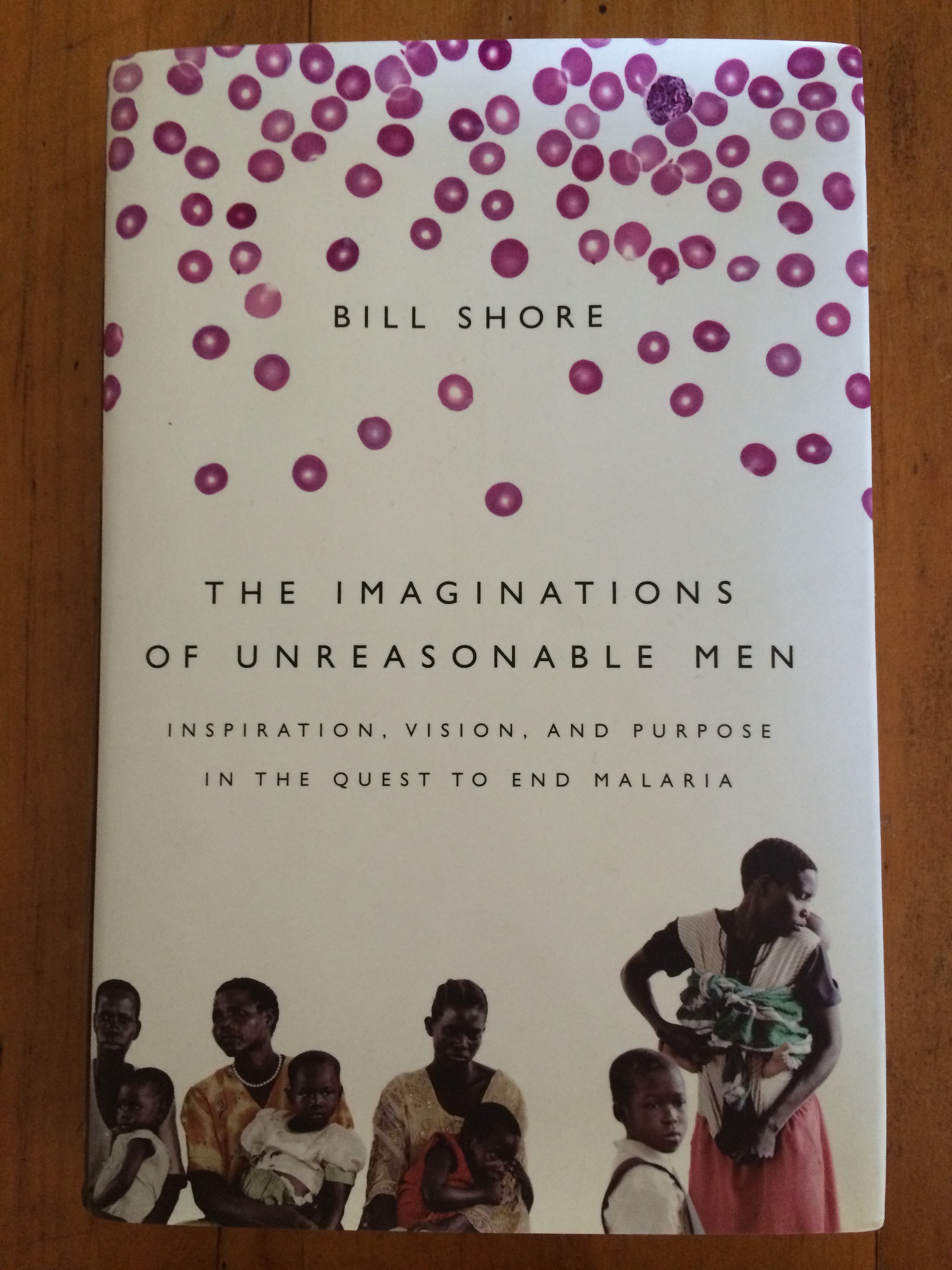
- The Imaginations Of Unreasonable Men: inspiration, vision, and purpose in the quest to end malaria, Bill Shore, Public Affairs, 2010
 There were other books as well that I had to cut from the list. I asked Bill and Melinda Gates for five books, and so I limited myself to five books too.
You might have a different opinion, or some other books that I didn’t consider. I hope you do, and I hope you might share them here too! Write a review of your favourite book for making change happen as it relates to improving the delivery of child survival, and I’ll add it here on the blog (you write the blog and I can post it without editing it).
As for getting in touch with Bill and Melinda, well I’m sill trying. You can help by forwarding this blog, and the video message to the Gates’ is shown below. Personally, I like the list I have already, but this journey is about building a conversation and sharing how we see the world, so it would be nice to know how they think and what they would recommend we read!
ReThinking The Design Forum
 In 2010 I had an idea to do something that would both address child survival, and at the same time show the capacity we have together for collaboration, even if the beginning of our efforts is an individual act of decision.
The plan was to run 10 sub-marathons each of 24 km in 10 cities across 10 countries, and at the end convene a Design Forum to somehow find ways to impact the issue.
Four years passed until I was able to commence in 2014, during which time there was frustration to be found in spades, hopes dashed, thwarting by circumstances such as injury and access to resources.
Then in mid-September 2014 I commenced the journey. It was prudent not to have commenced before then, despite the misgivings this might have created in the minds of other people. I didn’t have the resources to complete the journey, and if I had began it would have been a disaster for me personally.
Long story short, I completed the running journey late on a cold, dark and wet night in early January in New York. The running was always a stunt to frame the Design Forum. In the meantime, what I learnt was that I still needed more time to prepare for this conversation.
The running at took place at the end of last year informed the conduct of the Design Forum. Doors were opened, I saw many places, experiences shaped my thinking. It was a personal journey that was extremely instructive. And now it is time to turn attention to the Design Forum.
The Design Forum have actually commenced already. It is a series of 10 events that will occur in each of e cities where running took place to open a conversation, and this conversation will be extended into other places through the participation of others. The first Design Forum was in Osaka, and that is being extended presently by a number of teams of great people with whom I am engaged in a process of examine Human Centred Design through an introductory course from IDEO/Acumen Fund.
Until last night, I had a plan to commence the remaining Design Forums as early as next month in Port Moresby, with others following in May. If I learnt anything from my running it was that action is important now, but that good preparation beforehand will ensure that action has impact. I have been ReThinking the Design Forum as I plan out my year ahead, and now recognise that there is some personal maintenance issues I need to attend to called ‘working to earn some money’ before I can suitably commit my time and energy more fully to convening the Design Forum. Besides which, to conduct them right now would be a financial stretch. It doesn’t mean not possible, but perhaps in the immediate sense, not prudent right now.
The good news is that this gives more time for preparation. And the second (next Design Forum) is likely to be held in early August in Port Moresby. That might seem like a long time away, but there is a lot to organise before then and the time will pass quickly. Following Port Moresby, the remaining eight Design Forum will occur to conclude in Seoul towards the end of October. It will be a pretty intense period, but will also frame a particular window of activity inside of which many people can engage to help us address this question: “how might we use our networks to improve the delivery of child survival?”
We are making progress, maybe not immediately like some people might expect, but we are getting there. Come August, I would expect a few other things to have been addressed to:
- Engaging with media
- Making it clear how people can get involved in the Design Forum
- Building a robust team to help with the conduct of the Design Forum
- More fully engaging with an inspiring community of practitioners who are already involved to help improve child survival
- Building support for a petition to go to Australia’s Foreign Minister The Hon Julie Bishop MP asking her to be the Official Champion for the final Design Forum to be held in Seoul
- Completing the book Life Bridge which people’s earlier contributions have helped fund as a way to enable to conduct of this epic journey. I anticipate the book might be completed and handed over to the designers/publishers in late June, aiming to have it ready for distribution after publishing by early August. That is an ambitious timeline, but also achievable.
There is always merit in ReThinking your position, not to change your mind every five minutes, but through a process of iteration to come up with a better and more workable solution.
With your help, together we can engage in these series of Design Forum and work to improve the delivery of child survival.
Details about how you can engage coming soon!
This Is Not New
 During the 10 City Bridge Run, I might have been pathfinding a new journey for looking at the issue of child survival from a different perspective, but I was not the first person to go this way. In fact, I am following the reliable footsteps of others.
And child survival is not a new phenomenon. Historical records showing the impact of changing medical, infrastructure, social and economic conditions in Europe during the Industrial Revolution points to a time when the incidents of child survival was high much like it is today in the worst places on earth. There was no magic fairy dust to make this change happen. And the impacts can be seen to reliably influence quality of life, wellbeing and population levels across Europe. That historical data points to why improving child survival is important.
Back in 1982, the Executive Director of UNICEF who was then James Grant launched what was called the Campaign for Child Survival. Jeffrey Sachs in his book “The End of Poverty” writes about how this campaign promoted a package of intervention known by the acronym GOBI: growth monitoring of children; oral rehydration therapy to treat bouts of diarrhoea; breastfeeding for nutrition and immunity to diseases in infancy; and immunisation against six childhood killer diseases.
Sachs writes:
“The results were striking. Child mortality rates fell sharply in all parts of the low-income world, including Africa, where rates were (and are) by far the highest. The campaign was estimated to have saved around 12 million lives by the end of the decade.”
UNICEF leading a coalition of all nations was able to deploy a great mass of resources to achieve this outcome. “The results were striking”, and even so the problem remains today. Bill and Melinda Gates wrote recently in regard to child mortality that “Things can be better”.
The Design Forum which the 10 City Bridge Run is focusing on are not proposing some magical solution that until now no one has ever thought about. The Design Forum are not suggesting that until now there has been no progress. No, the Design Forum readily recognise that this effort is built on top of the excellent work of others. Good progress has been made, but there is still much to be done.
In particular, the 10 City Bridge Run Design Forum argues that there is considerable untapped resources through our own connections which can be engaged with that stands to contribute to the improved progress that is making today. This is not a stand-alone effort, it is part of an existing collaboration to improve child survival.
This is not new, but we stand before an opportunity to perhaps uncover new approaches to help improve the delivery of child survival. Join us. And maybe more importantly, if you are already engaged or know of great work to advance child survival, then bring us into the picture. Let’s open those connections.
Few Will Have The Greatness To Bend History Itself
 “Who are you doing this for?” This is perhaps the most frequently asked questions of me as I set about the epic journey which I had called the 10 City Bridge Run. I ran 10 sub-marathons each of 24 km in 10 cities across 10 countries. I wasn’t doing it for myself, and I wasn’t doing it for an organisation. Truth be told, I was doing it for the many millions of children born and unborn, along with their parents and communities to give them hope and the enjoyment of a good start to life by combatting child mortality. Audaciously, I proposed that through this crazy stunt that we could open a conversation to improve the delivery of child survival.
Initially, I did think this question about “who or which organisation was I doing it for?” was entirely reasonable. I now look back and see that instead that question is based on a flawed premise that it is only through having the juggernaut of a fundraising institution behind you that our efforts might have any credibility. We don’t need anything other than our own sense of daring and will to make change happen. It doesn’t mean will will be successful, but then again, not everything the large institutions do is successful either. Certainly there are questions about probity that need to be addressed, but that is also a matter of trust between those that might support me and my own personal integrity and conduct.
Can we really give ourselves permission to tinker a little as individuals collaborating together so as to put a dent in the universe?
Yes, it is about us as individuals and what we will do together. This thought returned to me as a startling epiphany today while I was re-reading “The End of Poverty” by Jeffrey Sachs. “The End Of Poverty” is a great treatise on how poverty can be eradicated by 2025 from the perspective of an economist. What struck me as profound in Sachs’ book is the final paragraphs are dedicated not to how the UN or the IMF or the World Bank will save the day, but he writes very pointedly:
In the end, however, it comes back to us, as individuals.
He amplifies this comment by quoting Robert kennedy:
Great social forces, Robert Kennedy powerfully reminds us, are the mere accumulation of individual actions.
And he goes on to end his book with a powerful quote from Kennedy, repeated below:
Let no one be discouraged by the belief there is nothing one man or one woman can do against the enormous array of the world’s ills – against misery and ignorance, injustice and violence… Few will have the greatness to bend history itself; but each of us can work to change a small portion of events, and in the total of all those acts will be written the history of this generation…
It is from the numberless diverse acts of courage and belief that human history is shaped. Each time a man stands up for an ideal, or acts to improve the lot of others, or strikes out against injustice, he sends a tiny ripple of hope, and crossing each other from a million different enters of energy and daring, those ripples build a current which can sweep down the mightiest walls of oppression and resistance.
I’m inviting you, asking you, challenging you, and imploring you to do something that maybe you might not have done before. Do something daring. Go ahead and take action, become an activist. Do it as yourself, an individual representing yourself, but as part of a collective experience. What that something daring is will to some degree be up to you.
We need your participation in the series of Design Forum that are unfolding. Let your little droplets of activity send out tiny ripples of hope, so that together we will build a current that will sweep like a tsunami of activity that might even bend history itself.
I dare you.
Blackbird
 The rhythmic whirring and tapping sounds coming from the life support machines sound like a reassuring metronome. If only it was that idyllic…
The video below is self-explanatory by the comment which accompany the clip from Chris describing his bitter-sweet experience as he sings to his son Lennon following the death of his wife:
Chris Picco singing Blackbird to his son, Lennon James Picco, who was delivered by emergency C-section at 24 weeks after Chris’ wife Ashley unexpectedly and tragically passed away in her sleep. Lennon’s lack of movement and brain activity was a constant concern for the doctors and nurses at Loma Linda University Children’s Hospital, where he received the absolute best care available. During the pregnancy, Ashley would often feel Lennon moving to music so Chris asked if he could bring his guitar into the NICU and play for Lennon, which he did for several hours during the last days of Lennon’s precious life. One day after filming this, Lennon went to sleep in his daddy’s arms.
Can you feel that crushing blow which must have accompanied Chris through this song and for the days, weeks, and years that will follow as he remembers his wife and child?
Many child deaths are irrevocable, and in the West in developed countries this is by and large the majority of incidents of child mortality. My brother’s son Xander is one such case as this. Lennon is another. Some reading this will have a very personal connection with that too, and I write these words with much care because I know that any reminder must be hurtful for you in ways only you could understand.
But what about those in so-called developing countries where we have no visibility of their deaths through YouTube or media? The sadness shared by their parents is no less. And the figure, while diminishing because of improvements in child survival is still too great, still over 16,000 children under the age of five per day. More than 16,000 parents singing their own version of a broken-hearted Blackbird daily. And that is not to mention the large numbers of women who die while pregnant or during labour. Life is a risky business. It is a situation we hope to address through the Design Forum accompanying the 10 City Bridge Run. Join us.
Returning To The Ordinary World
 My first visit to Papua New Guinea was life-changing. I was taken to villages on islands that were a million miles from where I existed, and found people that lived lives of contentment but without the trappings of infrastructure that we take for granted. I’m not taking a romantic view here, and appreciate that their existence is also not without problems.
Have you been there before? Not necessarily to Papua New Guinea, but somewhere where you were taken out of the Ordinary World. It changes you. That is the great thing about travel.
Being taken out of the Ordinary World happens in darker times too, when you don’t actually leave the familiar surroundings of home, but when events conspire to wreck and ruin your world. You leave and return to the Ordinary World you once knew. And again you are changed. Hopefully for the better, but not always. There can be pain and loss involved. Being changed means that things are not the same as they were before.
It is in this experience that we find the Hero’s Journey that was defined best by Joseph Campbell. You have to both leave and return to the Ordinary World to complete The Hero’s Journey. This post is about returning.
It is now more than 10 days since my last post here. A long time. Why the delay?
I’ve come to realise that I am on the return from the Hero’s Journey. The return doesn’t happen when you clear customs at the airport. It is more intrusive than that. And I think that accounts for the delay.
Partly, it was because I spent some time with my family in Melbourne. That was a very good opportunity and connect, especially in the wake of my brother’s recent death.
But I am also back from the epic quest of the 10 City Bridge Run. Ought it not to be Full Steam Ahead pushing ahead into the Design Forum to unpack this question “how might we use our networks to improve the delivery of child survival?” Well, the answer to pushing ahead Full Steam Ahead is both yes, and no.
Yes, it is Full Steam Ahead, and this question about child survival is being examined with a number of teams working using the framework of the Acumen Fund/IDEO Introduction to Human Centred Design online course to start giving some definition to where we should go next.
But I found it was on a personal level time to wind myself back from being in a Full Steam Ahead mode. I needed to change gears a few times. Reflect on what happened. And then finally last night, it was clear to me that I was on my way home, returning to the Ordinary World. That is part of the Hero’s Journey. The Hero’s Journey is not something that is behind me, and this is an administrative requirement to find my own way home after passing through the pageantry of the finish line.
There is nothing mechanical about The Hero’s Journey. And I think there is a need to distinguish a fine line between ‘The Hero’s Journey’ and ‘an heroic journey’. Both are intriguing, and often they overlap, but in reality our appetite for media fuels our hunger for a straight diet of heroic journeys, and we shy away from The Hero’s Journey because it forces us to confront questions about ourselves that are better left undisturbed. The Hero’s Journey is far more entertaining to enjoy from the comfort of the audience watching the latest instalment from Hollywood.
I’m a little sceptical of workshops that take you through this process, allowing the exploration of a Special World from a sanitised and fluorescent-lit room. Far from being cynical, I’m instead suggesting that if we are serious about story-telling and exploring the Special World’s that adventures calls us to explore, then we should open ourselves to that journey. Be vulnerable. Abandon the Ordinary World for a moment.
So what has helped me return? Three things.
Firstly, it was spending time with my family. That was important.
Secondly, it was taking time to review where I had been and where the rest of this year is likely to take me, and in doing so looking beyond this obsession with the Design Forum. I still have a lot of things to write about the trip away and the Design Forum to come, but one thing at a time.
And thirdly, it has been the opportunity to share part of this journey with friends. One way that is being done is through the 10 o’clock Club. You can join us there too. It is free, and happens every night at 10 pm in your time zone. Post a photograph of where you are and what you are doing onto Twitter at 10 pm using hashtag #10cbr . Share your journey with us. We might not know it at the time, but you could well be documenting part of your own experience throug your own Hero’s Journey there too!
Looking forward to seeing you at the 10 o’clock Club!
Life Bridge: true voyage of discovery

The vision for the 10 City Bridge Run was ambitious. Ridiculously ambitious, but even though it is taking longer than first thought, I believe that delay is acceptable towards achieving a far better outcome and lasting legacy.
The initial concept from when it was first conceived in 2010 is unchanged. The execution has differed, but only in ways so as to improve the journey. There are three parts to that concept:
- Running 10 sub-marathons each of 24 km in 10 cities across 10 countries as a stunt to open a conversation about improving child survival (completed successfully!)
- A Design Forum to address the conversation asking “how might we use our networks to improve the delivery of child survival?” (commenced, in progress, culminating at the end of October 2015)
- A book with a working title ‘Life Bridge: the importance of connection’ which will feature 100 photos of human bridges to illustrate the importance of our connection which is necessary to both flourish and also to solve any problem
The concept for Life Bridge is simple enough. A human bridge might be a photo which would describe the importance of connection in the mind of the photographer, maybe in collaboration with the subjects. Each photo is a design project in its own right.
While the concept is simple, organising this task has taken time. It is a collaborative effort. Soon we will be underway.
I will be the first to admit that the delay in the book Life Bridge is unwelcome, but I also acknowledge that the space which has been created because of the time has helped to mature the concept defining the book. Presently, I see the curation, design and distribution all being events which will compliment and contribute towards the conversation that is unfolding through the Design Forum.
I just finished reading a book which I highly recommend by Alan Gregerman called “The Necessity of Strangers: the intriguing truth about insight, innovation and success.” He opens the book with a quote from Proust which succinctly frames the concept for Life Bridge:
“The only true voyage of discovery would not be to visit strange lands but to posses other eyes, to behold the universe through the eyes of another, of a hundred others, to behold the hundred universes that each of them holds, that each of them is.”
The 10 City Bridge Run involved a journey, and through the Design Forum we are learning to see. And not just to see, but to do.
Life Bridge will be an important book. It is a call to action for all who read it, by being stimulated by the imaginations of the holders of one hundred universes. It will be beautifully published in Korea, and present itself as a fitting coffee table book, but one with a difference. My hope is that every time anyone reads Life Bridge, it will change the world beginning with the reader.
By way of thanks, I also wanted to clarify that everyone who has contributed to this journey will receive a copy cod this book. I don’t regard your engagement as transactional, but it is the tangible thing which many have effectively pre-purchased by supporting this journey. There is no more you need to contribute to receive the book. And thank you for your patience as we uncover the alchemy to weave together these one hundred universes seen through the eyes on another.
Dear Bill and Melinda, It’s About The Fog That I Write To You

Dear Bill and Melinda,
It’s about the fog that I write you you. Not the real fog, mind you, especially now that it is colder in the Northern Hemisphere. I know you are both busy, and need not be bothered by a trifling commentary about the weather.
Knowledge helps to lift the fog which prevents us from seeing clearly. I am particularly interested in knowledge based on the experience of others that will help improve child survival.
I applaud you both for your last two Annual Letters. The commentary and insights you provided about child survival is important. Would you please point us to five good books that might help us to know more about improving child survival?
I asked you for a recommendation of five good books in the video I recorded below in Glasgow on the Clyde River in late December last year just after I completed the eighth leg of an epic quest which I had called the 10 City Bridge Run. This involved running 10 sub-marathons each of 24 km in 10 cities across 10 countries as a stunt to open a conversation asking: “how might we use our networks to improve the delivery of child survival?”
This question of child survival will be addressed though a series of Design Forum, held in each of the cities where running took place. They begin today in Osaka, and conclude in Seoul in October. We will be exploring is question about child survival and doing what we can so that as a global community we achieve the bet you have made for the future. But we need your help.
Would you please list the five best books that have helped you both best understand child survival? We would love to read those books and also make sure others can too.
It would be great if you would join our journey by sharing with us your favourite list of five books that might help us understand child survival better. The best way to share these would be by Twitter through my address at @socialalchemy.
Thanks for your help!
Matt Jones, writing from Osaka
Let’s Collaborate!
 We are going to experiment with different process, platforms, and formats.
Platforms for collaborative exchange. There are many and this is just the start. So let’s begin with Google Hangout. There will almost certainly be some platforms that have better features, and some are suited to other tasks better than others. Part of the conversation will be working out what tools work best, and also how to coordinate the involvement of people together so that collaboration can occur optimally. This is not a simple question, and will involve trail, testing and error.
Process for problem solving and engagement. We will adopt a variation of Design Thinking known as Human Centred Design. We can play around with that as there are many variations, and it can develop and become modified according to our need. But neither should this become doctrinaire or a distraction from the task at hand. The process, much like the platform, is a tool, not a silver bullet.
The format for the Design Forum to be adopted is a little more involved. Roughly speaking, a framework of a hackathon is what I have thought might be best to adopt, but there are many different ways of executing a hackathon. We can look at other initiatives and model the best they offer. Creativity and invention that we also bring to the table are important to combine with what we like best in the work of others we model. Some start points could be among the following, where ‘the best of’ is combined for optimal value:
- Super Challenge Hackathon in Seoul this past week
- The HackOsaka Hackathon
- Davos, the World Economic Forum
- Bill and Melinda Gates Annual Letter
- Playing For Change
- The Your Turn Challenge
- Skoll World Forum
- Humans of New York
This list is far from exhaustive. The aspiration ought to be that the final Design Forum in Seoul brings together the best of what we have created together to generate meaningful impact as the next steps to make a difference in improving the delivery of child survival.
The 2015 Fuller Challenge gives us a guiding framework as to how to ‘measure impact’ for both the Design Forum and the outcomes of what flows from the next nine months activity. The culmination of the Introduction to Human Centred Design course which examines the process of Design Thinking will be close enough near completion when the Fuller Challenge is due, and this will both give us some clarity of how coherent our plan for the following nine Design Forums is towards meeting an objective, as well as a credible timeframe to gather together a team who are share a similar passion towards pursuing a question about child survival.
Here is a little bit about the inspiration behind the Fuller Challenge:
Buckminster Fuller led a prolific life of research, invention and social engagement, a practice he called comprehensive anticipatory design science. He established a set of rigorous design principles and ecological aesthetics. Fuller’s intention was to design new systems in which all of humanity could live lives characterized by freedom, comfort and dignity without negatively impacting the earth’s ecosystems or regenerative ability. He emphasized that the technology and knowhow exist to successfully surmount global challenges and advocated the creation of strategies that “do more with less” by increasing the overall performance of the resources invested in a system.
In all of this, when the size of the beginning might seem small compared to the juggernaught of institutional activity which typically defines this space, we would do well to remember the words of Margaret Mead:
“Never doubt that a small group of thoughtful, committed citizens can change the world; indeed, it’s the only thing that ever has.”
Happenstance: Then There Were Ten

It was when I was in Osaka last October after completing the fourth leg of the 10 City Bridge Run that I realised the plan had to change.
Up until that time, a singular Design Forum was scheduled for the end of the journey in Seoul. The fourth leg I referred to above was part of an epic quest running 10 sub-marathons each of 24 km in 10 cities across 10 counties as a stunt to open a conversation asking “how might we use our networks to influence the delivery of child survival?”
It was a journey fraught with difficulty and uncertainty. Getting it started was hard enough, but at that point in Osaka, now that I had began, I found that my capacity to engage effectively on the issue while running was limited. And I knew the conversation was huge. Enormous. Not impossible, but tremendously big.
 I thought back to some of the earlier difficulties since I committed to the task in 2010. A crowdfunding effort commenced and fell slightly short of the sum required to pay for the round-the-world plane fare to undertake this epic quest which had been called the 10 City Bridge Run. Departure was delayed until sufficient funds were gathered, injuries followed, more delays, another crowdfunding attempt in 2012 which was successful but then thwarted with a badly torn calf muscle. Even though bad, those things were happenstance.
During this time, life continued on, winding and wending its way, day by hour by week by month by year. Time marches on and waits for no man, so says the idiom.
Many supporters remained a source of amazing encouragement. A “how’s it going?” here, a “have you been training much?” there. We underestimate the significant of the quiet word of encouragement like this. Those small things in effect became the resin I needed to stick to the task.
Then in 2013, happenstance brought a chance to recommit publicly while on a leadership forum focused on the Commonwealth. Not only an opportunity to renew this commitment, but a realisation of the importance the Commonwealth brings to this discussion. You can see my good friend Ellie encouraging me to put it out there in the photo above.

Happenstance. The insight which this blog refers to came one morning in Osaka in October 2014 while trying to once again figure out my schedule. I realised that time was a resource we needed to draw upon for this conversation. Not necessarily more time, but to take more time ourselves. It would take more than one meeting in Seoul. The afternoon of that insight, I was visiting the Osaka Innovation Hub. I had searched some places I wanted to meet with on the Internet, and other than that had little idea of who I was meeting.
Happenstance is the collision of preparedness with opportunity. Meeting with key staff in Osaka, I learnt of their HackOsaka being held on 10 February 2015. Right then, I knew that would be the start point for the Design Forum, and that there would need to be not one but ten conversations.
It will be a surreal feeling when the Design Forum in Osaka comes around next week. You are welcome to join us too. Go on, partner with us in this conversation. Create your own happenstance by turning up.
- ← Previous
- 1
- 2
- 3
- …
- 5
- Next →
 Building Bridges